Showing posts sorted by relevance for query agenda. Sort by date Show all posts

Monday, September 27, 2021

the Broadway plan for little Vancouver

 https://shapeyourcity.ca/broadway-plan 

Broadway has the potential of providing 4 lanes westbound & 12th Avenue with 4 lanes eastbound. This would provide an 8 lane corridor without ever resorting to the 1950s & 60s freeway method. Instead, some of Broadway will be reduced to 2 lanes each way once the subway opens.

Of course instead of the Broadway Subway having 500 foot long stations like the Montreal Metro has, the stations will be barely more than half the length of a Montreal station. 

Fortunately, Vancouver was unable to stop Edmonton, Seattle & Portland from having longer underground train stations.  

Once again, fine examples of half size planning for more congestion. Fortunately, most real cities haven't adopted the Vancouver mentality of having half size roads & short trains & stumpy buildings.

When the Vancouver agenda is to constantly reduce the influx of people, building big city infrastructure would actually show a willingness to dramatically expand for future capacity.

So many cities are able to build bike bridges & not have to reduce traffic lanes. Have much longer trains for future capacity & wide roadways. Many cities are even able to have trams or streetcars that form LRV trains. 

https://shapeyourcity.ca/budget

Apparently, there has never been the budget to enable Vancouver to plan & think like most major cities. Plus, there has been a multi-generational, KEEP THEM OUT AGENDA. Most of the worlds population isn't white, so there is a very strong reluctance to expand the infrastructure for nonwhites. WTH?

https://www.bloomberg.com/features/2021-vancouver-canada-asian-hate-crimes Every city in this video either has longer trains, wider roads or taller buildings than Vancouver. In many cities their overall infrastructure isn't thwarted by something like the Vancouver power-structure.

https://nationalpost.com/news/canada/this-is-why-vancouver-has-become-north-americas-anti-asian-hate-crime-capital

https://www.citynews1130.com/2019/03/07/vancouver-councillor-racism-email/

A multi-generational predominantly white power-structure has been able to continually stunt Vancouver for so many years. The SLOW GROWTH AGENDA is about slowing down the rate on non whites moving into Vancouver. This is true simply by the fact that most of the world is non white.

https://bc.ctvnews.ca/data-shows-vancouver-had-highest-number-of-anti-asian-hate-crimes-in-north-america-in-2020-1.5419915

https://www.theguardian.com/world/2021/may/23/vancoucer-anti-asian-hate-crimes-increase

https://www.voanews.com/a/americas_canadas-most-asian-city-faces-surge-hate-crimes/6204668.html

Decades of a LIVABILITY AGENDA is all about slowing down the amount of people moving into Vancouver. It becomes the perfect cover to refuse to build full size infrastructure, because most of the world really is non white. For most major cities around the world, building up large scale infrastructure isn't the same like it is in Vancouver.

Seattle & Calgary not only have longer underground train stations, wider roads & taller buildings, they also have had non white mayors before Vancouver. It's not that other major cities don't have their problems, its just that they aren't limited like Vancouver seems to be.

https://dailyhive.com/vancouver/anti-asian-hate-crimes-vancouver

https://www.vancouverisawesome.com/local-news/vancouver-named-anti-asian-hate-crime-capital-of-north-america-3763561

Unless Vancouver is allowed to grow up & become a proper big city, the refusal to build up its infrastructure like a big city will continue.

https://www.vancouverisawesome.com/local-news/city-responds-to-vancouver-being-dubbed-anti-asian-hate-crime-capital-of-north-america-3770143

There are so many building restrictions in Vancouver that most cities around the world just don't have.

The Vancouver & BC power-structure are very slow to really allow big city diversity & infrastructure. So the short trains & narrow roads continue...

Saturday, May 21, 2022

A Vancouver City Councillor suggests pushing jobs out of city

 https://dailyhive.com/vancouver/jean-swanson-vancouver-jobs

This is so sad, but there has been a strong KEEP+THEM+OUT agenda in Vancouver for several decades. If business & the overall urban infrastructure can continually be held back, that means Vancouver can continue to fall behind what Toronto & Calgary, Seattle & SF allow. 

Since most of the world is compose on non white people, any agenda to KEEP PEOPLE OUT, or at least slow down the influx of people, has been very carefully crafted. Vancouver has always had a white power structure to try to keep the city a provincial backwater.

To be fair, over the past several decades, its become a predominantly white power structure that refuses to build proper big city infrastructure.

Fortunately, this mentality hasn't taken over Montreal, Toronto, Calgary, Edmonton, Seattle, SF & especially LA, Chicago & NYC. Most major cities want to attract business & people, regardless of their skin color. They allow trains to be longer, roads & bridges to be wider & buildings to be much taller.

If Vancouver & BC continues to maintain the, KEEP THEM OUT agenda, the general public must realize that most of the world's population isn't white. Therefore, any agenda to hold Vancouver & BC back is about trying to reduce the influx of non white people.

Sydney, Australia & San_Francisco, CA are just as scenic as Vancouver & Victoria, but they don't impose the same building & infrastructure restrictions that BC does.

Monday, May 09, 2022

VCC’s Broadway Campus and the Broadway Plan are shaping the future of Vancouver

 https://dailyhive.com/vancouver/vancouver-community-college-broadway-campus-redevelopment-affordable-housing-broadway-plan

A reluctant city, province & nation just might eventually have to contain at least half of 1 percent of the worlds population. 

When the world reaches 8 billion, Canada will not even have 80 million people. Perhaps not even 40 million. If Canada put up a bunch of KEEP THEM OUT signs, there would be a lot of challenges. Most of the world is non white, so anything to do with the KTO Agenda has been cleverly disguised. 

If the KTO Agenda could ever be properly challenged, then Vancouver, Victoria & Kelowna, Kamloops & PG could all become big cities. Any slow growth initiative has been a clever way for the KTO Agenda to not build up proper infrastructure in BC.

https://dailyhive.com/vancouver/kelowna-transportation-plan-second-okanagan-lake-bridge

Tuesday, March 31, 2020

TUI

The-Urban-Intersection Point, Of Cities and Technology in general... 

(This blog is in a very roughed out format. Perhaps eventually after hundreds of posts, it will gradually start to look a little more complete.)

TUI started out as a place where I could reference & list a bunch of urban links. Then over the past several years I noticed that other cities just as scenic as Vancouver, BC were able to do a lot more things and on a much larger scale. So many other cities don't look for excuses to continually hold things back, like Vancouver does. Simply put, no other major city is subjected to the overall restrictive or scaling down process known as, Vancouverism. Unofficially, the Vancouver planning mentality seems to be about almost watering everything down, while most real cities remain un-stunted in their scale and progress.

https://en.wikipedia.org/wiki/List_of_cities_with_the_most_skyscrapers#List_of_cities_by_number_of_completed_skyscrapers_taller_than_150_m_(492_ft)

TUI isn't just about cities and urban technology, although that is the main theme. It's also about comparing several things that various BIG cities have been allowed to do. Being from Vancouver, its amazing to see what so many cities around the world can do, simply because they aren't under the extreme multi-generational zoning controls and limitations of Vancouver. Apparently, Vancouver is suppose to be a stunted city, because it is in a scenic setting. Yet, several other cities that are also in a scenic setting, have nowhere near the same level of restrictive view corridors & building size restrictions, with short trains and narrow roads that Vancouver imposes. It's amazing to see the size and extent of the urban infrastructure that is so commonplace in most major cities, yet not permitted in small-scale thinking of Vancouver and BC, in general. 

Of course the two closest major cities to Vancouver are, Seattle and Calgary. Some might say that Calgary isn't as scenic as Seattle, because it isn't by a big lake or the ocean. However, I think that Calgary is a scenic city in its own right, just as Seattle is by the ocean and lakes. Its impressive to see what both of these cities have been able to accomplish without the small city thinking mentality of Vancouver & BC to curtail them.

It's as if Seattle and Calgary as well as most cities, have a symbolic Vancouver stump next to their version of a towering office building.

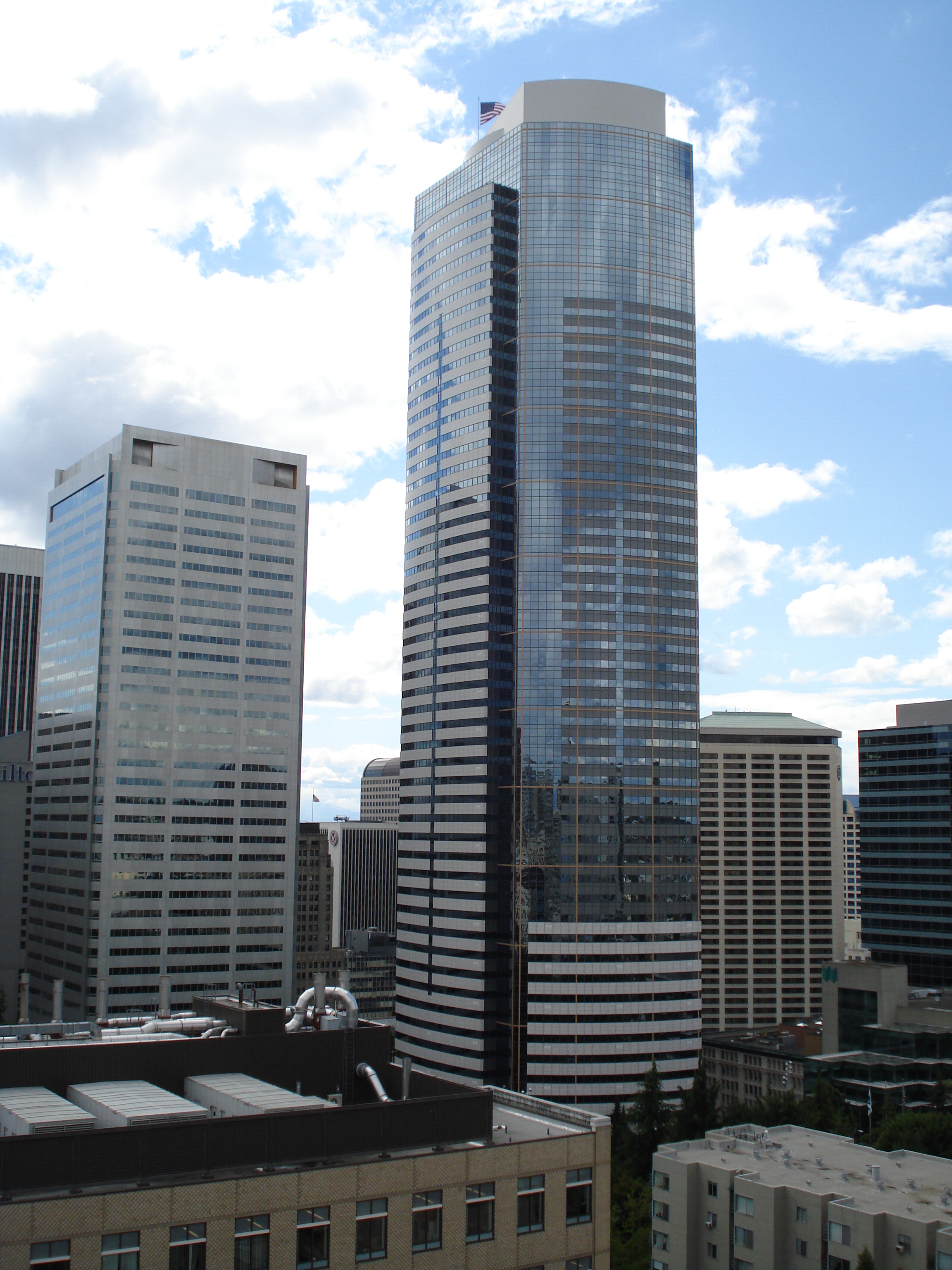
The Vancouver stumps vs. the Seattle & Calgary office towers. One_Union_Square at 456 feet (139 m) is just another stumpy building in Seattle. Yet, it would be one of the tallest office towers in Vancouver or anywhere in BC. So in  effect, when the 2nd tower was built, it was like showing a major Seattle office tower next to a Vancouver stump.

RoofOne Union Square:
456 ft (139 m)
Two Union Square:
741 ft (226 m)
Technical details
Floor countOne Union Square: 36
Two Union Square: 56

https://en.wikipedia.org/wiki/Union_Square_(Seattle)

https://upload.wikimedia.org/wikipedia/commons/9/95/Two_Union_Square_2.jpg (This complex started with a Vancouver, BC scale first tower, then because Seattle isn't under Vancouver type limitations, a second  building was able to be built as a Seattle size office tower.)

One of the tallest office towers in Calgary with its Vancouver stump sidekick. At the time of construction in the early 1980s, it was like a symbolic depiction of a big attempt of a Vancouver office building next to a Calgary size office tower. Of course Calgary like Seattle, isn't under the extremely restrictive Vancouver type building limitations.
The view From_Calgary_Tower , https://en.wikipedia.org/wiki/Suncor_Energy_Centre

When the Petro-Canada Centre opened in 1984 its Vancouver stumpy sidekick would be one of the tallest office buildings in BC & still is. 

https://upload.wikimedia.org/wikipedia/commons Sometimes I wonder how a city so close to Vancouver could permit an office tower to be 40 stories taller than the tallest office building in BC. Well of course, Seattle isn't under the small scale building limitations that Vancouver has imposed. Indeed, there is no office building in BC that has been permitted to even have a 40th floor, let alone 76 stories like in Seattle.
https://en.wikipedia.org/wiki/List_of_tallest_buildings_in_Seattle

https://upload.wikimedia.org/wikipedia/commons/3/34/Downtown_Calgary_2020-3.jpg The days of a 30 to 35 story Vancouver size office building in Calgary & Seattle being impressive are long gone.
wikipedia/commons/Vancouver_Skyline_and_Mountains The 34 or 36 story Scotia_Tower in Vancouver still remains as one of the prominent office buildings on the skyline. Yet, in most cities it would just be another background stump. Even in other scenic cities like Sydney, SF, Seattle & Auckland. Unlike those cities, Vancouver uses its scenic setting to limit the size of building & infrastructure overall. This helps with the, KEEP THEM OUT Agenda in BC, especially in Vancouver. 
wikipedia/commons/Vancouver-downtown It's very rare now for a 35 story office building to still be so prominent on the skyline in most major cities. 
wikipedia/commons/Scotia_Tower_Vancouver (Windows only go up to 34 floors with a few non window floors above that. There are also some underground floors. 138m or 452 feet. That's the Vancouver stump, now compare the Sydney office towers.)
The MLC_Center_Sydney has 60 floors, plus 8 more underground. 228m or 748 feet. Both 8 sided buildings opened in 1977, but NSW has nowhere near the building restrictions as found in BC. Yet, Sydney is just as scenic as Vancouver, if not more so. 

wikipedia/commons/Living_Shangri-La Vancouver, BC
https://en.wikipedia.org/wiki/Living_Shangri-La  200.86 metres (659 ft) tall with 62 residential floors.
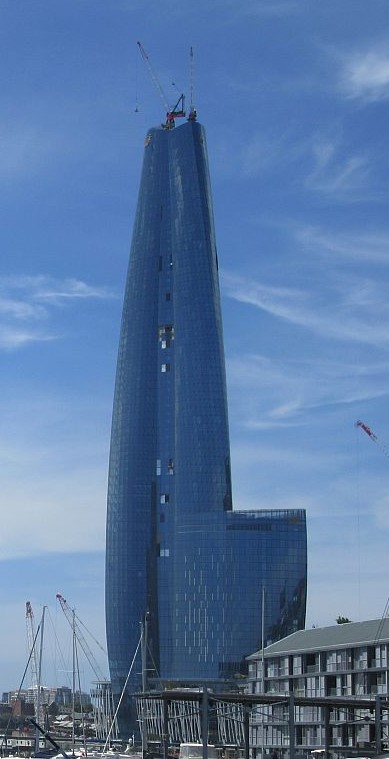
https://en.wikipedia.org/wiki/Crown_Sydney a height of 271.3 m (890 ft) with 75 floors.
One can clearly see the difference between the tallest residential tower in Sydney vs. Vancouver. Compared to Vancouver, Sydney doesn't really have much of a winter with cold crappy weather. Therefore, I would say that Sydney is just as scenic as Vancouver & much warmer, yet its isn't subjected to the Vancouver building & infrastructure limitations.

View_of_the_Sydney_Opera_House_on_city_skyline
Unlike scenic Sydney, Vancouver has used almost any excuse to have small buildings, short trains and narrow roads. All because the Vancouver interpretation of a scenic city is to keep everything small.   


It seems like there has been a multi-generational agenda to keep people out of BC. Of course one of the best ways to do that is to limit the growth of the largest cities in BC. Strict zoning and building codes that Seattle and Calgary just aren't bound by. Warm and scenic cities like Sydney, NSW and SF, Ca have never been under such limitations as Vancouver is towards urban scale. 
Any slow growth initiative is intended to reduce the influx of people moving in. Since most of the people on earth are of a nonwhite or non European heritage, the slow growth agenda seems to be a clever way to reduce the influx of non whites into Vancouver & BC. Unfortunately, most of the world is still unaware of this unofficial objective. SW BC is the most mild part of Canada and it seems that someone devised a way many decades ago to create several zoning & building restrictions to help keep people out. It's not just about limiting the scale of the buildings, but to even limit the overall infrastructure & economy. That in turn means that less people will be likely to move into BC.
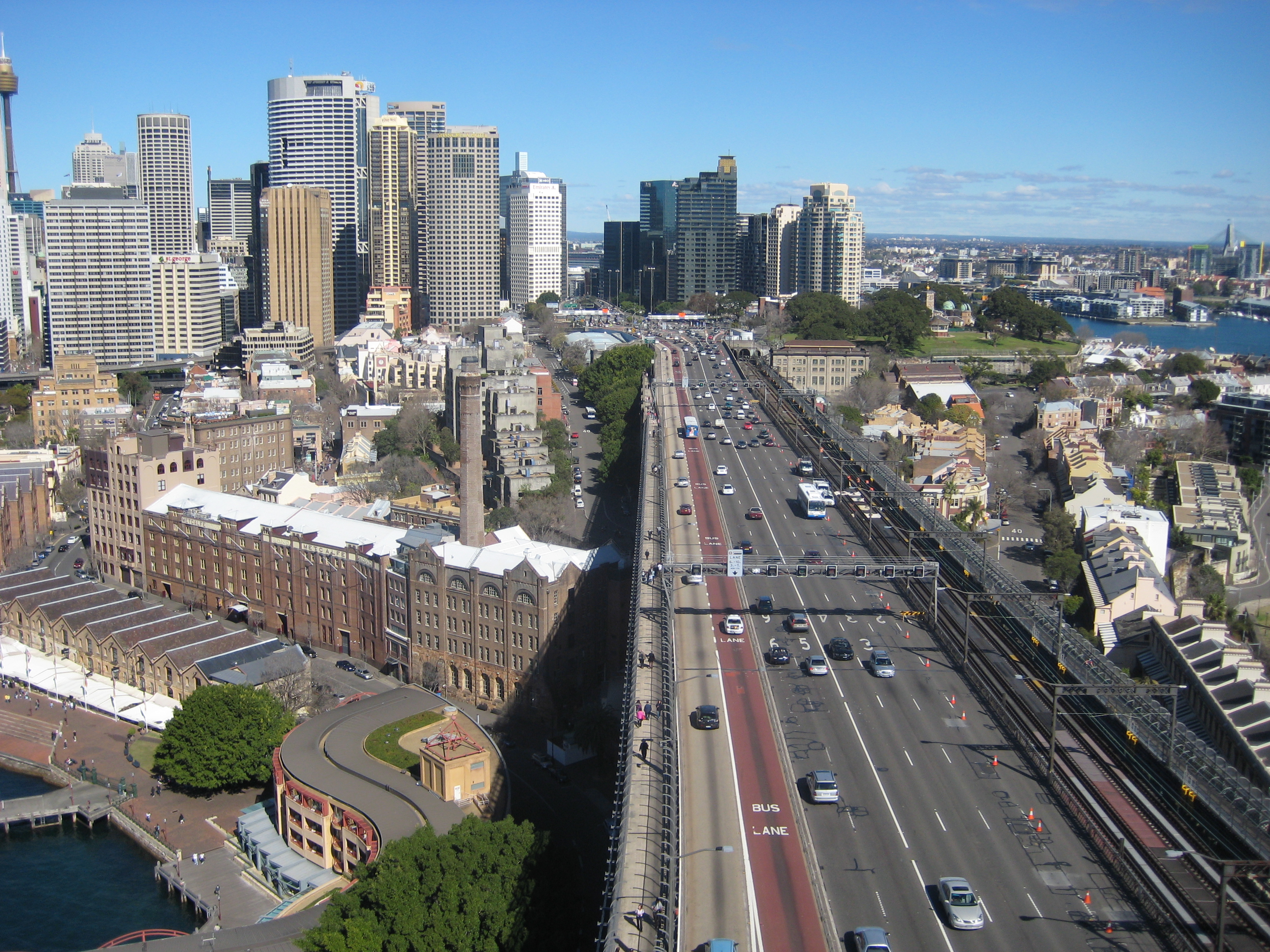
https://upload.wikimedia.org/wikipedia/commons/9/95/Cahill_expressway_from_bridge.jpg
Its just amazing, how a bridge that was started in 1923 and opened in 1932, is wide enough to accommodate 8 lanes, 2 train tracks, foot and bike pathways. In stead of building more bike and transit bridges, the Vancouver approach is to take away what little traffic lanes exist.
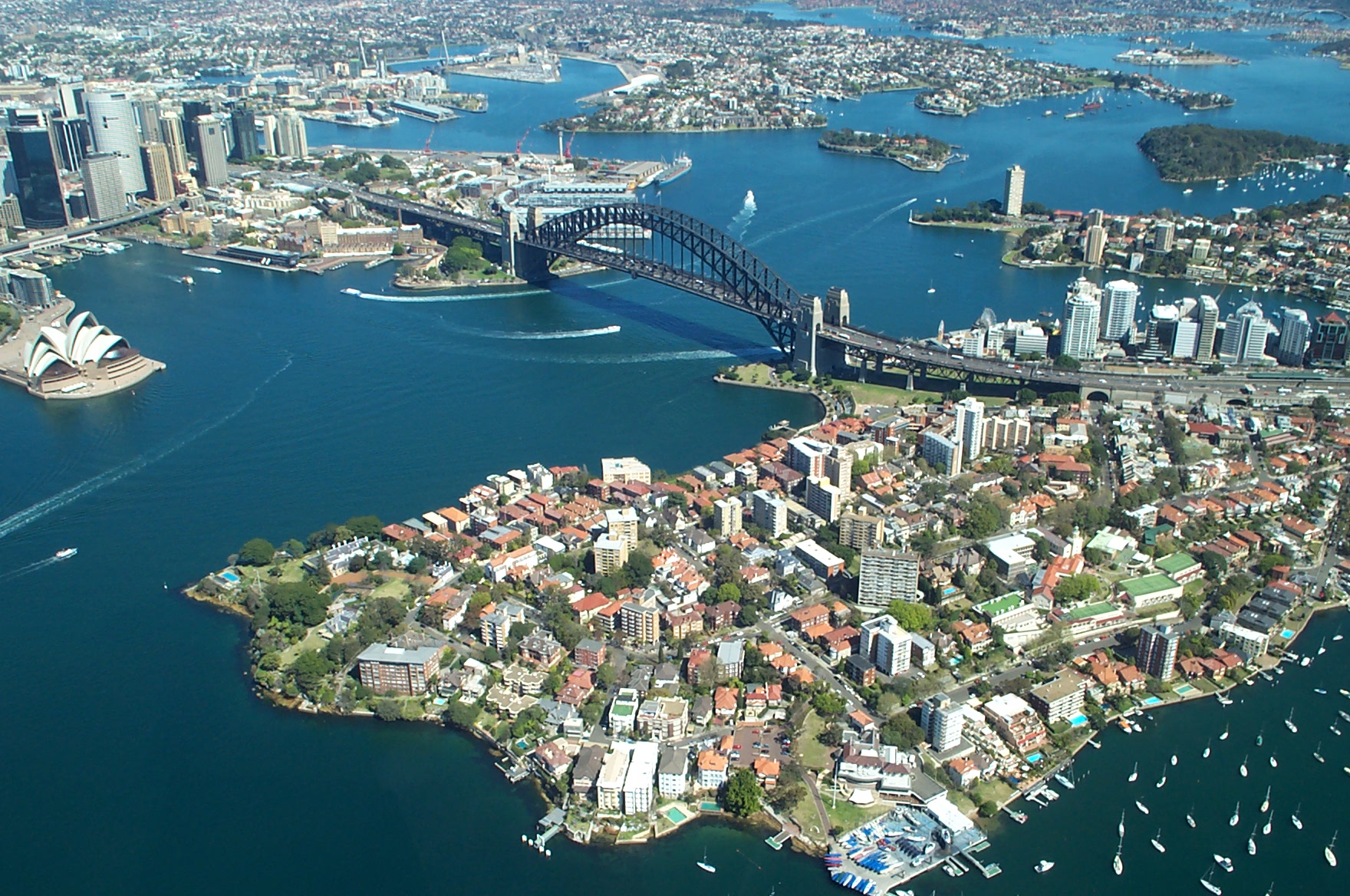
wikipedia/commons/Sydney_Harbour_Bridge_from_the_air
The Sydney_Harbour_Bridge is just as impressive now as it was when it first opened.
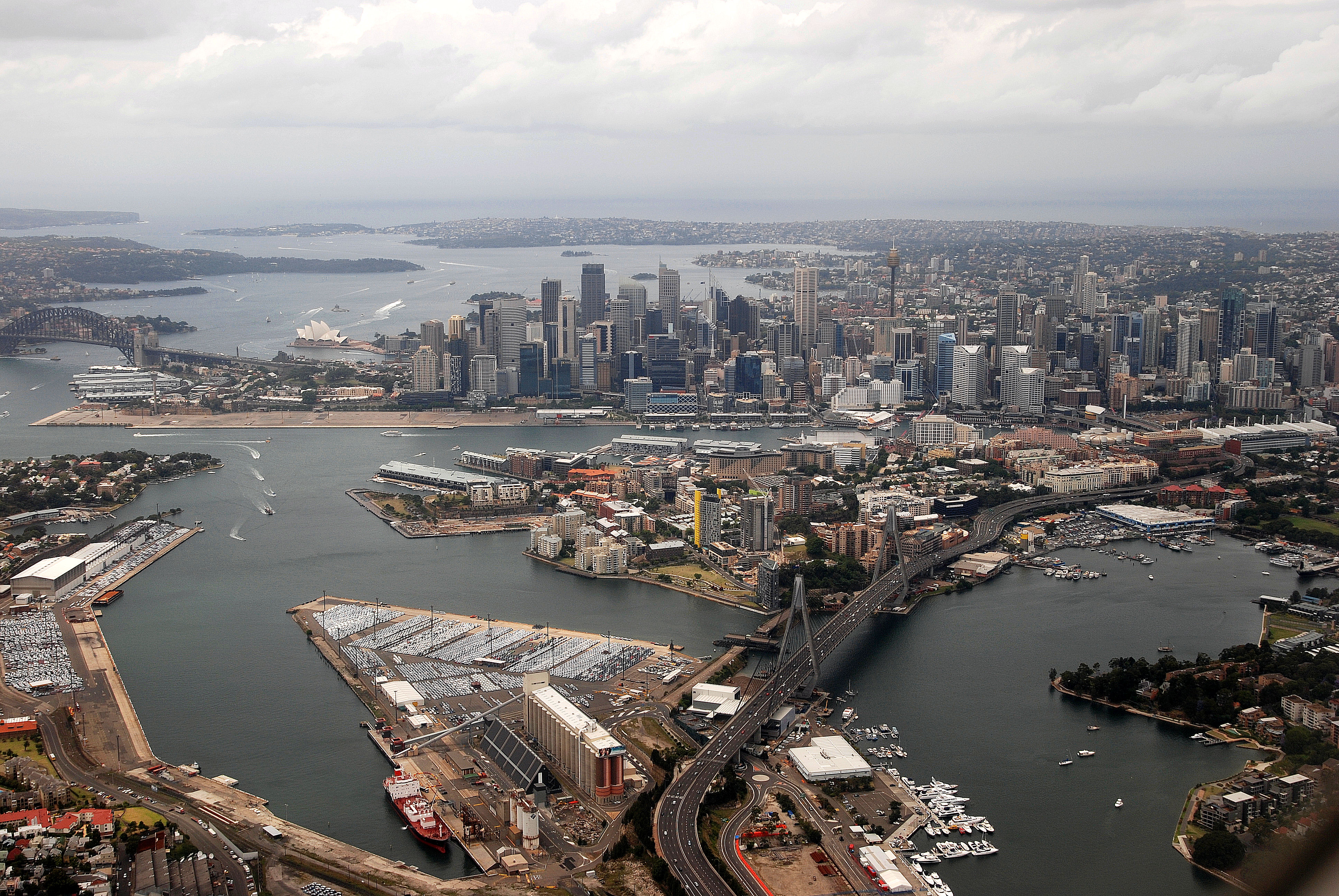
wikipedia/commons/Sydney The fantastic Anzac_Bridge is another 8 lane wonder. Although Vancouver was correct in stopping a few freeway plans that would have carved up the city, there still should have been a couple of wide Sydney like bridges across its inlet by now. At least a tunnel or 2.
Wikipedia Burrard_Inlet (So far, no passenger or commuter train tunnel has been built between Vancouver & North Vancouver or WV.)
Of course no bus & HOV tunnel under the inlet has been built either. Of course as if to meet a substandard requirement, Vancouver bridges are designed to be the epitome of bottleneck planning. Unlike Sydney or Perth, the Vancouver mentality was like, "Why would anyone want to cross the water on a wide bridge?" Indeed, the inept Lions_Gate_Bridge started out with only 1 wide lane each way. Unfortunately, the Lions_Gate_Bridge could only become 3 lanes wide, with no provision for an upper deck that could allow for a train, bus or HOV level. There should have been a bus & train tunnel constructed to help the congested bridge several decades ago. 

At least the Ironworkers_Memorial_Second_Narrows_Bridge was built to have 6 lanes. However, the bridge wasn't designed to have full width emergency lanes, that could have allowed for a provision to become 4 or 5 lanes each way. Ultimately, the bridge should have been designed to have 5 lanes each way, plus a provision for 2 train tracks & bike & foot paths. 
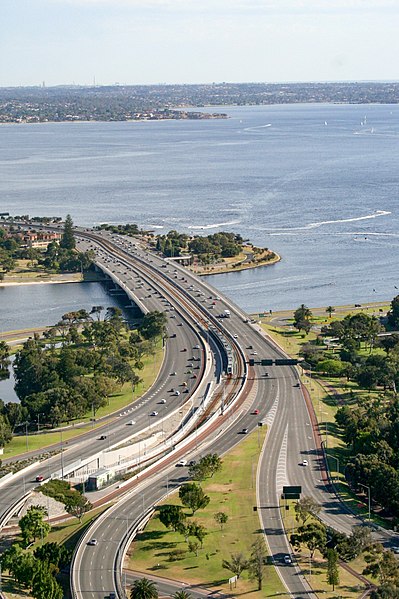
https://upload.wikimedia.org/Narrows_Bridge (Perth isn't limited by the small city thinking that Vancouver like to impose, so big city infrastructure isn't a problem there.)

"Under the plan, there would be six lanes on each bridge, including a bus lane on each.[28] The new bridge would run parallel to the original bridge and be separated from it by a gap of 6 metres (20 ft),[28] and was designed to look largely the same as the original."
https://en.wikipedia.org/wiki/Narrows_Bridge_(Perth)#Second_road_bridge:_2001 (5 general lanes each way with 2 train tracks in the middle.)

For Sydney allowing a 4 lane highway harbor tunnel, wasn't the end of their world. Yet, for Vancouver to even seriously reconsider its old harbor tunnel plans still scares the, KEEP+THEM+OUT, power-structure that mostly consists of white people. I just don't get it. My ancestors are from Europe & anyone that studies human history will realize that white people have always been a small portion of the overall human population. So by Canada continually refusing to only contain less than 1 percent of the human population, just happens to fit right in with the, KEEP THEM OUT Agenda. 

I'm bewildered that Vancouver is considered to be one of the worlds most_livable_cities. Considering how lacking the overall infrastructure is in Greater Vancouver, it's as if everything is continually watered down, compared to what most major cities allow themselves to have.

UPDATE
Then there is the-covid-era of the 2020s that just might be the perfect excuse to further limit Vancouver, BC and even Canada. As the worlds second largest nation in land area, Canada is not even close to having 1 percent of the worlds population. Again, it just so happens that most of the earth's human population is nonwhite. So using Covid and environmental issues has become the perfect excuse to keep nonwhite people out of Canada. Of course this should be challenged, but a lot of people will continue to use Covid and the environmental restrictions to maintain the, KEEP+THEM+OUT Agenda. 

Tuesday, May 17, 2022

Some in BC are calling for free public transit while gas prices remain high

 https://dailyhive.com/vancouver/bc-green-party-free-public-transit-gas-prices

A good idea, but the inept transit planning never allowed a provision for 8 to 10 car trains, as demand increases.

Unfortunately, the Canada_Line was only built to have 50m stations when the Montreal Metro has 152.5m stations.

The first 2 SkyTrain_Lines were barely built to just over half the length of a 500 foot long Montreal Metro station. Considering how narrow most of the streets & highways are in BC, one would think that the train stations would be built to eventually be as long as a 500 foot long TTC Subway platform. However, BC is all about congestive planning. 

Why would a multi generational power structure want to properly invest in big city scale infrastructure, when their agenda is to KEEP+THEM+OUT? Or, at least dramatically reduce the influx of people. Their logic is that mountainous BC is already too crowded with only 5.2 million people. Yet, mountainous Switzerland with 8.5 million people, still isn't all bricks, steel & concrete.

Indeed, Switzerland can fit into the BC part of Canada 23.62 times. That means even if BC had 200 million people, it would still have no more than the population density of Switzerland. This is merely to point out how much growth potential there is for BC & Canada, overall.  

https://en.wikipedia.org/wiki/Switzerland#Geography

"It is geographically divided among the Swiss Plateau, the Alps and the Jura, spanning a total area of 41,285 km2 (15,940 sq mi) and land area of 39,997 km2 (15,443 sq mi). Although the Alps occupy the greater part of the territory, the Swiss population of approximately 8.5 million is concentrated mostly on the plateau, where the largest cities and economic centres are..." https://en.wikipedia.org/wiki/Switzerland 

"British Columbia's land area is 944,735 square kilometres (364,800 sq mi)."  https://en.wikipedia.org/wiki/British_Columbia#Geography

"It borders the Canadian province of Alberta to the east and the Canadian territories of Yukon and the Northwest Territories to the north. With an estimated population of 5.2 million as of 2021, it is Canada's third-most populous province." https://en.wikipedia.org/wiki/British_Columbia

Canada has yet to even contain half of 1 percent of the worlds population. Of course most of the worlds population is of non European heritage. During colonial times, White immigration was the name of the game, with only a small portion of non whites to immigrate to Canada. 

Since most of the world is non white, Canada just happens to maintain such a small population, in-spite of being the 2nd largest national area on the planet. So as long as no one puts up a bunch of KEEP THEM OUT signs, people don't seem to notice what's going on. 

During tough economic times, immigrants were seen as taking up limited jobs by some Canadians. Well, if wealthier immigrants were allowed in during tough economic times, that argument doesn't hold up. However, then there might be some jealousy, so its as if something else had to be done to continually reduce immigration.

Canada might use the environment as an excuse to KEEP PEOPLE OUT. This is diabolically ingenious, because it can condition the population into thinking a certain way. KEEP THE FOREIGNERS OUT, BECAUSE IT'S GOOD FOR THE ENVIRONMENT. Unless enough people can ever see through this B$, Canada will be able to maintain the small population colonial agenda.

Keeping a lot of people out of Canada just because they are non white does indeed seem like a colonial mentality throwback. So when the world reaches 8 billion, Canada won't even have 80 million people, not even 40 million. 

https://www.cbc.ca/news/canada/british-columbia/challenging-racist-british-columbia-150-years-1.5930361

Parts of BC are the most mild in Canada during the winter. Yet, BC continues to have limited infrastructure investment, as if to create more congestion.

https://bcblackhistory.ca/learning-centre/anti-racism-strategies

In spite of being much colder during the winter, Ontario, Quebec & Alberta are all able to have taller & grander cities than what is allowed in BC. When more people in Canada & from around the world want to choose BC for the mild winters, the infrastructure isn't allowed to keep up.

https://globalnews.ca/news/8802898/bc-government-systemic-racism-announcement

Long time BC residents become conditioned to accept small scale infrastructure. Then when they see "foreigners" moving in & putting a strain on the small scale infrastructure, they can easily be blamed.

https://vpfo.ubc.ca/2021/03/systemic-racism-what-it-looks-like-in-canada-and-how-to-fight-it

Yet, it is the reluctance of BC & its municipalities to properly plan for big city growth.

https://www.cbc.ca/news/canada/british-columbia/bc-hate-crime-statistics-1.6388519

Even if someday BC had half a dozen major urban areas, most of BC would still be mountainous wilderness.

https://www150.statcan.gc.ca/n1/pub/85-002-x/2022001/article/00005-eng.htm

Asia is the most populated part of the planet & part of Canada reaches the Pacific_Rim. How could BC be so ignorant of this? Yet, Vancouver ended up being the Asian hate capital of Canada.

https://www.bloomberg.com/features/2021-vancouver-canada-asian-hate-crimes

So many other countries, states, provinces & cities properly plan for large scale infrastructure to handle the growth. Unfortunately, Vancouver, Victoria & Kelowna are still part of the KEEP BC SMALL AND BACKWARDS agenda.

https://en.wikipedia.org/wiki/Pacific_Rim#Commerce

Monday, September 20, 2021

Surrey-Langley-Skytrain-opening-delayed-until 2028

 https://dailyhive.com/vancouver/surrey-langley-skytrain-opening-delayed-2028

BC always has a way of slowing things down.

https://dailyhive.com/vancouver/surrey-langley-skytrain-fraser-highway-widening Wow, that's a big jump to go from 1 wagon road each way to 2 lanes each way. Of course for many cities, a 6 or 8 lane roadway would have been built. The train wouldn't just have 80m stations, but something closer the Montreal Metro's 152m stations.

If BC really planned & allowed for growth, that would mean accepting more of Canada's immigration. Since most of the world is nonwhite, its as if the multi-generational BC power-structure had to create a way to slow the immigration down. Thus Vancouver & Victoria have such strict slow growth measures, no one really sees through it. The slow growth initiatives are so strong that Vancouver is nowhere close to becoming Montreal size. Victoria is far from even catching up to Q.City.

This is all by design, because the BC power-structure doesn't want Montreal, Seattle or even Calgary size cities. It just so happens that most of the immigrants of the wold are non white. That's because most of the world is non white & its been that way since the beginning. 

Its not necessarily all part of a racist agenda. However, by using all sorts of environmental controls & restrictions just happens to be a potential covert way to keep Canada & especially BC small in population. 

There are those that don't want too many people moving into the mild part of Canada, officially its for environmental reasons. Thus, a slow growth agenda is maintained. Sydney Australia, SF, Seattle & Auckland are just as scenic as Vancouver & Victoria, but they have wider roads, taller buildings & longer trains than what is allowed in BC.

Saturday, May 21, 2022

Vancouver's Chinatown

 https://dailyhive.com/vancouver/vancouver-chinatown-gates-defaced

In stead of Vancouver being allowed to become a thriving metropolis on the Pacific Rim, the HOLD THINGS BACK mentality has been successful in having short trains, narrow roads & bridges & short buildings when compared to what most big cities allow. 

https://www.bloomberg.com/features/2021-vancouver-canada-asian-hate-crimes/

As an international city, Vancouver has been continually thwarted throughout its history. Then the locals that have been conditioned to only accept a small scale city, blame those that are different than them.

https://bc.ctvnews.ca/data-shows-vancouver-had-highest-number-of-anti-asian-hate-crimes-in-north-america-in-2020-1.5419915

When a predominantly white power structure refuses to allow Vancouver to become a proper big business city like Montreal & Toronto, Calgary & Edmonton, Seattle & SF, this is what happens.

https://www.theguardian.com/world/2021/may/23/vancoucer-anti-asian-hate-crimes-increase

https://dailyhive.com/vancouver/jean-swanson-vancouver-jobs This is the epitome of the KEEP THEM OUT mentality. Its all part of the backwater BC agenda. Alberta & Washington State are able to do much more, simply because they aren't under Vancouver & BC type restrictions.

https://dailyhive.com/vancouver/vancouver-most-congested-city-canada-2020 Unfortunately, long term residents of Vancouver have been conditioned to accept a congestive planning agenda. Then it becomes easier for some BC residents to blame anyone that doesn't seem to be white. When a person is conditioned to accept short trains, narrow roads & bridges, it becomes that much easier to blame anyone that seems to be more cosmopolitan or "foreign".

https://bc.ctvnews.ca/vancouver-has-the-worst-traffic-congestion-in-canada-again-according-to-this-ranking-1.4790325

While it was a wise decision to reject freeways within the city limits of Vancouver, the city has continually failed to improve or even maintain its street network.

https://vancouversun.com/news/metro/vancouver-edges-out-los-angeles-for-worst-traffic-congestion-in-north-america-index

Tuesday, December 07, 2021

Vancouver ranks 58th of top 100 destination cities around the world

 https://dailyhive.com/vancouver/vancouver-city-ranking-58-out-of-100

That's the problem with the backwater BC mentality. Why have Skytrain stations longer than the underground Edmonton LRT stations or even at the same length as the Toronto subway stations? Vancouver really should have allowed a provision to have 500 foot or 152.5m stations like the Montreal Metro has. Vancouver opted to have narrow bridges so that it's almost impossible to have proper bus & HOV lanes. 

Fortunately, Vancouver, BC wasn't able to stop Seattle & Portland, Calgary & Edmonton from having a zoo within their city limits. Of course Vancouver made sure that it never had a proper big city zoo within its city limits like equally small Boston & San_Francisco did. Boston, SF & Vancouver are all less than 50 sq.mi. or 130 sq.km in area. Yet, those cities were allowed to do so much more than Vancouver.

The lack of proper big city museums & art galleries fits right in with the small city mentality of Vancouver.

Its as if there has been a multi-generational mentality to keep Vancouver small & backward since its early years.

"The first viaduct was completed in 1915, extending what was then called Harris St over the CPR Beatty St yards to connect to Georgia St.  At that time, Harris St was renamed East Georgia, and the viaduct called the Hart McHarg bridge, but it was more commonly called the Georgia Harris Viaduct.  It was poorly built and plagued by difficulties from the beginning; It was not uncommon to see sagging sections, timber propping it up, and concrete falling to the ground below.  In anticipation of the viaduct and the planned streetcar providing easy access to the city centre, apartments began popping up in the area in the preceding years, including the heritage building called the Jackson Apartments at 660 Jackson St/501 E Georgia.  Although a track was laid for the Georgia Streetcar to offer service across the viaduct, there were immediate concerns about its ability to hold the weight, and the plan was abandoned." https://www.placesthatmatter.ca/location/georgia-st-viaduct (A fine example of inept Vancouver planning & development. So many other cities were actually able to build a bridge for streetcars or trams, as well as cars & trucks. 

https://vancouversun.com/news/local-news/this-week-in-history-the-great-georgia-harris-viaduct-opens-in-1915 (Why properly build infrastructure for long-range durability & future capacity?)

https://searcharchives.vancouver.ca/before-demolition-of-old-georgia-viaduct-30-9-70-4 If done properly, the original viaduct should have been built to be strong enough to have 6 lanes with 2 streetcar tracks & bike lanes. Then a lower deck provision for another rapid transit line with bike lanes. Fortunately, Vancouver wasn't able to stop other cities from getting rid of their streetcars or prevent the rebirth of tram trains.

https://en.wikipedia.org/wiki/Georgia_Viaduct#Demolition Some people believed that with proper strengthening & maintenance, they could have remained for several more decades. Perhaps even past 2070.

https://thetyee.ca/News/2018/06/27/Vancouver-Inner-City-Slum-Clearance-Repair (While the cancellation of a freeway through East Vancouver was a good idea in the 1960s, since the 1970s viaducts were built, they should remain for several more decades.)

To allow Vancouver to have the infrastructure of Montreal or Seattle would mean to fully accept becoming a major metropolitan area. 

https://en.wikipedia.org/wiki/Champlain_Bridge_(Montreal,_2019-present) An 8 lane bride with a provision for a rapid transit train. https://dailyhive.com/montreal/montreal-light-rail-train-rem-video

https://en.wikipedia.org/wiki/Interstate_90_floating_bridges Seattle has this as an 8 lane crossing with an LRT line as well. Unfortunately, such big city infrastructure just isn't allowed by the small city mentality of Vancouver.

If Vancouver, BC was allowed to become a major global city like Sydney, Australia or SF, California, the local power-structure would have to give up on its stunting agenda. 

A national power-structure has made sure that Canada has yet to even contain 0.005% of the worlds population. It just so happens that most of the world is non-white, but as long as Canada doesn't officially have a, KEEP THEM OUT agenda, the worlds 2nd largest nation won't even have 40 million people, when the world reaches 8 billion.

Saturday, October 30, 2021

A Plan To Cover A Portion Of The Décarie Expressway

 https://www.mtlblog.com/montreal/valrie-plante-wants-to-cover-a-portion-of-the-dcarie-expressway

There are benefits to covering over some parts of urban freeways.

https://cultmtl.com/2021/10/denis-coderre-plan-to-cover-montreal-decarie-expressway-with-a-park-ludicrous/

https://montrealgazette.com/news/local-news/denis-coderre-vows-to-cover-part-of-montreals-decarie-expressway

https://www.concordia.ca/content/dam/artsci/geography-planning-environment/docs/student-projects/SouthernDecarie_DesignBrief.pdf , http://www.montrealroads.com/roads/decarie


"The covered expressway is an idea that Sophie Larochelle can get behind.

Her kitchen can get busy around dinnertime, but nothing compares to what is going on just steps from her home as cars and trucks rumble by." https://www.cbc.ca/news/canada/montreal/decarie-expressway-covered-1.5025880

https://upload.wikimedia.org/Autoroute_Decarie.jpg This is what Vancouver wanted to avoid between the 1950s and 70s. 

Indeed, something like Autoroute_15 and Interstate_5_in_Seattle would have meant that entire blocks would have been cleared from downtown Vancouver to the Fraser River to Richmond. Then a swath from downtown Vancouver to Burnaby, connecting to the Trans-Canada_Highway

https://upload.wikimedia.org/British_Columbia_Highway_1_as_it_enters_Vancouver_from_Burnaby.jpg  
The irony is that the roads and streets in Vancouver could have been upgraded without having to build freeways in the city limits. Instead, an agenda to create bottlenecks and more congestion was established in Vancouver. Fortunately, Vancouver has no control over Burnaby and Richmond. 
If Vancouver was somehow able to water-down the freeways in Montreal and Toronto, it would be a disaster of congestion. Especially making the subway stations smaller, causing much shorter trains.  

Most major cities don't have a multi-generational agenda to continually water-down and thwart its infrastructure like Vancouver does.

The Cassiar_Tunnel is the only section of freeway within the city limits of Vancouver. https://en.wikipedia.org/wiki/Vancouver#/media/File:Hwy1-offramp-withbg.jpg

Sunday, November 21, 2021

CANARY WHARF, LONDON'S BUSINESS AND FINANCIAL DISTRICT

 https://www.youtube.com/watch?v=ZbTEsIi8Hg0

And to think that there was a time when London had shorter buildings than what Vancouver or anywhere else in BC had. Of course the Great_Reset & the Fourth_Industrial_Revolution could become very effective devices to stunt or hinder the world. All in the name of environmental protection. 

Considering that Canada is the 2nd largest county in area, yet it has less than half of 1 percent of the worlds population, one could almost think TGR (the-great-reset) was developed in Canada.

https://en.wikipedia.org/wiki/Great_Reset#Canada If someone really has a, KEEP THEM OUT agenda for Canada, the 2020s would seem to be the time to fully impose it. All in the name for having a better environment.

Certainly, there are good arguments about reducing carbon emissions & limiting the human population, but turning the world into a UN run global state might take things to extremes.

Since most of the world is non-white, any global reset and control agenda will mostly affect people that aren't of European heritage. Conveniently, the wording isn't officially stated like that. Perhaps openly pointing that out just might cause most of the world to start asking more questions about the true nature of a Global Management System. Its not that a GMS ins't necessary, it's just that lot of wide sweeping changes could be thrusted upon the world over the next few decades. 

Saturday, March 13, 2021

The miniature Vancouver agenda

 https://www.urbanyvr.com/vantage-miniature-vancouver That's just how some people would like to keep Vancouver, as a little toy city.

A multi-generational miniaturizing or thwarting process started in Vancouver several decades ago. Essentially a white power-structure wanted to create so many overlapping municipal restrictions in order to dramatically slow the growth of the city. By refusing to build up proper big city infrastructure, Vancouver continually demonstrates its reluctance to act like a big city. Vancouver is one of the smallest major cities on earth. However, the BC Lower_Mainland could contain, Greater_Montreal , the Calgary_Metropolitan_Region , the Edmonton_Metropolitan_Region and Winnipeg. So a clever way was devised to keep the region from becoming another Toronto or Montreal or even like Seattle or any other major urban region that people want to move to.

The result is having short & congested trains when many cities allow 8 to 10 car trains. Having narrow bridges & roads to increase congestion & frustration. Buildings are kept short, despite the high cost of land.

Vancouver & BC is all about keeping people out, but since a force force field can't be established around BC, something else was done. Just keep limiting or restricting the size of the overall infrastructure & hope that no one notices. That's what the predominantly white power-structure still wants. Of course if they openly revealed their agenda, there just might be a multicultural movement that would demand that Vancouver start to behave more like all the big cities in Canada. That BC allow for significant growth. Switzerland can fit into BC about 23 times. Yet, BC has yet to reach the population of one Switzerland. 

Unfortunately at this point, its become quite evident that unlike most major cities, Vancouver still refuses to build up proper big city infrastructure.

At least its interesting to see what other major cities are able to do, simply because they aren't under the planning & building restrictions of Vancouver.

https://en.wikipedia.org/wiki/Montreal#Transportation Mon. & To. flourish in part, because they aren't under any type of small Vancouver or BC building limitations.

https://en.wikipedia.org/wiki/Toronto#Transportation It would be like a Sci-Fi horror story if Vancouver was able to force Toronto & Montreal to only have 4 lane roads & short trains with only 2 - 4 rail-coaches. Fortunately, Vancouver & BC in general, were unable to change the mentality of Toronto & Montreal. Even much closer Seattle & Calgary are able to have much wider roads than what Vancouver allows.

https://en.wikipedia.org/wiki/Calgary#Infrastructure

"Construction is underway on the final two legs of the freeway in west and southwest Calgary; both legs have been divided into north and south projects. The time-sensitive northern segment of the southwest leg will be completed first, following a land transfer agreement[42] with the Tsuu T'ina First Nation that was reached in 2013. It is being built as a 6-8 lane freeway to be completed by October 1, 2021,[43] with the ability to upgrade the corridor to a 16-lane freeway with express and collector lanes." https://en.wikipedia.org/wiki/Stoney_Trail#Future (In Vancouver, its like the roads can't be any wider than what Lethbridge has.)

"In late 2020 the Government of Alberta announced they will replace the existing eastbound bridge over the Bow River on Southeast Stoney Trail, widen the westbound bridge and build a new, stand-alone pedestrian bridge. The project will boost the number of lanes to four in each direction — currently the eastbound crossing has two lanes, while the westbound has three." https://en.wikipedia.org/wiki/Stoney_Trail#Future (Calgary actually will build a pedestrian bridge so that road lanes don't have to be reduced.The Vancouver approach is to avoid building pedestrian & bike bridges, opting instead to reduce lanes of traffic. This bottleneck planning approach ensures the best way to achieve even more congestion. So far, no one from Vancouver or BC has been able to get Albertans to go back to the horse & biggie days. Or, to simply ban most vehicles & force most people to go on bikes, skateboards or roller-blades, in addition to public transit. A good transportation system means having longer trains, wider roads & more bike & foot bridges to not reduce traffic lanes.) 

https://en.wikipedia.org/wiki/Calgary_Metropolitan_Region#/media/File:Calgary_Skyline_2015.png 4 lanes each way with 2 C Train tracks in the middle. 

The closest attempt in Greater Vancouver is in Burnaby. Only because the train is elevated, there might be a potential to have 4 lanes each way. https://en.wikipedia.org/wiki/Brentwood_Town_Centre_station#/media/File:Brentwood_Skytrain_long-exposure.jpg However, like in Vancouver, its tough enough just to have 3 lanes each way. https://en.wikipedia.org/wiki/British_Columbia_Highway_7#/media/File:Lougheed_Hwy_near_Brentwood_Stn.JPG

British_Columbia_Highway_7 doesn't have to be upgraded to a freeway, but most of it should have been 8 lanes wide by now.


https://en.wikipedia.org/wiki/Edmonton#Infrastructure

"The entire freeway road was built with expansion in mind; almost all bridges were built wide enough for expansion to the ultimate stage which includes as many as six main travel lanes in one direction, depending on location." https://en.wikipedia.org/wiki/Anthony_Henday_Drive#Future (A potential of 6 lanes each way in Edmonton. In Vancouver, its tough enough to have streets that are 6 lanes wide.)

https://en.wikipedia.org/wiki/Edmonton_Transit_Service#LRT

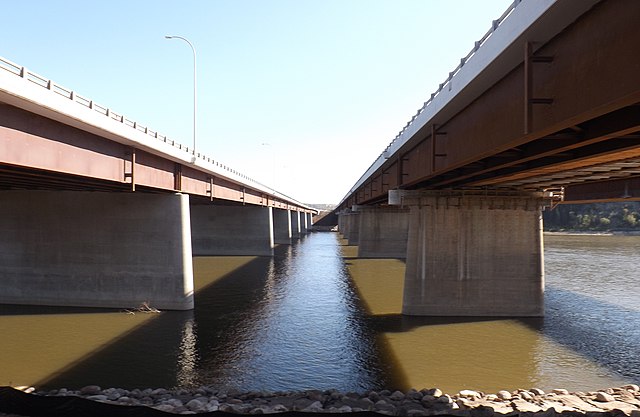
https://en.wikipedia.org/wiki/Red_Deer,_Alberta Two parallel bridges that allow for 3 lanes each way. Not a big deal for RD, but for Vancouver the power-structure doesn't even like more than 2 lanes each way.

https://upload.wikimedia.org/wikipedia/commons/thumb/8/8b/Fort_McMurray_Athabasca_River_Bridges.jpg/640px-Fort_McMurray_Athabasca_River_Bridges.jpg Many cities will have parallel bridges less than a block apart. This is a way to add capacity to the overall crossing. In Vancouver this is frowned upon. In stead of increasing capacity, the crossings are kept narrow & sometimes even a lane or 2 is removed. This really helps to increase congestion, but that's whats expected with bottleneck planning. 
https://upload.wikimedia.org/wikipedia/commons/thumb/8/86/Fort_McMurray_Athabasca_River_Bridges_2.png/640px-Fort_McMurray_Athabasca_River_Bridges_2.png Vancouver has taken measures to prevent it from ever having any bridge or overall crossing from containing 10 lanes as in Ft. McM.
https://upload.wikimedia.org/wikipedia/commons/thumb/1/11/Surrey_aerial_view.JPG/640px-Surrey_aerial_view.JPG However, Vancouver was unable to stop Surrey from having a 10 lane crossing. 
No predominantly white power-structure is able to stop the growth of Surrey. No power-structure will be able to stop Surrey from eventually becoming the largest city in BC, with some of its tallest buildings. 

Most of the worlds population is nonwhite, so any slow growth initiative is a secret clever way to maintain the, KEEP THEM OUT mentality. A true multicultural Canada can help Vancouver & Victoria become proper big cities in the mild part of Canada. Not everyone wants to endure -20C to -40C winters.

Friday, October 01, 2021

TIoT

TIoT is an Urban Tech Intersection of various links. 

Vancouver and even Victoria should have already been high tech hubs for several decades. Seattle, SF and Toronto are so far ahead of whats in backwater BC. 

It seems that things like the COVID-19_pandemic will slow down immigration into Canada considerably. Vancouver, one of the most mild parts of Canada, won't be rivaling Montreal's population any time soon and Victoria remains much smaller than Quebec_City. When the world attains 8 billion people, Canada wont even have 80 million. It will be doubtful if Canada will even have a population of 40 million people when the world reaches 8 billion. 

Even if the cities and their surrounding urban areas grew by tens of millions, most of Canada would still remain unpopulated and natural for wildlife. Combine that with more renewable energy measures and recycling and the worlds 2nd largest nation could easily contain millions of more people. However, there seems to be a mostly covert, KEEP THEM OUT Agenda, that's been firmly entrenched since colonial times.

https://en.wikipedia.org/wiki/List_of_census_metropolitan_areas_and_agglomerations_in_Canada

Canada as a nation, has the 2nd largest land_area and has yet to even contain even 1% of the worlds people. 

https://en.wikipedia.org/wiki/List_of_countries_and_dependencies_by_area#Countries_and_dependencies_by_area

Some would like to see a dramatic global reduction of population in most countries.

https://www.wsj.com/articles/looking-forward-to-the-end-of-humanity-11592625661 

Perhaps releasing an army of Terminator robots upon most of humanity will speed things up.

https://www.wsj.com/articles/doomsday-math-says-humanity-may-have-just-760-years-left-11561655839 (Doom & gloom ecological horror stories or outright fascist extermination policies to reduce the human population is too dam extreme. Education & better urban planning can help to gradually reduce the human population.)

Most of this blog is still roughed out from its link list phase & is under construction & will include sarcasm.

https://en.wikipedia.org/wiki/Intersection_(road)#Types

https://upload.wikimedia.org/Bonneuil_16_Carrefour_Bellevue_2012.jpg (This will likely always be a rural intersection.)


https://wikipedia/commons/Veterans_Memorial_Parkway_London_Ontario.jpg (A rural intersection for now, but someday perhaps it will become an urban intersection.) 

"Long term plans for the route call for grade separated interchanges along its entire length to convert it to a freeway." 

Times Square in NYC has been a quintessential urban-intersection-point since the late 1800s. There was a time when it was just another rural intersection. Then before that, it was indigenous tribal land...

Tuesday, November 23, 2021

Nicomekl-river-bridge-and riverfront-park in Surrey, BC

 https://dailyhive.com/vancouver/nicomekl-river-bridge-riverfront-park

King_George_Boulevard should have a minimum of 6 lanes all the way through its length. That would make it a lot easier to have a couple of bus or HOV lanes. So much of BC just had a 1 lane each way wagon road mentality for so long. https://en.wikipedia.org/wiki/King_George_Boulevard#History So to even get to a point where there are 2 lanes each way frightens some people. Especially a multi-generational stubborn power-structure that doesn't want to encourage rapid growth. Since BC can't control immigration into Canada, the next best thing would be to build a wall to perpetuate the, KEEP THEM OUT agenda. Of course that would result in many challenges, so BC continually thwarts the size of its infrastructure. On a much larger scale, Canada has made sure that its nowhere near containing 1% of the worlds population. Yet in-spite of that, Toronto, Montreal, Calgary & Edmonton are all still able to build up larger infrastructure, because they don't have to contend with Vancouver & Victoria restrictions.

BC has such expertise in funneling traffic into a 3 lane crossing. Some people would just like it to remain as it is. 

https://www.google.com/maps/place/Surrey,+BC/@49.0692287,-122.8233335,184m/data=!3m1!1e3!4m5!3m4!1s0x5485dc034d3fa75b:0xd28b4898abd598e0!8m2!3d49.1913466!4d-122.8490125

https://www.google.com/maps/place/Surrey,+BC/@49.0692107,-122.820008,521m/data=!3m1!1e3!4m5!3m4!1s0x5485dc034d3fa75b:0xd28b4898abd598e0!8m2!3d49.1913466!4d-122.8490125


The quintessential 3 lane bottleneck.

https://www.google.com/maps/place/Lions+Gate+Bridge/@49.3154152,-123.1420283,2331m/data=!3m1!1e3!4m13!1m7!3m6!1s0x548673f143a94fb3:0xbb9196ea9b81f38b!2sVancouver,+BC!3b1!8m2!3d49.2827291!4d-123.1207375!3m4!1s0x548671e4314afbf5:0x3e51e1a4f59d56fa!8m2!3d49.3146651!4d-123.1392099


Of course the BC capital would have to have its own 3 lane bottleneck.

https://www.google.com/maps/place/Johnson+Street+Bridge/@48.428204,-123.3727534,249m/data=!3m1!1e3!4m13!1m7!3m6!1s0x548f738bddb06171:0x38e8f3741ebb48ed!2sVictoria,+BC!3b1!8m2!3d48.4284207!4d-123.3656444!3m4!1s0x548f749c9ec2d143:0x5a83be27f477e403!8m2!3d48.4282598!4d-123.3721465


If you are from Montreal or QC, it would be difficult to imagine something like a BC power-structure putting in a 3 lane crossing when it should at least have 6 lanes.

https://www.google.com/maps/place/Montreal,+QC/@45.4875674,-73.8697933,766m/data=!3m1!1e3!4m5!3m4!1s0x4cc91a541c64b70d:0x654e3138211fefef!8m2!3d45.5016889!4d-73.567256

Just imagine if this little 3 lane bridge was at a major crossing point in Montreal or QC.

https://www.google.com/maps/@45.4874563,-73.8679282,3a,60y,321.46h,85.09t/data=!3m6!1e1!3m4!1sbvDYhUmK9rVwp9NX8lpRhA!2e0!7i16384!8i8192

Montreal already has its share of congestion. If anyone there tried to impose BC bottleneck planning there it would be an outrage of protests.

Monday, January 24, 2022

Tunnel boring machines for Broadway Subway to arrive in Vancouver this spring

 https://dailyhive.com/vancouver/broadway-subway-tunnel-boring-machines There is a way to construct train stations so that they can be easily lengthened as demand increases. Unfortunately, that's not the Vancouver & BC way.

https://dailyhive.com/vancouver/mark-v-skytrain-design-translink When so many cities planned for 8-10 car trains, Vancouver can only max out with 5 car trains. Its always better to build longer stations & wider bridges in the first place.

https://dailyhive.com/vancouver/skytrain-station-platform-extension

Apparently, short trains and narrow roads are the best way for Vancouver to deal with its transportation congestion. Of course since most cities don't take a small scale planing approach like Vancouver does, they are able to have larger underground stations that allow for longer trains, wider bridges that make it easier to have bus & HOV lanes.

https://dailyhive.com/vancouver/canada-line-skytrain This is so sad & pathetic for backward BC. Clearly, this was built in symbolic defiance of the 152.5m or 500ft. long stations that the Toronto Subway & the Montreal Metro have. Instead of building all of the Canada Line with 152.5m long stations, the C Line was only designed to have 50m or 164ft. stations. This is classic Vancouver & BC inept logic at its best. Instead of running a 152.5m Montreal metro train every 5 minutes, a short BC train could be run 3 times every 6 minutes. Considering that Vancouver opted to not ever have a freeway to the airport & ferry terminal, a provision for a 500ft long train should have been made, right from the start.

https://dailyhive.com/vancouver/short-platforms-and-trains-is-the-skytrain-canada-line-under-built-and-nearing-capacity Ultimately, there will only be 50m long trains on the Canada line, that's less than a 3rd of the 152.5m Montreal Metro trains. Unlike Montreal, Toronto, Edmonton, Calgary & Seattle, Vancouver has been under a multi-generational small town mindset. Short trains & short buildings, narrow bridges & narrow roads, etc., are all indicative of a, KEEP THEM OUT agenda. If you plan & build big city infrastructure, you are indicating that you accept substantial urban population growth & density. Extremely restrictive Vancouver & BC is all about thwarting the influx of people and that's how the power-structure likes it.

A similar restrictive power-structure or multi-generational mindset has never been able to take over Alberta or Washington State. Thus, they are able to allow infrastructure to exist on a much larger scale.