Showing posts sorted by relevance for query bridge. Sort by date Show all posts

Wednesday, February 22, 2012

The 4 lane Pattullo Bridge Saga

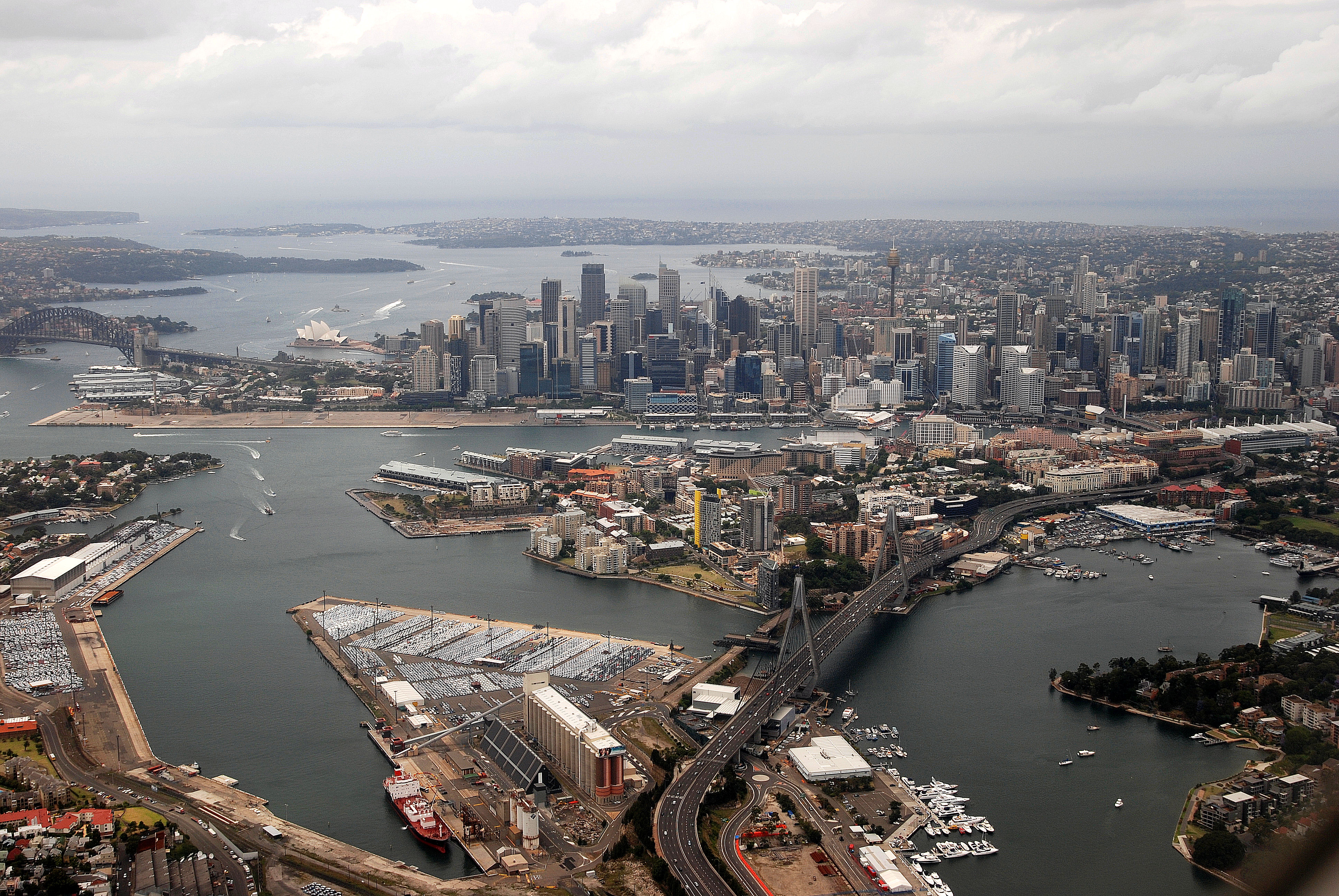
The Sydney Harbour Bridge opened in 1932 with 6 lanes & 2 tracks for trams & another 2 tracks for the heavier passenger trains. Eventually the trams were removed so that the bridge could have 8 lanes, but the 2 train tracks remain. It would be several decades before a bridge of similar width would be built in Canada. In BC, it was difficult enough just to get a 4 lane bridge built & the single track NW_Bridge.
www.nwheritage.org/phototour/riverlife/bridges_fraser.htm,  www.flickr.com,  www.tenthtothefraser.ca/2010/09/19/remembering-new-westminsters-pay-a-toll-o-bridge

The Pattullo_Bridge could have really been something spectacular between New_Westminster & Surrey. However, back in the 1930s there just wasn't that much population growth compared to more established urban areas of the world. Thus, there was no need to meet the equivalent engineering standards of New_South_Wales or CaliforniaSwitzerland can fit into the land area of BC some 23 times. While Switzerland has about 8 million people, BC is struggling to reach 4.5 million & its 23 times larger. New_Zealand has about the same population of BC, but is about 3 quarters its size. Although Canada & Australia are among the largest countries_by_total_area, they are among the smallest in population because of their size. Canada hasn't been allowed to equal the population of California & Australia hasn't been allowed to rival the population of Texas. After all these years on a planet that has over 7 billion people, Canada & Australia combined, haven't been permitted to even equal the population of the United_Kingdom. Perhaps the Commonwealth_realm requires that its two largest land areas never rival the population of the UK, indefinitely.
http://io9.com/5930595/the-future-is-unevenly-distributed?tag=futurism

Although Canada has over 10 million more people than Australia, the urban infrastructure seems to lag behind that of Australia.
The new bridge might have 6 lanes, some 9 decades after the Sydney Harbor Bridge started out with its first 6 lanes in 1932. The heavy rail bridge might still remain as a single track crossing. www.surreyhistory.ca/rrera.html, www.southfraser.net/2008/06/rail-bridge_24.html
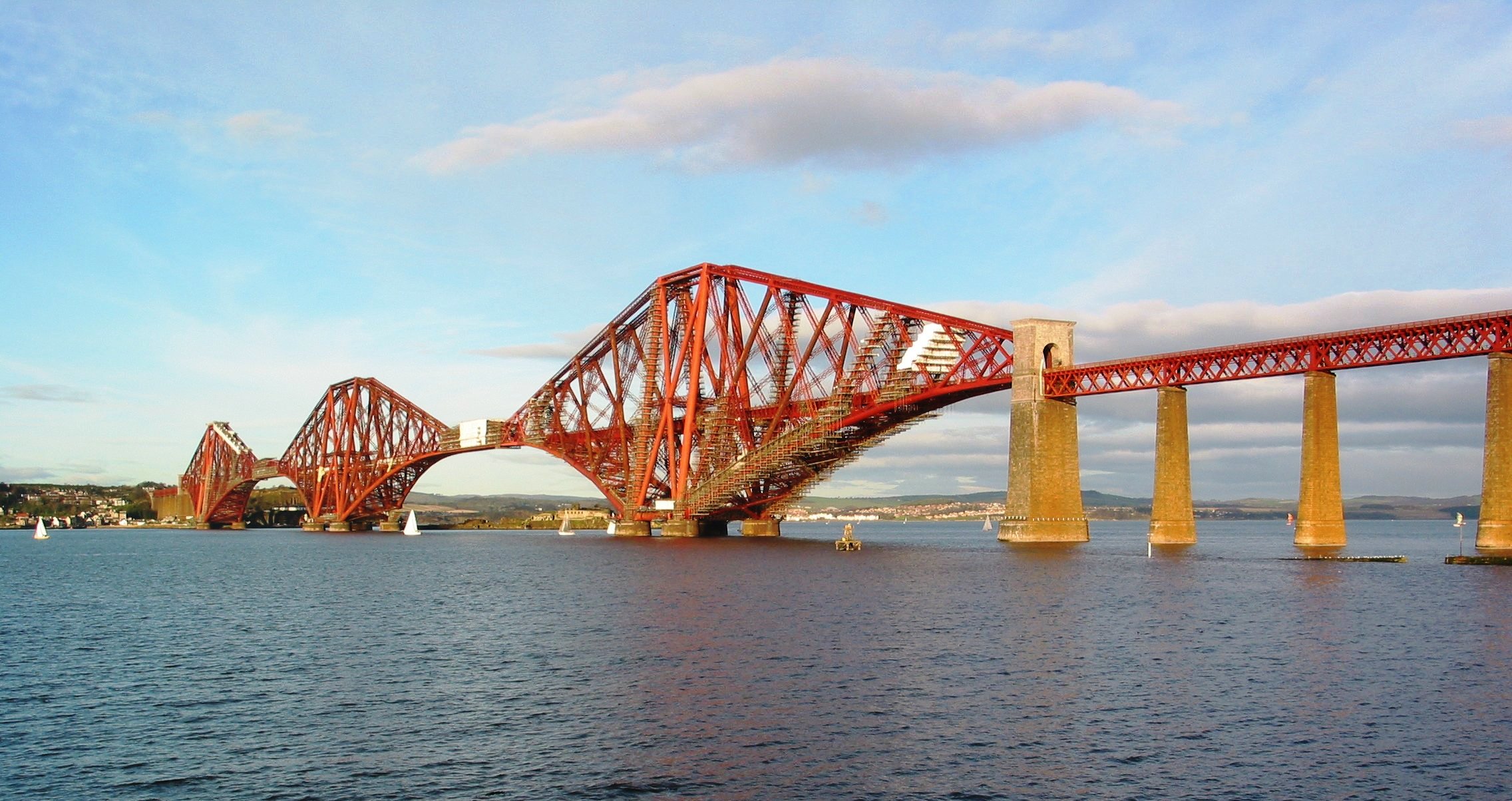
The Forth_Bridge is a fine example of a large scale double track bridge. The Quebec_Bridge was originally a double track railway crossing.


Tuesday, May 10, 2022

The Pattullo bridge Over the Fraser river in NW, British Columbia, Canada

 https://www.youtube.com/watch?v=l3oREKxiApc

The Pattullo_Bridge is another joke of inept BC infrastructure that should have been replaced decades ago.

"The existing bridge is currently being replaced with a new cable-stayed four-lane bridge with new connections on both the New Westminster and Surrey approaches. The new bridge also incorporates barrier-separated dedicated walking and cycling lanes which can be removed in order to allow a future 6-lane expansion of the bridge." https://en.wikipedia.org/wiki/Pattullo_Bridge#Replacement_Bridge

https://www.pattullobridgereplacement.ca

The new bridge should have been designed to have 6 lanes with at lest 2 wide shoulders.

https://www.pattullobridgereplacement.ca/construction/current-works

Then it could have been an 8 lane crossing including 2 rapid bus lanes so whenever the Sky-bridge had undergone maintenance, the bus lanes would always be ready as HOV space. A provision for a lower level should have been implemented for future tram, bus & bike lanes.

Instead, everything will be funneled into just 2 lanes each way.

https://dailyhive.com/vancouver/pattullo-bridge-construction-tower-foundation


The Skytrain bridge should have had a provision to have 4 tracks or at least 3.

https://dailyhive.com/vancouver/pattullo-bridge-overnight-lane-closure The new Bridge just like the old P. Bridge, will feature a classic 4 lane BC bottleneck.

https://dailyhive.com/vancouver/new-westminster-new-housing-demand-young-people

Tuesday, May 14, 2019

revelstoke bridge

https://historicbridges.org/bridges/browser/?bridgebrowser=britishcolumbia/revelstoke


For months, the ministry has been weighing replacing the bridge with either a new five-lane span over the Sicamous Channel or a four-lane bridge with another smaller bridge over the channel at Sicamous’ Main Street. 
https://www.revelstokereview.com/news/single-bridge-option-chosen-to-replace-highway-1-bridge-in-sicamous
“A new five-lane structure will eventually replace the RW Bruhn Bridge in Sicamous and the approaches will be widened to four lanes, improving safety and efficiency for people travelling through the area on Highway 1,” a release from the ministry reads.


https://images.drivebc.ca/bchighwaycam/pub/html/www/11.html


https://images.drivebc.ca/bchighwaycam/pub/html/www/71.html

Friday, January 14, 2022

The 10-lane George Massey Bridge would have been completed this year

 https://dailyhive.com/vancouver/george-massey-bridge-opening-day

Unfortunately, in typical backward BC style, the bridge project was cancelled. An 8 lane tunnel option without any provision for a train isn't expected to open until 2030.

The Oak_Street_Bridge could have been modified to be 4 lanes northbound, if a new bridge west of it was built to handle 4 lanes from Granville Street going into Richmond.

BC has never been able to thwart the scale of infrastructure in Alberta and Washington State, let alone Ontario and Quebec. So those places and many more, are always to build on a larger scale than what is allowed in backward BC. 

Most of Oak Street & Granville Street are 6 lanes wide. That's 12 lanes that never has to become a freeway, just a more efficient traffic corridor.

The 8 lane Granville_Street_Bridge could have been modified to handle 4 northbound lanes from Oak and 4 southbound lanes to Granville Street. Then like what several other cities do, is build more parallel bike bridges so that lanes don't have to be removed from the Granville_Street_Bridge & others.

That's what happened to the former 6 lane Burrard_Bridge. Now the Burrard_Bridge is a classic 4 lane funnel because the city was too cheap to build a parallel bike bridge.

The Ironworkers_Memorial_Second_Narrows_Crossing should have been designed to have 4 lanes each way plus 2 full width emergency lanes. Then by now it could have been a 10 lane bridge. A new rapid transit train & bike bridge should be built beside it.

Tuesday, March 31, 2020

TUI

The-Urban-Intersection Point, Of Cities and Technology in general... 

(This blog is in a very roughed out format. Perhaps eventually after hundreds of posts, it will gradually start to look a little more complete.)

TUI started out as a place where I could reference & list a bunch of urban links. Then over the past several years I noticed that other cities just as scenic as Vancouver, BC were able to do a lot more things and on a much larger scale. So many other cities don't look for excuses to continually hold things back, like Vancouver does. Simply put, no other major city is subjected to the overall restrictive or scaling down process known as, Vancouverism. Unofficially, the Vancouver planning mentality seems to be about almost watering everything down, while most real cities remain un-stunted in their scale and progress.

https://en.wikipedia.org/wiki/List_of_cities_with_the_most_skyscrapers#List_of_cities_by_number_of_completed_skyscrapers_taller_than_150_m_(492_ft)

TUI isn't just about cities and urban technology, although that is the main theme. It's also about comparing several things that various BIG cities have been allowed to do. Being from Vancouver, its amazing to see what so many cities around the world can do, simply because they aren't under the extreme multi-generational zoning controls and limitations of Vancouver. Apparently, Vancouver is suppose to be a stunted city, because it is in a scenic setting. Yet, several other cities that are also in a scenic setting, have nowhere near the same level of restrictive view corridors & building size restrictions, with short trains and narrow roads that Vancouver imposes. It's amazing to see the size and extent of the urban infrastructure that is so commonplace in most major cities, yet not permitted in small-scale thinking of Vancouver and BC, in general. 

Of course the two closest major cities to Vancouver are, Seattle and Calgary. Some might say that Calgary isn't as scenic as Seattle, because it isn't by a big lake or the ocean. However, I think that Calgary is a scenic city in its own right, just as Seattle is by the ocean and lakes. Its impressive to see what both of these cities have been able to accomplish without the small city thinking mentality of Vancouver & BC to curtail them.

It's as if Seattle and Calgary as well as most cities, have a symbolic Vancouver stump next to their version of a towering office building.

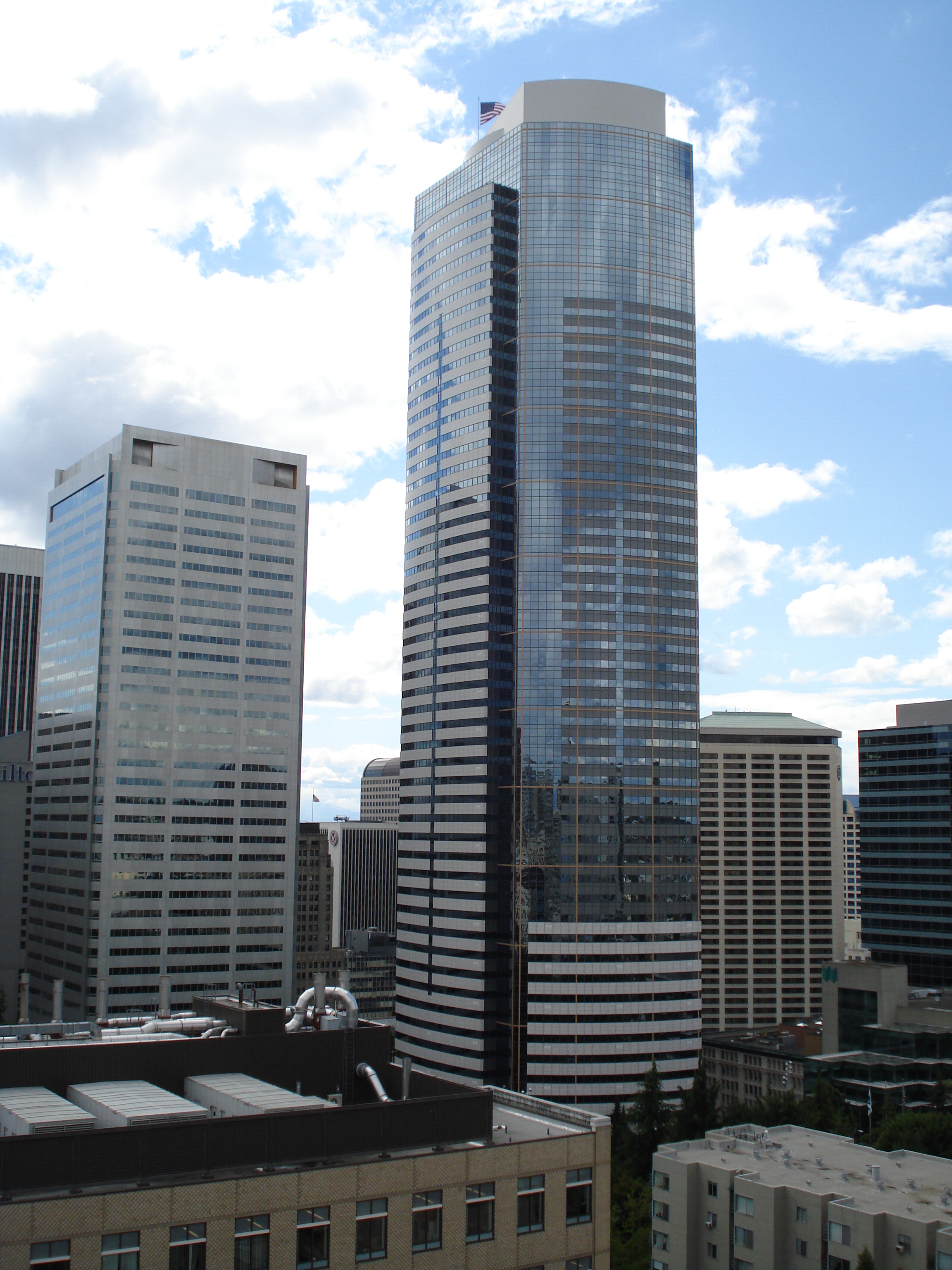
The Vancouver stumps vs. the Seattle & Calgary office towers. One_Union_Square at 456 feet (139 m) is just another stumpy building in Seattle. Yet, it would be one of the tallest office towers in Vancouver or anywhere in BC. So in  effect, when the 2nd tower was built, it was like showing a major Seattle office tower next to a Vancouver stump.

RoofOne Union Square:
456 ft (139 m)
Two Union Square:
741 ft (226 m)
Technical details
Floor countOne Union Square: 36
Two Union Square: 56

https://en.wikipedia.org/wiki/Union_Square_(Seattle)

https://upload.wikimedia.org/wikipedia/commons/9/95/Two_Union_Square_2.jpg (This complex started with a Vancouver, BC scale first tower, then because Seattle isn't under Vancouver type limitations, a second  building was able to be built as a Seattle size office tower.)

One of the tallest office towers in Calgary with its Vancouver stump sidekick. At the time of construction in the early 1980s, it was like a symbolic depiction of a big attempt of a Vancouver office building next to a Calgary size office tower. Of course Calgary like Seattle, isn't under the extremely restrictive Vancouver type building limitations.
The view From_Calgary_Tower , https://en.wikipedia.org/wiki/Suncor_Energy_Centre

When the Petro-Canada Centre opened in 1984 its Vancouver stumpy sidekick would be one of the tallest office buildings in BC & still is. 

https://upload.wikimedia.org/wikipedia/commons Sometimes I wonder how a city so close to Vancouver could permit an office tower to be 40 stories taller than the tallest office building in BC. Well of course, Seattle isn't under the small scale building limitations that Vancouver has imposed. Indeed, there is no office building in BC that has been permitted to even have a 40th floor, let alone 76 stories like in Seattle.
https://en.wikipedia.org/wiki/List_of_tallest_buildings_in_Seattle

https://upload.wikimedia.org/wikipedia/commons/3/34/Downtown_Calgary_2020-3.jpg The days of a 30 to 35 story Vancouver size office building in Calgary & Seattle being impressive are long gone.
wikipedia/commons/Vancouver_Skyline_and_Mountains The 34 or 36 story Scotia_Tower in Vancouver still remains as one of the prominent office buildings on the skyline. Yet, in most cities it would just be another background stump. Even in other scenic cities like Sydney, SF, Seattle & Auckland. Unlike those cities, Vancouver uses its scenic setting to limit the size of building & infrastructure overall. This helps with the, KEEP THEM OUT Agenda in BC, especially in Vancouver. 
wikipedia/commons/Vancouver-downtown It's very rare now for a 35 story office building to still be so prominent on the skyline in most major cities. 
wikipedia/commons/Scotia_Tower_Vancouver (Windows only go up to 34 floors with a few non window floors above that. There are also some underground floors. 138m or 452 feet. That's the Vancouver stump, now compare the Sydney office towers.)
The MLC_Center_Sydney has 60 floors, plus 8 more underground. 228m or 748 feet. Both 8 sided buildings opened in 1977, but NSW has nowhere near the building restrictions as found in BC. Yet, Sydney is just as scenic as Vancouver, if not more so. 

wikipedia/commons/Living_Shangri-La Vancouver, BC
https://en.wikipedia.org/wiki/Living_Shangri-La  200.86 metres (659 ft) tall with 62 residential floors.
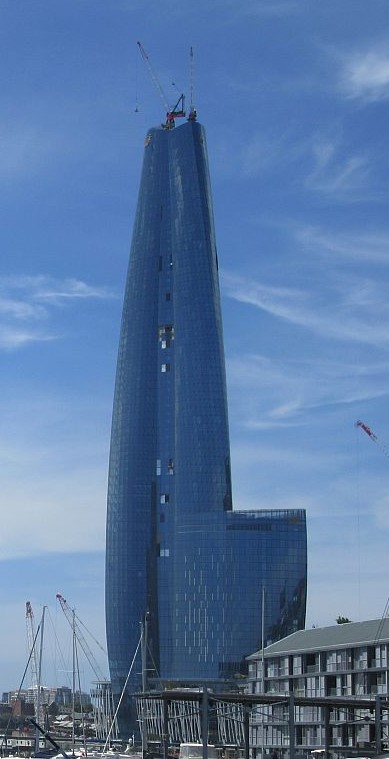
https://en.wikipedia.org/wiki/Crown_Sydney a height of 271.3 m (890 ft) with 75 floors.
One can clearly see the difference between the tallest residential tower in Sydney vs. Vancouver. Compared to Vancouver, Sydney doesn't really have much of a winter with cold crappy weather. Therefore, I would say that Sydney is just as scenic as Vancouver & much warmer, yet its isn't subjected to the Vancouver building & infrastructure limitations.

View_of_the_Sydney_Opera_House_on_city_skyline
Unlike scenic Sydney, Vancouver has used almost any excuse to have small buildings, short trains and narrow roads. All because the Vancouver interpretation of a scenic city is to keep everything small.   


It seems like there has been a multi-generational agenda to keep people out of BC. Of course one of the best ways to do that is to limit the growth of the largest cities in BC. Strict zoning and building codes that Seattle and Calgary just aren't bound by. Warm and scenic cities like Sydney, NSW and SF, Ca have never been under such limitations as Vancouver is towards urban scale. 
Any slow growth initiative is intended to reduce the influx of people moving in. Since most of the people on earth are of a nonwhite or non European heritage, the slow growth agenda seems to be a clever way to reduce the influx of non whites into Vancouver & BC. Unfortunately, most of the world is still unaware of this unofficial objective. SW BC is the most mild part of Canada and it seems that someone devised a way many decades ago to create several zoning & building restrictions to help keep people out. It's not just about limiting the scale of the buildings, but to even limit the overall infrastructure & economy. That in turn means that less people will be likely to move into BC.
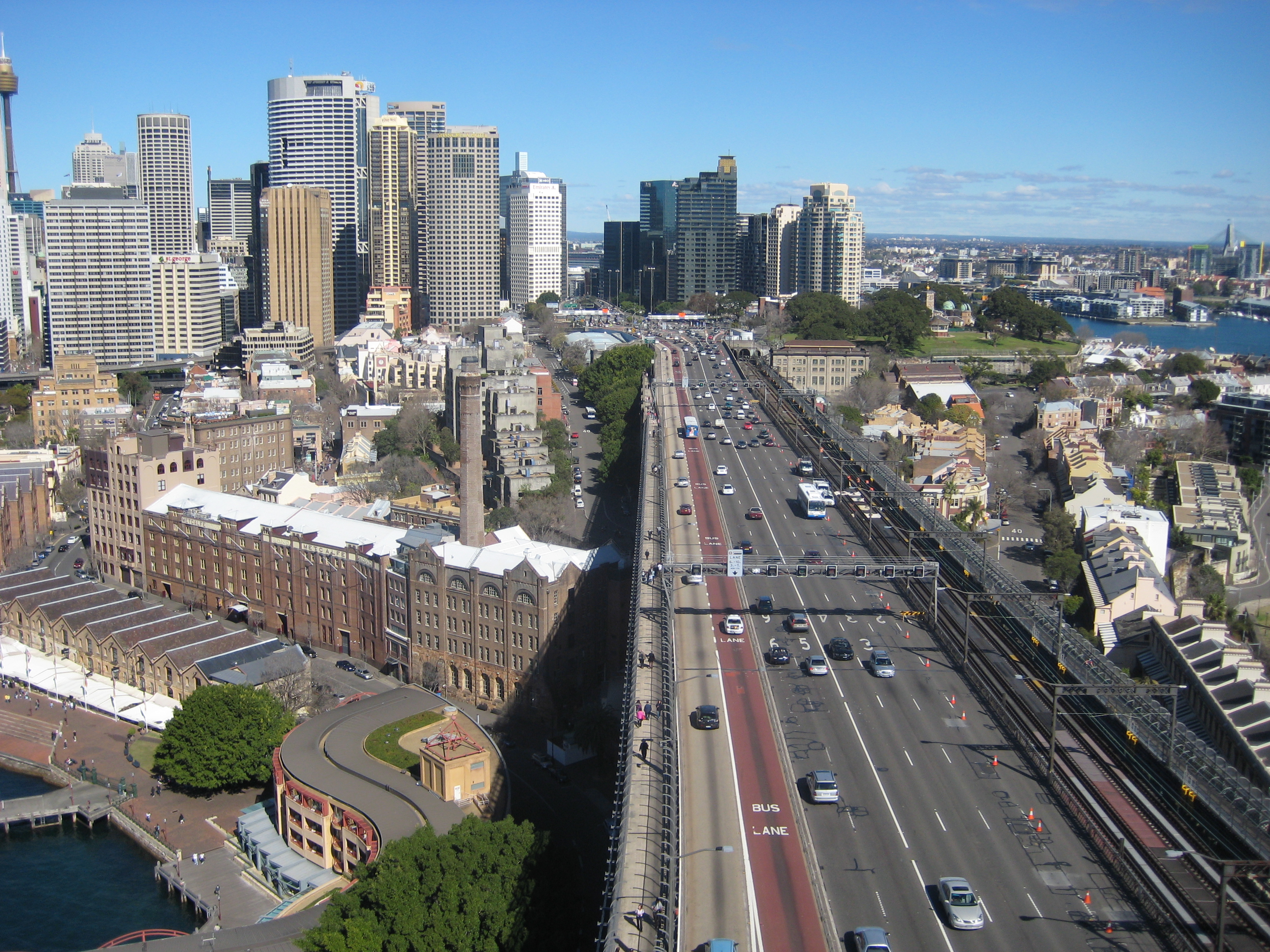
https://upload.wikimedia.org/wikipedia/commons/9/95/Cahill_expressway_from_bridge.jpg
Its just amazing, how a bridge that was started in 1923 and opened in 1932, is wide enough to accommodate 8 lanes, 2 train tracks, foot and bike pathways. In stead of building more bike and transit bridges, the Vancouver approach is to take away what little traffic lanes exist.
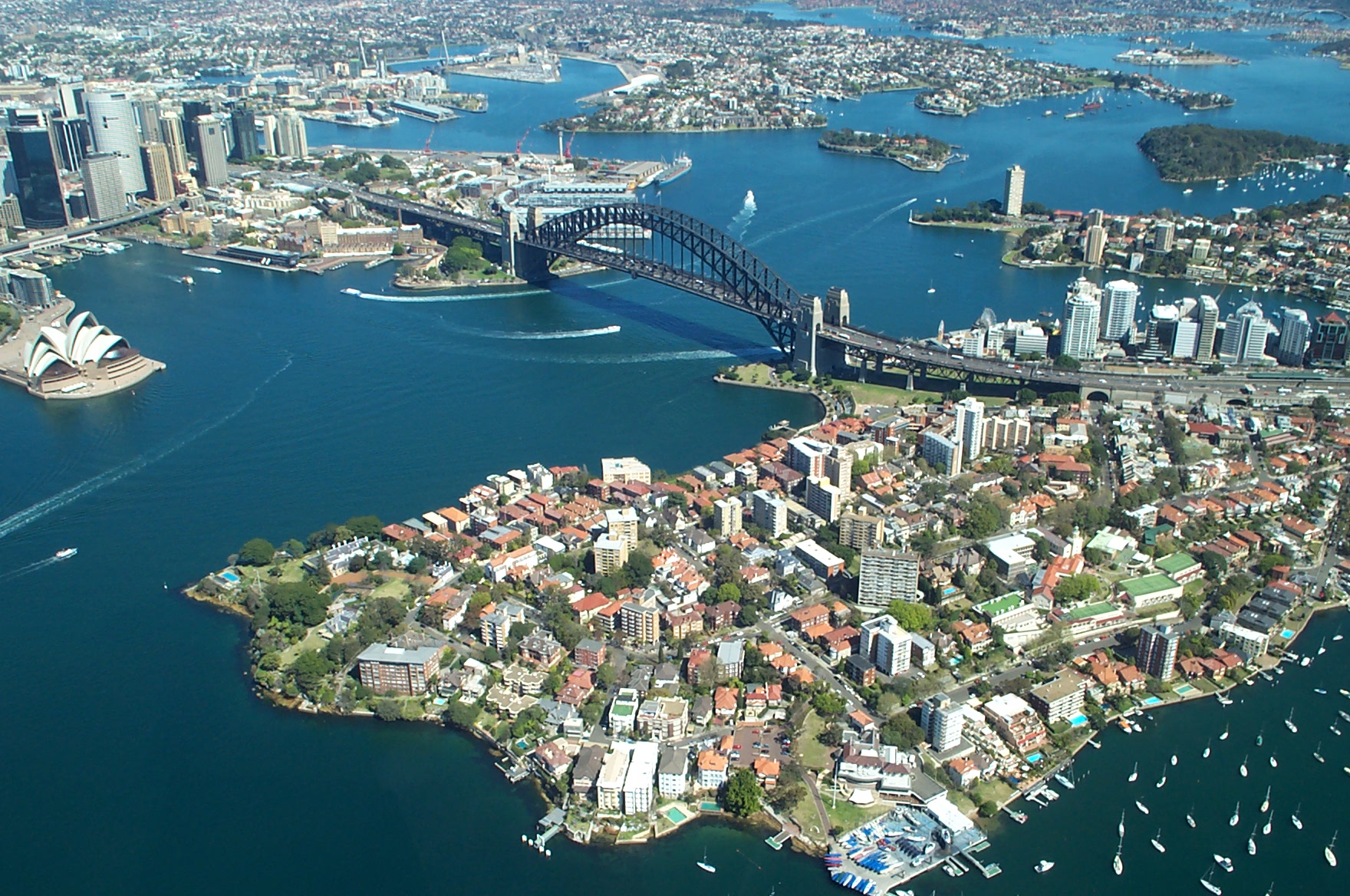
wikipedia/commons/Sydney_Harbour_Bridge_from_the_air
The Sydney_Harbour_Bridge is just as impressive now as it was when it first opened.
wikipedia/commons/Sydney The fantastic Anzac_Bridge is another 8 lane wonder. Although Vancouver was correct in stopping a few freeway plans that would have carved up the city, there still should have been a couple of wide Sydney like bridges across its inlet by now. At least a tunnel or 2.
Wikipedia Burrard_Inlet (So far, no passenger or commuter train tunnel has been built between Vancouver & North Vancouver or WV.)
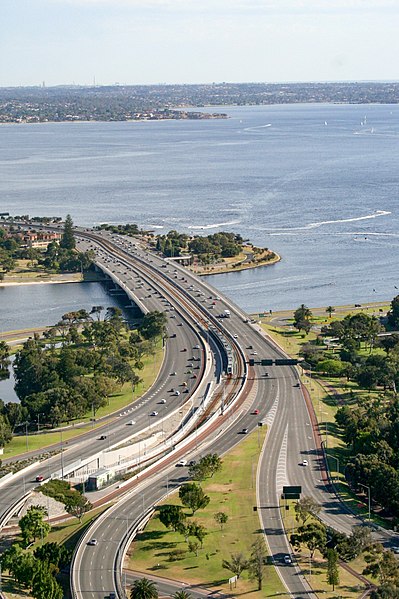
Of course no bus & HOV tunnel under the inlet has been built either. Of course as if to meet a substandard requirement, Vancouver bridges are designed to be the epitome of bottleneck planning. Unlike Sydney or Perth, the Vancouver mentality was like, "Why would anyone want to cross the water on a wide bridge?" Indeed, the inept Lions_Gate_Bridge started out with only 1 wide lane each way. Unfortunately, the Lions_Gate_Bridge could only become 3 lanes wide, with no provision for an upper deck that could allow for a train, bus or HOV level. There should have been a bus & train tunnel constructed to help the congested bridge several decades ago. 

At least the Ironworkers_Memorial_Second_Narrows_Bridge was built to have 6 lanes. However, the bridge wasn't designed to have full width emergency lanes, that could have allowed for a provision to become 4 or 5 lanes each way. Ultimately, the bridge should have been designed to have 5 lanes each way, plus a provision for 2 train tracks & bike & foot paths. 
https://upload.wikimedia.org/Narrows_Bridge (Perth isn't limited by the small city thinking that Vancouver like to impose, so big city infrastructure isn't a problem there.)

"Under the plan, there would be six lanes on each bridge, including a bus lane on each.[28] The new bridge would run parallel to the original bridge and be separated from it by a gap of 6 metres (20 ft),[28] and was designed to look largely the same as the original."
https://en.wikipedia.org/wiki/Narrows_Bridge_(Perth)#Second_road_bridge:_2001 (5 general lanes each way with 2 train tracks in the middle.)

For Sydney allowing a 4 lane highway harbor tunnel, wasn't the end of their world. Yet, for Vancouver to even seriously reconsider its old harbor tunnel plans still scares the, KEEP+THEM+OUT, power-structure that mostly consists of white people. I just don't get it. My ancestors are from Europe & anyone that studies human history will realize that white people have always been a small portion of the overall human population. So by Canada continually refusing to only contain less than 1 percent of the human population, just happens to fit right in with the, KEEP THEM OUT Agenda. 

I'm bewildered that Vancouver is considered to be one of the worlds most_livable_cities. Considering how lacking the overall infrastructure is in Greater Vancouver, it's as if everything is continually watered down, compared to what most major cities allow themselves to have.

UPDATE
Then there is the-covid-era of the 2020s that just might be the perfect excuse to further limit Vancouver, BC and even Canada. As the worlds second largest nation in land area, Canada is not even close to having 1 percent of the worlds population. Again, it just so happens that most of the earth's human population is nonwhite. So using Covid and environmental issues has become the perfect excuse to keep nonwhite people out of Canada. Of course this should be challenged, but a lot of people will continue to use Covid and the environmental restrictions to maintain the, KEEP+THEM+OUT Agenda. 

Tuesday, November 23, 2021

Nicomekl-river-bridge-and riverfront-park in Surrey, BC

 https://dailyhive.com/vancouver/nicomekl-river-bridge-riverfront-park

King_George_Boulevard should have a minimum of 6 lanes all the way through its length. That would make it a lot easier to have a couple of bus or HOV lanes. So much of BC just had a 1 lane each way wagon road mentality for so long. https://en.wikipedia.org/wiki/King_George_Boulevard#History So to even get to a point where there are 2 lanes each way frightens some people. Especially a multi-generational stubborn power-structure that doesn't want to encourage rapid growth. Since BC can't control immigration into Canada, the next best thing would be to build a wall to perpetuate the, KEEP THEM OUT agenda. Of course that would result in many challenges, so BC continually thwarts the size of its infrastructure. On a much larger scale, Canada has made sure that its nowhere near containing 1% of the worlds population. Yet in-spite of that, Toronto, Montreal, Calgary & Edmonton are all still able to build up larger infrastructure, because they don't have to contend with Vancouver & Victoria restrictions.

BC has such expertise in funneling traffic into a 3 lane crossing. Some people would just like it to remain as it is. 

https://www.google.com/maps/place/Surrey,+BC/@49.0692287,-122.8233335,184m/data=!3m1!1e3!4m5!3m4!1s0x5485dc034d3fa75b:0xd28b4898abd598e0!8m2!3d49.1913466!4d-122.8490125

https://www.google.com/maps/place/Surrey,+BC/@49.0692107,-122.820008,521m/data=!3m1!1e3!4m5!3m4!1s0x5485dc034d3fa75b:0xd28b4898abd598e0!8m2!3d49.1913466!4d-122.8490125


The quintessential 3 lane bottleneck.

https://www.google.com/maps/place/Lions+Gate+Bridge/@49.3154152,-123.1420283,2331m/data=!3m1!1e3!4m13!1m7!3m6!1s0x548673f143a94fb3:0xbb9196ea9b81f38b!2sVancouver,+BC!3b1!8m2!3d49.2827291!4d-123.1207375!3m4!1s0x548671e4314afbf5:0x3e51e1a4f59d56fa!8m2!3d49.3146651!4d-123.1392099


Of course the BC capital would have to have its own 3 lane bottleneck.

https://www.google.com/maps/place/Johnson+Street+Bridge/@48.428204,-123.3727534,249m/data=!3m1!1e3!4m13!1m7!3m6!1s0x548f738bddb06171:0x38e8f3741ebb48ed!2sVictoria,+BC!3b1!8m2!3d48.4284207!4d-123.3656444!3m4!1s0x548f749c9ec2d143:0x5a83be27f477e403!8m2!3d48.4282598!4d-123.3721465


If you are from Montreal or QC, it would be difficult to imagine something like a BC power-structure putting in a 3 lane crossing when it should at least have 6 lanes.

https://www.google.com/maps/place/Montreal,+QC/@45.4875674,-73.8697933,766m/data=!3m1!1e3!4m5!3m4!1s0x4cc91a541c64b70d:0x654e3138211fefef!8m2!3d45.5016889!4d-73.567256

Just imagine if this little 3 lane bridge was at a major crossing point in Montreal or QC.

https://www.google.com/maps/@45.4874563,-73.8679282,3a,60y,321.46h,85.09t/data=!3m6!1e1!3m4!1sbvDYhUmK9rVwp9NX8lpRhA!2e0!7i16384!8i8192

Montreal already has its share of congestion. If anyone there tried to impose BC bottleneck planning there it would be an outrage of protests.

Saturday, March 13, 2021

The miniature Vancouver agenda

 https://www.urbanyvr.com/vantage-miniature-vancouver That's just how some people would like to keep Vancouver, as a little toy city.

A multi-generational miniaturizing or thwarting process started in Vancouver several decades ago. Essentially a white power-structure wanted to create so many overlapping municipal restrictions in order to dramatically slow the growth of the city. By refusing to build up proper big city infrastructure, Vancouver continually demonstrates its reluctance to act like a big city. Vancouver is one of the smallest major cities on earth. However, the BC Lower_Mainland could contain, Greater_Montreal , the Calgary_Metropolitan_Region , the Edmonton_Metropolitan_Region and Winnipeg. So a clever way was devised to keep the region from becoming another Toronto or Montreal or even like Seattle or any other major urban region that people want to move to.

The result is having short & congested trains when many cities allow 8 to 10 car trains. Having narrow bridges & roads to increase congestion & frustration. Buildings are kept short, despite the high cost of land.

Vancouver & BC is all about keeping people out, but since a force force field can't be established around BC, something else was done. Just keep limiting or restricting the size of the overall infrastructure & hope that no one notices. That's what the predominantly white power-structure still wants. Of course if they openly revealed their agenda, there just might be a multicultural movement that would demand that Vancouver start to behave more like all the big cities in Canada. That BC allow for significant growth. Switzerland can fit into BC about 23 times. Yet, BC has yet to reach the population of one Switzerland. 

Unfortunately at this point, its become quite evident that unlike most major cities, Vancouver still refuses to build up proper big city infrastructure.

At least its interesting to see what other major cities are able to do, simply because they aren't under the planning & building restrictions of Vancouver.

https://en.wikipedia.org/wiki/Montreal#Transportation Mon. & To. flourish in part, because they aren't under any type of small Vancouver or BC building limitations.

https://en.wikipedia.org/wiki/Toronto#Transportation It would be like a Sci-Fi horror story if Vancouver was able to force Toronto & Montreal to only have 4 lane roads & short trains with only 2 - 4 rail-coaches. Fortunately, Vancouver & BC in general, were unable to change the mentality of Toronto & Montreal. Even much closer Seattle & Calgary are able to have much wider roads than what Vancouver allows.

https://en.wikipedia.org/wiki/Calgary#Infrastructure

"Construction is underway on the final two legs of the freeway in west and southwest Calgary; both legs have been divided into north and south projects. The time-sensitive northern segment of the southwest leg will be completed first, following a land transfer agreement[42] with the Tsuu T'ina First Nation that was reached in 2013. It is being built as a 6-8 lane freeway to be completed by October 1, 2021,[43] with the ability to upgrade the corridor to a 16-lane freeway with express and collector lanes." https://en.wikipedia.org/wiki/Stoney_Trail#Future (In Vancouver, its like the roads can't be any wider than what Lethbridge has.)

"In late 2020 the Government of Alberta announced they will replace the existing eastbound bridge over the Bow River on Southeast Stoney Trail, widen the westbound bridge and build a new, stand-alone pedestrian bridge. The project will boost the number of lanes to four in each direction — currently the eastbound crossing has two lanes, while the westbound has three." https://en.wikipedia.org/wiki/Stoney_Trail#Future (Calgary actually will build a pedestrian bridge so that road lanes don't have to be reduced.The Vancouver approach is to avoid building pedestrian & bike bridges, opting instead to reduce lanes of traffic. This bottleneck planning approach ensures the best way to achieve even more congestion. So far, no one from Vancouver or BC has been able to get Albertans to go back to the horse & biggie days. Or, to simply ban most vehicles & force most people to go on bikes, skateboards or roller-blades, in addition to public transit. A good transportation system means having longer trains, wider roads & more bike & foot bridges to not reduce traffic lanes.) 

https://en.wikipedia.org/wiki/Calgary_Metropolitan_Region#/media/File:Calgary_Skyline_2015.png 4 lanes each way with 2 C Train tracks in the middle. 

The closest attempt in Greater Vancouver is in Burnaby. Only because the train is elevated, there might be a potential to have 4 lanes each way. https://en.wikipedia.org/wiki/Brentwood_Town_Centre_station#/media/File:Brentwood_Skytrain_long-exposure.jpg However, like in Vancouver, its tough enough just to have 3 lanes each way. https://en.wikipedia.org/wiki/British_Columbia_Highway_7#/media/File:Lougheed_Hwy_near_Brentwood_Stn.JPG

British_Columbia_Highway_7 doesn't have to be upgraded to a freeway, but most of it should have been 8 lanes wide by now.


https://en.wikipedia.org/wiki/Edmonton#Infrastructure

"The entire freeway road was built with expansion in mind; almost all bridges were built wide enough for expansion to the ultimate stage which includes as many as six main travel lanes in one direction, depending on location." https://en.wikipedia.org/wiki/Anthony_Henday_Drive#Future (A potential of 6 lanes each way in Edmonton. In Vancouver, its tough enough to have streets that are 6 lanes wide.)

https://en.wikipedia.org/wiki/Edmonton_Transit_Service#LRT

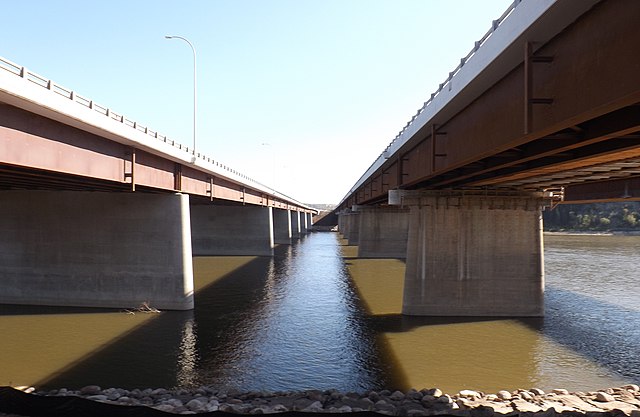
https://en.wikipedia.org/wiki/Red_Deer,_Alberta Two parallel bridges that allow for 3 lanes each way. Not a big deal for RD, but for Vancouver the power-structure doesn't even like more than 2 lanes each way.

https://upload.wikimedia.org/wikipedia/commons/thumb/8/8b/Fort_McMurray_Athabasca_River_Bridges.jpg/640px-Fort_McMurray_Athabasca_River_Bridges.jpg Many cities will have parallel bridges less than a block apart. This is a way to add capacity to the overall crossing. In Vancouver this is frowned upon. In stead of increasing capacity, the crossings are kept narrow & sometimes even a lane or 2 is removed. This really helps to increase congestion, but that's whats expected with bottleneck planning. 
https://upload.wikimedia.org/wikipedia/commons/thumb/8/86/Fort_McMurray_Athabasca_River_Bridges_2.png/640px-Fort_McMurray_Athabasca_River_Bridges_2.png Vancouver has taken measures to prevent it from ever having any bridge or overall crossing from containing 10 lanes as in Ft. McM.
https://upload.wikimedia.org/wikipedia/commons/thumb/1/11/Surrey_aerial_view.JPG/640px-Surrey_aerial_view.JPG However, Vancouver was unable to stop Surrey from having a 10 lane crossing. 
No predominantly white power-structure is able to stop the growth of Surrey. No power-structure will be able to stop Surrey from eventually becoming the largest city in BC, with some of its tallest buildings. 

Most of the worlds population is nonwhite, so any slow growth initiative is a secret clever way to maintain the, KEEP THEM OUT mentality. A true multicultural Canada can help Vancouver & Victoria become proper big cities in the mild part of Canada. Not everyone wants to endure -20C to -40C winters.

Tuesday, May 10, 2022

The Samuel De Champlain Bridge in Montreal

 https://en.wikipedia.org/wiki/Champlain_Bridge_(Montreal,_2019-present)

Being from Vancouver its hard to fathom that Montreal has this new cool 8 lane Champlain_Bridge. Then I remember that no one from Vancouver or BC was able to stop it from being built in Montreal. Of course the Vancouver mentality is to prevent any new wide bridge. In fact, to prevent any new bridges that would bring more cars and trucks into its puny city limits.

https://vancouver.skyrisecities.com/news/2017/05/sibling-bridges-second-narrows

Of course the new Champlain_Bridge would be designed to carry the REM line over the river. https://rem.info/en/work-schedule Simply because Vancouver is classified as a scenic city, its not allowed to have big city infrastructure on the scale of what Sydney, Australia, SF, Seattle & Montreal allow.

The Ironworkers_Memorial_Second_Narrows_Crossing should have been built with 4 or at least 2 wide shoulders so that by now, the bridge could have had 8 to 10 lanes. Plus a provision for 2 rapid train tracks & 2 express bus lanes on a lower level. Instead, its a congested mess of 6 lanes with no shoulders or provision for rapid transit. Unlike most cities, Vancouver really excels at congestive planing. That's why the first 2 Skytrain lines have stations only about half the length of any Montreal Metro station. The Canada line only has a maximum allowance for 50m stations, while the Montreal Metro has 152.5m stations.

https://globalnews.ca/news/8330542/pothole-ironworkers-memorial-bridge

Tuesday, May 25, 2021

lions-gate-bridge-counterflow-upgrade

 https://dailyhive.com/vancouver/lions-gate-bridge-counterflow-upgrade

No matter what they try to do, a 3 lane bridge will always be very limited.

By now a lot of other cities in this predicament would have build a tunnel or a larger bridge.

Thursday, December 09, 2021

Thursday, November 25, 2021

Climate activists to block Lions Gate Bridge Friday morning

 https://www.vancouverisawesome.com/local-news/climate-activists-to-block-lions-gate-bridge-friday-morning-4800782 Due to the cities multi-decade long refusal to build up big city infrastructure, people are left with a 3 lane bottleneck. AKA, the Lions_Gate_Bridge. Its difficult to have rapid bus & HOV lanes when there are only 3 lanes to work with. Fortunately, most cities aren't thwarted by something like the Vancouver power-structure & backward BC mindset.

Other scenic cities such as, Seattle, SF, Sydney, Auckland & Rio just don't have Vancouver type restrictions to prevent building a big wide bridge across their harbors.

https://www.vancouverisawesome.com/local-news/pipelines-blown-up-extinction-rebellion-defends-david-suzukis-controversial-comments-video-4794933

This is what happens when BC can't build a wall or electric fence around it. The, KEEP THEM OUT mentality is very strong in Vancouver & Victoria & BC in general.

https://www.vancouverisawesome.com/local-news/it-will-make-people-angry-protesters-plan-to-block-major-vancouver-intersection-during-rush-hour-4539272

Why build up proper size infrastructure when you can just cause more disruptions & congestion?

https://www.vancouverisawesome.com/local-news/protestors-plan-to-block-multiple-major-vancouver-bridges-intersections-and-highways-4500967

A lot of people don't have much of a choice but to use the inept 3 lane Lions_Gate_Bridge.

Vancouver & the North_Shore should have worked together decades ago to build their own version of something like the Downtown_Seattle_Transit_Tunnel. First for rapid buses & then LRT with a provision to become very high capacity. Fortunately, Vancouver wasn't able to stop Seattle, but Vancouver certainly continues to prevent itself from having big city infrastructure.

Another 3 lane wonder can be found in Victoriahttps://en.wikipedia.org/wiki/Johnson_Street_Bridge

BC has such expertise in bottleneck planning, but for some reason, it can't seem to get most of the world to do the same. 

Saturday, August 21, 2021

New Massey-Tunnel-to Delta with no-light-rail-option

 https://dailyhive.com/vancouver/massey-tunnel-delta-light-rail-opinion

This is backward BC planning at its best.

https://dailyhive.com/vancouver/george-massey-tunnel-immersed-business-case

Originally, it was to be a 10 lane bridge with a provision for light rail trains, but BC stopped it.

Seattle has a double level bridge, called the Ship_Canal_Bridge. It has a total of 12 lanes & V,BC wasn't able to stop it. https://en.wikipedia.org/wiki/Interstate_5_in_Washington#/media/File:Over_Lake_Union.JPG

Of course, because its in another country, BC couldn't mess it up. 

No lanes had to be removed from the bridge because of the University_Link_tunnel. It was able to provide an alternative to driving on that part of I-5. https://en.wikipedia.org/wiki/Line_1_(Sound_Transit)#Route

https://en.wikipedia.org/wiki/Line_1_(Sound_Transit)#Stations

From the UW then under downtown & onto the airport & back. https://en.wikipedia.org/wiki/Downtown_Seattle_Transit_Tunnel Unlike small thinking Vancouver, Seattle was able to have longer underground stations. https://en.wikipedia.org/wiki/Pioneer_Square_station#/media/File:Pioneer_Square_Station_center_platform_transfer_from_above.jpg

https://en.wikipedia.org/wiki/University_Street_station#/media/File:University_Street_station,_Seattle_-_02.jpg One can clearly see how much longer & higher the Seattle stations are.

The Canada_Line could have had stations that were already 3 times as long to meet future transit  demand. Apparently, Vancouver, BC & Canada saw no valid reason to plan for a big city train. 

"The five busiest stations have platforms 50 metres (160 ft) long, while the rest of the stations have 40-metre (130 ft) platforms that can be easily extended to 50 metres." https://en.wikipedia.org/wiki/Canada_Line#Stations (In contrast, Montreal made sure that all of their Metro stations were 500 feet or 152m long, right from the start. It would be absurd to only build 50m long stations in Montreal, but they aren't under Greater Vancouver & BC short sighted planing.)

https://en.wikipedia.org/wiki/Broadway%E2%80%93City_Hall_station#/media/File:Broadway-City_Hall_Station_platform_2018.jpg (A toy station that is only 50m long, when Montreal has 152m stations & even Auto-routes.)

https://en.wikipedia.org/wiki/Vancouver_City_Centre_station#/media/File:Vancouver_City_Centre_Platform_2018.jpg (Another inept 2 or 3 car station, when the Montreal Metro stations can accommodate 9 car trains.)

Saturday, May 21, 2022

Bring back the original bridge plan to replace Massey Tunnel or...?

 https://dailyhive.com/vancouver/george-massey-tunnel-replacement-bridge-kevin-falcon-bc-liberals

The tunnel would be OK if it had 4 main lanes each way. Plus 2 bus & HOV lanes each way in a 3rd section. Then a 4th section for future light & heavy rail trains.

A 10 lane bridge would be much better, especially if it had a provision for a lower deck. A lower deck would allow for additional bus & HOV lanes, along with a rail corridor to connect Delta with Richmond & Vancouver. Unfortunately, BC maintains a KEEP IT SMALL approach.