Showing posts sorted by relevance for query Seattle. Sort by date Show all posts

Tuesday, March 31, 2020

TUI

The-Urban-Intersection Point, Of Cities and Technology in general... 

(This blog is in a very roughed out format. Perhaps eventually after hundreds of posts, it will gradually start to look a little more complete.)

TUI started out as a place where I could reference & list a bunch of urban links. Then over the past several years I noticed that other cities just as scenic as Vancouver, BC were able to do a lot more things and on a much larger scale. So many other cities don't look for excuses to continually hold things back, like Vancouver does. Simply put, no other major city is subjected to the overall restrictive or scaling down process known as, Vancouverism. Unofficially, the Vancouver planning mentality seems to be about almost watering everything down, while most real cities remain un-stunted in their scale and progress.

https://en.wikipedia.org/wiki/List_of_cities_with_the_most_skyscrapers#List_of_cities_by_number_of_completed_skyscrapers_taller_than_150_m_(492_ft)

TUI isn't just about cities and urban technology, although that is the main theme. It's also about comparing several things that various BIG cities have been allowed to do. Being from Vancouver, its amazing to see what so many cities around the world can do, simply because they aren't under the extreme multi-generational zoning controls and limitations of Vancouver. Apparently, Vancouver is suppose to be a stunted city, because it is in a scenic setting. Yet, several other cities that are also in a scenic setting, have nowhere near the same level of restrictive view corridors & building size restrictions, with short trains and narrow roads that Vancouver imposes. It's amazing to see the size and extent of the urban infrastructure that is so commonplace in most major cities, yet not permitted in small-scale thinking of Vancouver and BC, in general. 

Of course the two closest major cities to Vancouver are, Seattle and Calgary. Some might say that Calgary isn't as scenic as Seattle, because it isn't by a big lake or the ocean. However, I think that Calgary is a scenic city in its own right, just as Seattle is by the ocean and lakes. Its impressive to see what both of these cities have been able to accomplish without the small city thinking mentality of Vancouver & BC to curtail them.

It's as if Seattle and Calgary as well as most cities, have a symbolic Vancouver stump next to their version of a towering office building.

The Vancouver stumps vs. the Seattle & Calgary office towers. One_Union_Square at 456 feet (139 m) is just another stumpy building in Seattle. Yet, it would be one of the tallest office towers in Vancouver or anywhere in BC. So in  effect, when the 2nd tower was built, it was like showing a major Seattle office tower next to a Vancouver stump.

RoofOne Union Square:
456 ft (139 m)
Two Union Square:
741 ft (226 m)
Technical details
Floor countOne Union Square: 36
Two Union Square: 56

https://en.wikipedia.org/wiki/Union_Square_(Seattle)

https://upload.wikimedia.org/wikipedia/commons/9/95/Two_Union_Square_2.jpg (This complex started with a Vancouver, BC scale first tower, then because Seattle isn't under Vancouver type limitations, a second  building was able to be built as a Seattle size office tower.)

One of the tallest office towers in Calgary with its Vancouver stump sidekick. At the time of construction in the early 1980s, it was like a symbolic depiction of a big attempt of a Vancouver office building next to a Calgary size office tower. Of course Calgary like Seattle, isn't under the extremely restrictive Vancouver type building limitations.
The view From_Calgary_Tower , https://en.wikipedia.org/wiki/Suncor_Energy_Centre

When the Petro-Canada Centre opened in 1984 its Vancouver stumpy sidekick would be one of the tallest office buildings in BC & still is. 

https://upload.wikimedia.org/wikipedia/commons Sometimes I wonder how a city so close to Vancouver could permit an office tower to be 40 stories taller than the tallest office building in BC. Well of course, Seattle isn't under the small scale building limitations that Vancouver has imposed. Indeed, there is no office building in BC that has been permitted to even have a 40th floor, let alone 76 stories like in Seattle.
https://en.wikipedia.org/wiki/List_of_tallest_buildings_in_Seattle

https://upload.wikimedia.org/wikipedia/commons/3/34/Downtown_Calgary_2020-3.jpg The days of a 30 to 35 story Vancouver size office building in Calgary & Seattle being impressive are long gone.
wikipedia/commons/Vancouver_Skyline_and_Mountains The 34 or 36 story Scotia_Tower in Vancouver still remains as one of the prominent office buildings on the skyline. Yet, in most cities it would just be another background stump. Even in other scenic cities like Sydney, SF, Seattle & Auckland. Unlike those cities, Vancouver uses its scenic setting to limit the size of building & infrastructure overall. This helps with the, KEEP THEM OUT Agenda in BC, especially in Vancouver. 
wikipedia/commons/Vancouver-downtown It's very rare now for a 35 story office building to still be so prominent on the skyline in most major cities. 
wikipedia/commons/Scotia_Tower_Vancouver (Windows only go up to 34 floors with a few non window floors above that. There are also some underground floors. 138m or 452 feet. That's the Vancouver stump, now compare the Sydney office towers.)
The MLC_Center_Sydney has 60 floors, plus 8 more underground. 228m or 748 feet. Both 8 sided buildings opened in 1977, but NSW has nowhere near the building restrictions as found in BC. Yet, Sydney is just as scenic as Vancouver, if not more so. 

wikipedia/commons/Living_Shangri-La Vancouver, BC
https://en.wikipedia.org/wiki/Living_Shangri-La  200.86 metres (659 ft) tall with 62 residential floors.
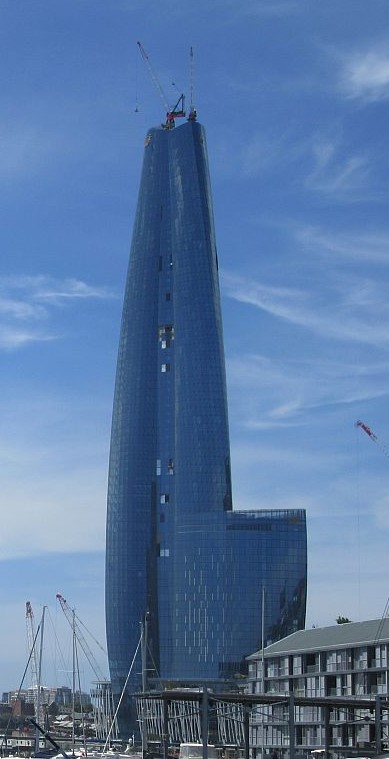
https://en.wikipedia.org/wiki/Crown_Sydney a height of 271.3 m (890 ft) with 75 floors.
One can clearly see the difference between the tallest residential tower in Sydney vs. Vancouver. Compared to Vancouver, Sydney doesn't really have much of a winter with cold crappy weather. Therefore, I would say that Sydney is just as scenic as Vancouver & much warmer, yet its isn't subjected to the Vancouver building & infrastructure limitations.

View_of_the_Sydney_Opera_House_on_city_skyline
Unlike scenic Sydney, Vancouver has used almost any excuse to have small buildings, short trains and narrow roads. All because the Vancouver interpretation of a scenic city is to keep everything small.   


It seems like there has been a multi-generational agenda to keep people out of BC. Of course one of the best ways to do that is to limit the growth of the largest cities in BC. Strict zoning and building codes that Seattle and Calgary just aren't bound by. Warm and scenic cities like Sydney, NSW and SF, Ca have never been under such limitations as Vancouver is towards urban scale. 
Any slow growth initiative is intended to reduce the influx of people moving in. Since most of the people on earth are of a nonwhite or non European heritage, the slow growth agenda seems to be a clever way to reduce the influx of non whites into Vancouver & BC. Unfortunately, most of the world is still unaware of this unofficial objective. SW BC is the most mild part of Canada and it seems that someone devised a way many decades ago to create several zoning & building restrictions to help keep people out. It's not just about limiting the scale of the buildings, but to even limit the overall infrastructure & economy. That in turn means that less people will be likely to move into BC.
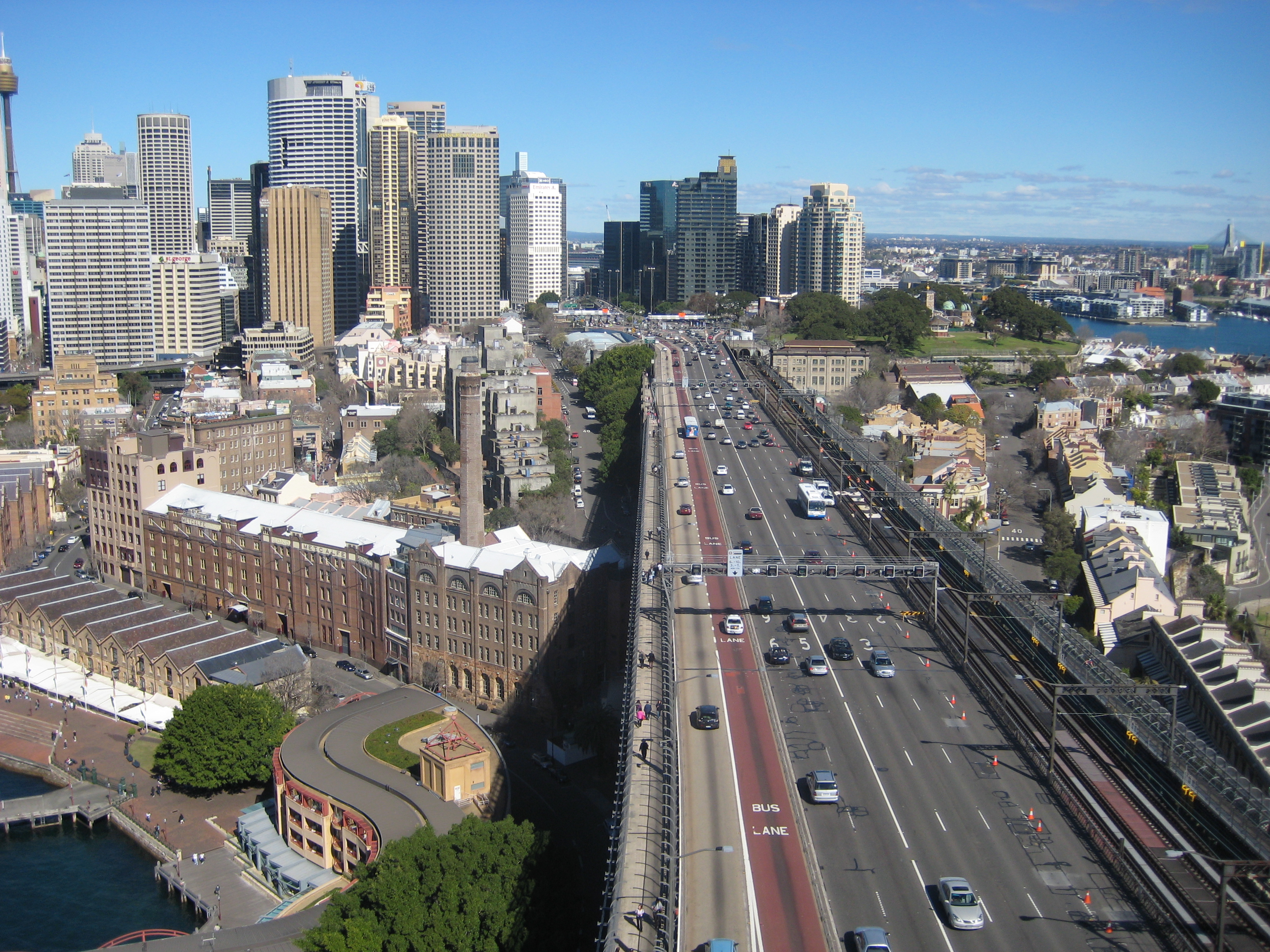
https://upload.wikimedia.org/wikipedia/commons/9/95/Cahill_expressway_from_bridge.jpg
Its just amazing, how a bridge that was started in 1923 and opened in 1932, is wide enough to accommodate 8 lanes, 2 train tracks, foot and bike pathways. In stead of building more bike and transit bridges, the Vancouver approach is to take away what little traffic lanes exist.
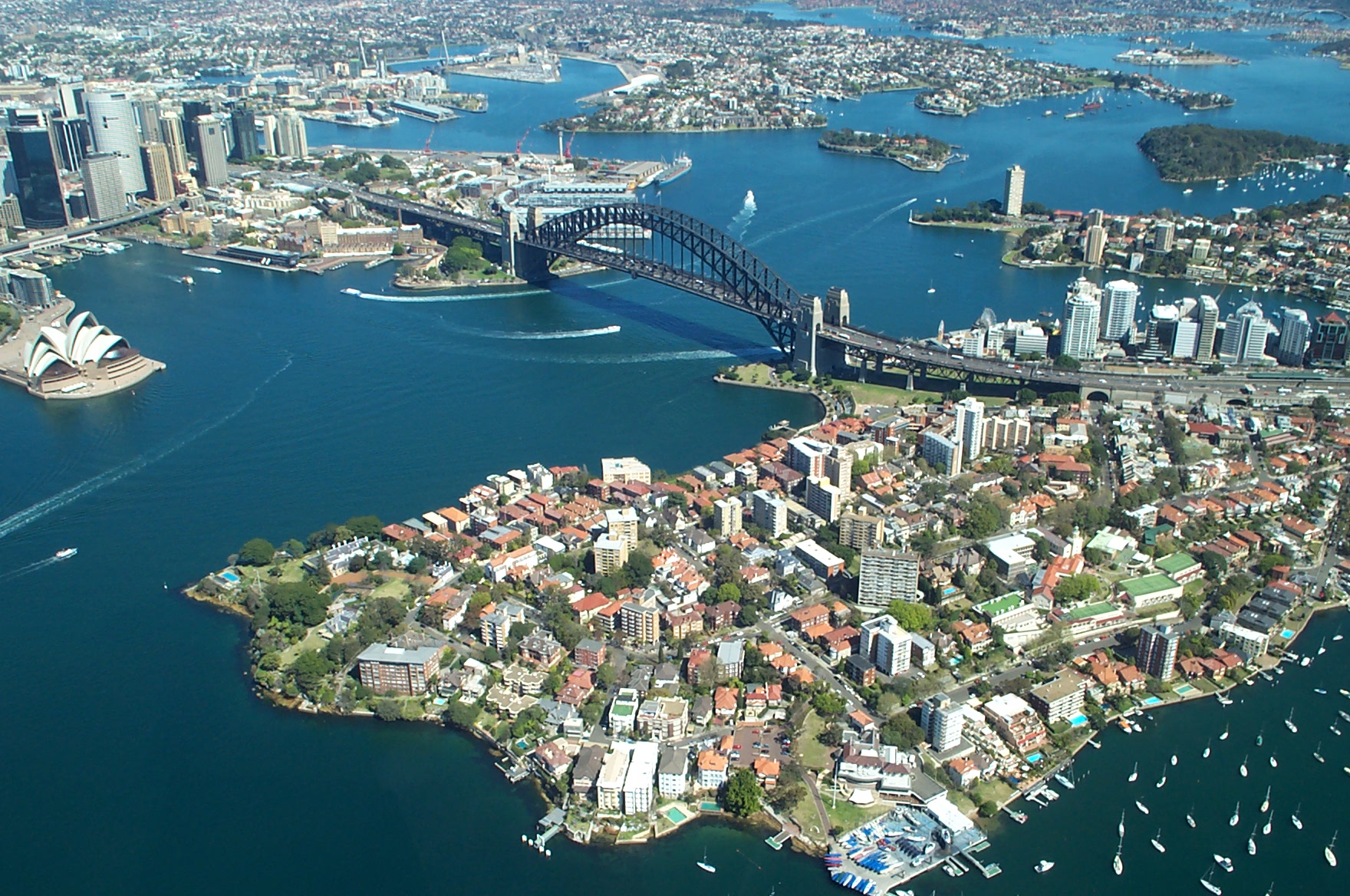
wikipedia/commons/Sydney_Harbour_Bridge_from_the_air
The Sydney_Harbour_Bridge is just as impressive now as it was when it first opened.
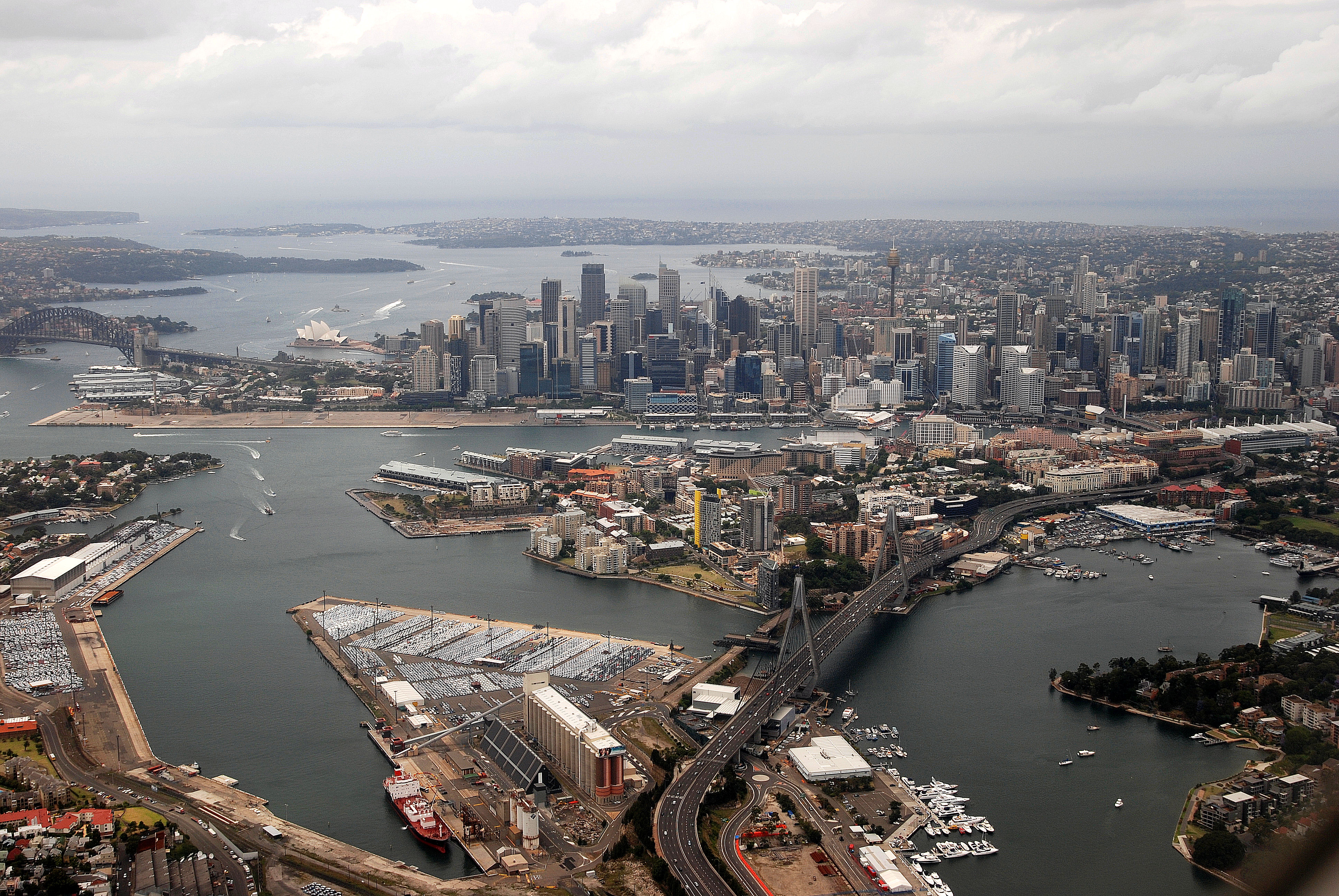
wikipedia/commons/Sydney The fantastic Anzac_Bridge is another 8 lane wonder. Although Vancouver was correct in stopping a few freeway plans that would have carved up the city, there still should have been a couple of wide Sydney like bridges across its inlet by now. At least a tunnel or 2.
Wikipedia Burrard_Inlet (So far, no passenger or commuter train tunnel has been built between Vancouver & North Vancouver or WV.)
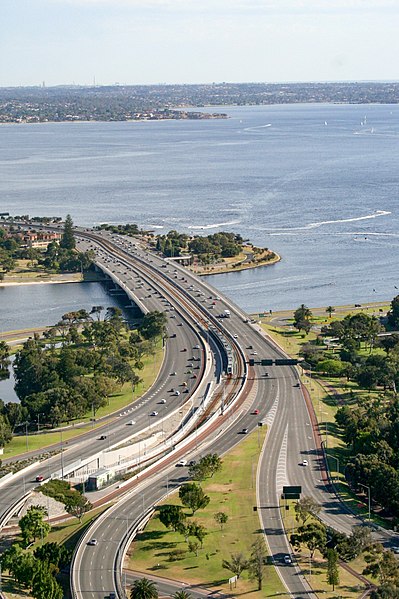
Of course no bus & HOV tunnel under the inlet has been built either. Of course as if to meet a substandard requirement, Vancouver bridges are designed to be the epitome of bottleneck planning. Unlike Sydney or Perth, the Vancouver mentality was like, "Why would anyone want to cross the water on a wide bridge?" Indeed, the inept Lions_Gate_Bridge started out with only 1 wide lane each way. Unfortunately, the Lions_Gate_Bridge could only become 3 lanes wide, with no provision for an upper deck that could allow for a train, bus or HOV level. There should have been a bus & train tunnel constructed to help the congested bridge several decades ago. 

At least the Ironworkers_Memorial_Second_Narrows_Bridge was built to have 6 lanes. However, the bridge wasn't designed to have full width emergency lanes, that could have allowed for a provision to become 4 or 5 lanes each way. Ultimately, the bridge should have been designed to have 5 lanes each way, plus a provision for 2 train tracks & bike & foot paths. 
https://upload.wikimedia.org/Narrows_Bridge (Perth isn't limited by the small city thinking that Vancouver like to impose, so big city infrastructure isn't a problem there.)

"Under the plan, there would be six lanes on each bridge, including a bus lane on each.[28] The new bridge would run parallel to the original bridge and be separated from it by a gap of 6 metres (20 ft),[28] and was designed to look largely the same as the original."
https://en.wikipedia.org/wiki/Narrows_Bridge_(Perth)#Second_road_bridge:_2001 (5 general lanes each way with 2 train tracks in the middle.)

For Sydney allowing a 4 lane highway harbor tunnel, wasn't the end of their world. Yet, for Vancouver to even seriously reconsider its old harbor tunnel plans still scares the, KEEP+THEM+OUT, power-structure that mostly consists of white people. I just don't get it. My ancestors are from Europe & anyone that studies human history will realize that white people have always been a small portion of the overall human population. So by Canada continually refusing to only contain less than 1 percent of the human population, just happens to fit right in with the, KEEP THEM OUT Agenda. 

I'm bewildered that Vancouver is considered to be one of the worlds most_livable_cities. Considering how lacking the overall infrastructure is in Greater Vancouver, it's as if everything is continually watered down, compared to what most major cities allow themselves to have.

UPDATE
Then there is the-covid-era of the 2020s that just might be the perfect excuse to further limit Vancouver, BC and even Canada. As the worlds second largest nation in land area, Canada is not even close to having 1 percent of the worlds population. Again, it just so happens that most of the earth's human population is nonwhite. So using Covid and environmental issues has become the perfect excuse to keep nonwhite people out of Canada. Of course this should be challenged, but a lot of people will continue to use Covid and the environmental restrictions to maintain the, KEEP+THEM+OUT Agenda. 
Wednesday, February 20, 2013

Seattle, Vancouver and Calgary

http://farm7.static.flickr.com/6127/5988496694_9937348af5_b.jpg
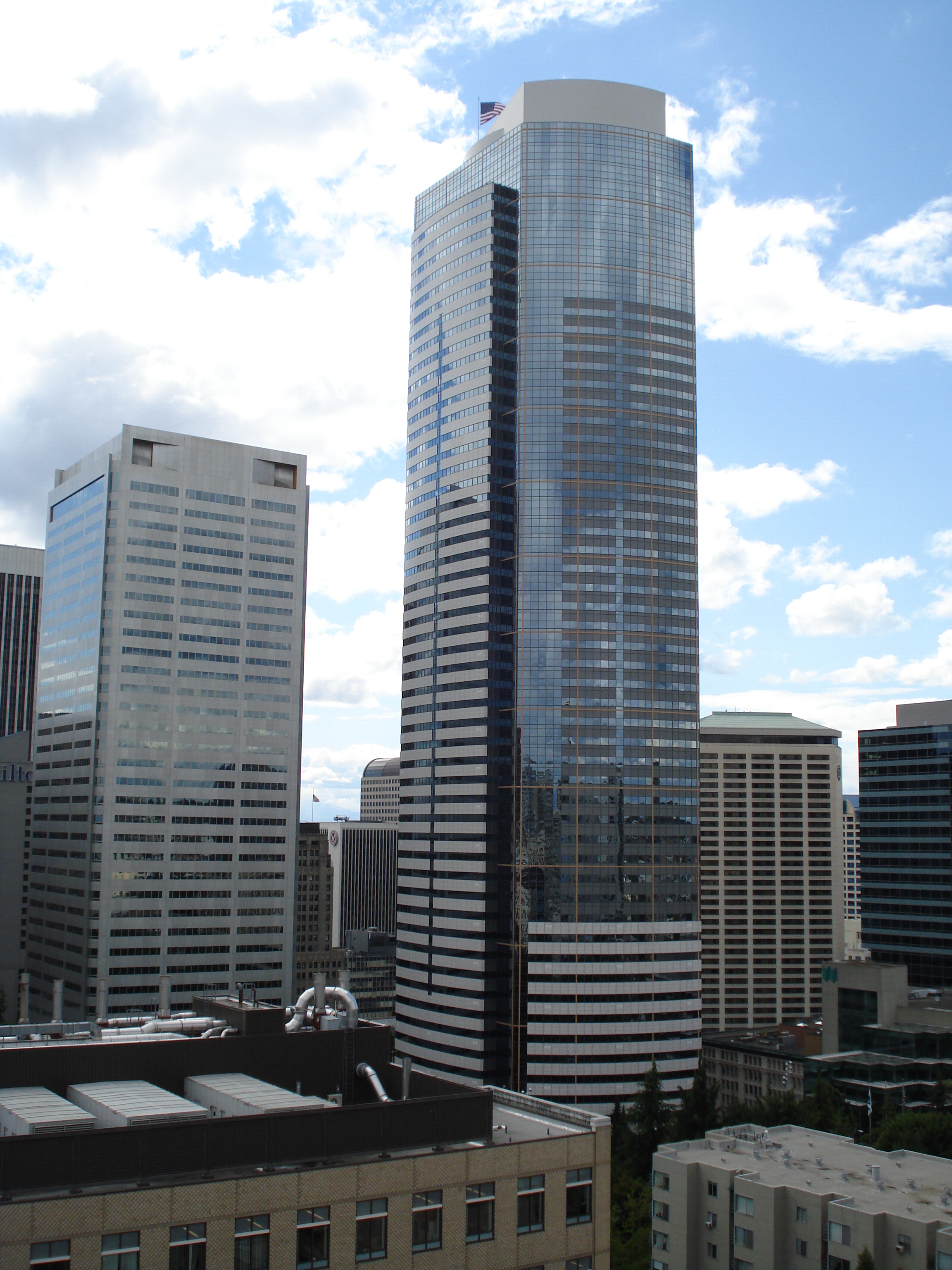
If this building was in Vancouver, it would be the tallest office tower in the city. In terms of height, it would currently be the 2nd tallest building in BC, as of 2020. Seattle hasn't used its scenic setting as an excuse to hold back the city to the extent that Vancouver, BC has.

http://www.flickr.com/photos/seattlemunicipalarchives/5988496694
The Safeco_Plaza was Seattle's first 50 story office tower to open before 1970.
http://www.pnwarchitecture.com/Building/4953/Safeco-Plaza.php
There was just too much fear of ever allowing a 50 or even a 40 story office tower in Vancouver before 1970. Just to consider the possibility of Vancouver allowing an office building to reach 30 stories was difficult. Eventually, the 30 story TD_Tower was completed in 1972 & as of 2013 no BC office building has been permitted to have a 60th, 50th or even a 40th floor.
The Columbia_Center became Seattle's first office tower to rise above 75 stories in 1985.
http://pinterest.com/pin/182818066093890434

The Seattle Smith_Tower opened in 1914 & the Royal_Centre_(Vancouver) opened in 1973. The RBC was the first office building in BC permitted to have more than 35 floors.
While the LC_Smith_Tower has almost become a stump in Seattle, it would still be among, if not the tallest of the office towers in Vancouver.
http://pinterest.com/thesmithtower/how-smith-tower-sees-itself,
http://pauldorpat.com/wp-content/uploads/2011/02/1968-CBD-FM-BH-GoweyWEB.jpg,
http://pauldorpat.com/archivepage/seattle-now-then-piners-point-and-plummers-bay

http://www.seattlepi.com/local/seattle-history/slideshow/P-I-archives-Aerial-views-of-Seattle-6694.php#photo-771850,
http://www.flickr.com/photos/bishopsgreen/2490023088/in/photostream


Monday, February 20, 2012

The Technology Intersection (TTI)

The Technology Intersection (TTI) is essentially an Urban Tech intersection. Technology is continually expanding all over the world. Is it a government-corporate push or is it just that more people that are wanting to live in cities & urban areas in general? (This blog is semi-dormant at times.)

 
TTI intersects with Science, Urban themes and technology in general. There is also a Sci-Fi, popular cultural aspect as well. Such as the urban monster_movie, Batman & Superman, TRON & the Matrix...

Technology & urban development are key aspects of cities. Some cities grow big because they are in a desirable location, but usually it's for economic reasons.

Being from Vancouver, Canada it's always amazing to see how so many cities are allowed to exist on a much larger scale than what is allowed in Vancouver & BC in general. That's because most big cities around the world aren't limited by anything like Vancouverism

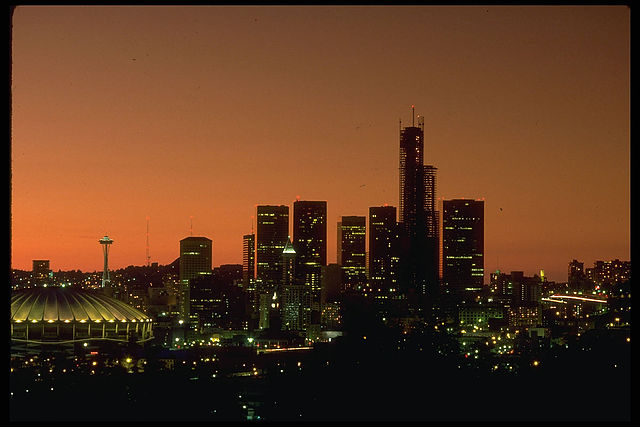
Even to see how much larger Seattle is able to be than little Vancouver, is astounding. No office tower in Vancouver has ever been permitted to have a 40th floor. Where as the tallest office tower in Seattle has 76 stories.  

The people of Seattle and especially the urban planners never had the same thwarting mentality that Vancouver seems to cultivate.
Obviously, the Greater Seattle Area was allowed to become a big high tech industry base. https://www.historylink.org/File/9190 Especially, the SF Bay Area.

Toronto is a BIG city on a lakeshore, just like Chicago is. 


Being from Vancouver, BC its amazing to see how several other cities are allowed to be built on a much larger scale, simply because they aren't under Vancouver type controls & restrictions.


Toronto Towers and Vancouver Stumps
The 72 story First_Canadian_Place and the 36 story Exchange_Tower.
The Exchange Tower is essentially a stump in Toronto, but in Vancouver it would be among the tallest office buildings.

Commerce_Court#1931_North_Tower & Commerce_Court West 1972
While CC North has become a stump in Toronto, it would be almost the tallest office buildings in Vancouver & BC, overall.


One of the main features of this blog is to point out how various cities have their tallest towers next to what would be a Vancouver size stump. How their long trains compare to the short trains of Vancouver. Being from Vancouver, its always fascinating to see how wide streets, roads and freeways can get in real cities.

Some how its like a multi-generational agenda was established so that Vancouver, Victoria and BC at large, would continually do things at a smaller scale than what is permitted in Ontario, Quebec and Alberta. 

Therefore, by continually building things at a smaller scale, it helped to thwart the economy. That means less economic reasons for people to move to BC. Several generations of extreme zoning and building restrictions have helped to condition people in BC to never expect Victoria to be as big as Seattle or Sydney, NSW. That Vancouver could never be on the scale of a Montreal, especially Toronto & the SFBA.

There has been a long running argument that because Vancouver and Victoria are in a scenic setting, the scale of things have to be held back. Yet, scenic cities such as Sydney, SF, Seattle and Auckland..., don't have the same building restrictions as what Vancouver and Victoria have.

Several cities around the world have a larger scale of urban infrastructure than what Vancouver allows. Even though Victoria has a mild winter climate, Halifax, Q. City, Winnipeg and Edmonton still all have more people. With BC having so many imposed limitations, more business and people go elsewhere. The scale of downtown Calgary and Seattle just aren't thwarted like Vancouver's downtown is.

I wish that Victoria was allowed to be on the same scale as Sydney, Australia or at least Auckland. I wish that Vancouver was allowed to be on the same scale as Montreal or Seattle or especially SF & Toronto. However, a multi-generational power-structure has been quite adept in holding Vancouver & BC back. Then there is a Canadian version of this mentality as well. In spite of Canada being the 2nd largest country in area, its never been allowed to contain 1% of the worlds population. Indeed, Canada has yet to even house half of one percent of the worlds population.


More about The+Urban+Intersection at TTI.

Saturday, April 10, 2021

Seattle northgate-link-light-rail-extension

 https://dailyhive.com/seattle/northgate-link-light-rail-extension-announcement

https://www.soundtransit.org/system-expansion/northgate-link-extension

https://en.wikipedia.org/wiki/Northgate_Link_tunnel

"The twin-bore tunnel carries Link light rail service on the University Link Extension of Central Link (now Line 1), running from the Downtown Seattle Transit Tunnel to University of Washington station via Capitol Hill station." https://en.wikipedia.org/wiki/University_Link_tunnel

"Westlake station is situated below Pine Street between 4th and 6th avenues in Downtown Seattle. The station consists of two side platforms, a mezzanine level, and entrances from the surface; all three levels are connected by a series of elevators, escalators, and stairs.[2] The 500-foot-long (150 m) mezzanine spans the length of the station, unlike other downtown tunnel stations..." https://en.wikipedia.org/wiki/Westlake_station_(Sound_Transit)#Station_layout

A 500' or 152.44m long station is the same length as a Montreal Metro station. Amazing, because Seattle never had to conform to small Vancouver train tunnel standards. 

https://upload.wikimedia.org/wikipedia/commons/thumb/5/5c/WestlakeStationPlatform.jpg/640px-WestlakeStationPlatform.jpg 

https://wikimedia.org/Capitol_Hill_Station_platform_on_opening_day_March_19_2016

"The station's underground structure is 540 feet (160 m) long, 80 feet (24 m) wide, and 75 feet (23 m) deep.[69] The station houses most of the tunnel's support systems, including power, communications, and ventilation."
A 160m long station is what is needed to handle full longer trains. In small thinking Vancouver, all the underground stations are only 80m or even just an absurd 50m. 

If only Vancouver was allowed to have nice big underground stations like Seattle and Edmonton. Of course those cities never had to conform to small Vancouver and BC (V&BC)
Even Portland, Or. was able to have big underground stations, because they didn't have small V,BC standards to adhere to. 

"University of Washington station consists of a single, 380-foot-long (120 m) island platform located 95 feet (29 m) below street level.[3][74] The station has a stated platform capacity of 1,600 people; it was designed to accommodate large crowds attending Husky Stadium events." https://en.wikipedia.org/wiki/University_of_Washington_station#Station_layout

Even a 380ft station is still longer than any underground station in V&BC. 

https://en.wikipedia.org/wiki/First_Hill_Streetcar V,BC has nothing like the First_Hill_Streetcar_401_on_Broadway. Seattle and Portland were able to revive some of their streetcar network because they aren't under V & BC limitations. V,BC will be one of the last cities on the planet to reestablish some of its streetcar lines.

Wednesday, September 29, 2021

Vancouver ranks 7th out of major North American cities returning to office

  https://dailyhive.com/vancouver/downtown-vancouver-office-workplace-return

Vancouver has tried its damnedest to limit the size and growth of office buildings downtown.

https://dailyhive.com/vancouver/metro-vancouver-office-market-september-2021

Seattle's tallest office tower is almost 80 stories and Calgary's is almost 60. Vancouver and BC have yet to  permit an office tower to even have a 40th floor.

It was as if there was an unwritten rule that Vancouver & BC must not allow any building to be taller than what Seattle_had_in_1914. Of course Seattle could build big & tall, simply because it wasn't under V,BC building height limitations. https://en.wikipedia.org/wiki/Columbia_Center#/media/File:Bank-of-america-seattle.jpg

"Smith Tower is a skyscraper in the Pioneer Square neighborhood of SeattleWashington, United States. Completed in 1914, the 38-story, 484 ft (148 m) tower is the oldest skyscraper in the city..." https://en.wikipedia.org/wiki/Smith_Tower

It would take until 1973 for an office tower in Vancouver to get close in height to what Seattle had in 1914.


Roof144.78 m (475 ft)

https://en.wikipedia.org/wiki/Royal_Centre_(Vancouver) 1973

The Harbour_Centre opened in 1977, but the office floors don't even reach 30. This could have & should have been Vancouver's first 60 or at least first 50 story office tower, but 28 is the highest office floor.

"The CTBUH however lists the buildings architectural height as actually being 147 m (482 ft).[2] Furthermore, Skyscraperpage lists the buildings height to the roof as being only 139.6 m (458 ft).[3] This is stated to be the height from the Hastings Street entrance while the height from the back entrance on Cordova Street is 146 m (479 ft). It also lists the buildings pinnacle height to the tip of the antenna as being 177.1 m (581 ft)." https://en.wikipedia.org/wiki/Harbour_Centre

The fearful little city wanted to avoid the scale of something like the 222m Hopewell_Centre_(Hong_Kong). Today in most cities, a 728 foot, 62 story building isn't even the tallest. The office tower portion goes up to 56 floors. https://www.skyscrapercenter.com/building/hopewell-centre/1325 62 or 64 floors altogether.

Not counting the antenna or flag pole, the Harbour_Centre is about 480 feet and would be equivalent to a 37 to 40 story office tower. https://www.skyscrapercenter.com/building/harbour-centre/4144 However, Vancouver refuses to allow any office building to have a 40th floor.


Height143 m (469 ft)

https://en.wikipedia.org/wiki/MNP_Tower 2014

Even a century after Seattle's tallest in 1914, Vancouver wasn't allowing office buildings to reach 500 feet & having a 40th floor. 

Sunday, November 21, 2021

Seattle Transit


Link Light Rail Northgate Simulated Service testing @ Uw Station  https://www.youtube.com/watch?v=6LvxXdKTN2s It's just amazing to see how much longer the underground stations are in Seattle & Edmonton compared to the short or stunted Vancouver stations. BC is about limiting the size of the infrastructure so that it creates more congestion. 

Seattle Opens 3 New Train Stations for Light Rail https://www.youtube.com/watch?v=1TSGotOY-gs

Seattle Link Light Rail https://www.youtube.com/watch?v=kaXjYjoZdok

Seattle Central Link Light Rail Trains Passing Othello Station https://www.youtube.com/watch?v=7vCjAsRsXzI

Seattle: America’s Next Top Transit City https://www.youtube.com/watch?v=V55zoWkcduM

Tuesday, February 21, 2012

The Tallest Buildings and Structures in Seattle vs. little Vancouver

The Columbia_Center opened in 1985 with 76 stories, 80 counting the mechanical or plant floors. Vancouver has the RBC with windows only up to the 36th floor. There are a few windowless floors above that.
The Smith_Tower opened in 1914. While this is a stump in Seattle, it would be the tallest office building in Vancouver, BC.

Monday, May 16, 2022

Seattle

Instead of Seattle having short underground train stations like Vancouver, Seattle has station lengths that rival Montreal Metro stations. Seattle has a big wide bridge with a train deep underneath it similar to what SF had done.

https://the-intersection-point.blogspot.com/search?q=Seattle

Tuesday, September 14, 2021

Vancouver's rental-housing-eviction-rate

 https://dailyhive.com/vancouver/vancouver-rental-housing-eviction-rate

If Vancouver and BC would allow developers to build taller towers, then they could also provide some affordable rental projects, it could make for a better housing situation, overall.

Instead, the V-BC power-structure still doesn't want to rival the tallest buildings in SeattleCalgary & Edmonton

823 feet in Edmonton: The Stantec_Tower is a 66-storey, 250.8 m (823 ft)[7] mixed-use skyscraper in Ice District in the city's downtown core of EdmontonAlberta, Canada. https://edmontonjournal.com/business/commercial-real-estate/stantec-tower-set-to-be-canadas-tallest-outside-toronto?r

729 feet in Calgary: Telus_Sky , (also stylized as TELUS Sky) is a 59-storey, 222.3 m (729 ft)[1] mixed-use skyscraper in downtown CalgaryAlbertaCanada

http://telussky.com/architecture , https://living.westbankcorp.com/property/telus-sky

850 feet in Seattle: The Rainier_Square_Tower is a mixed-use skyscraper in the Metropolitan Tract of downtown Seattle, Washington.[4] The 850-foot (260 m) tall, 58-story tower is located at Union Street between 4th and 5th Avenues adjacent to the existing Rainier Tower; it is the second-tallest building in Seattle.

659 or 642 feet in Vancouver: https://skyscraperpage.com/cities/?buildingID=9790 The roof is only at 642 feet. Therefore, Vancouver still has its highest residential floor significantly lower than what is permitted in Seattle, Calgary & Edmonton.

Living_Shangri-La is a mixed-use skyscraper in downtown Vancouver, British Columbia, Canada, and is the tallest building in the city and province. The 62-storey Shangri-La tower contains a 5-star hotel and its offices on the first 15 floors, with condominium apartment units occupying the rest of the tower. The high-rise stands 200.86 metres (659 ft) tall.


Saturday, May 21, 2022

1684-Alberni-street-tower in Vancouver-would just be another stump in Seattle.

 https://dailyhive.com/vancouver/1668-1684-alberni-street-vancouver-tower-westbank

Only 40 stories, when it should have been at lest 55 to 65. While some in Vancouver might think that its a big building at 385 ft (117 metres), it would be tiny in Seattle. It will be 12 feet lower than the shorter Westin Hotel Towers in Seattle. 

The shorter tower is, 121 m (397 ft).

https://upload.wikimedia.org/wikipedia/commons/thumb/6/6d/Westin_Seattle_from_Olive_8.jpg/317px-Westin_Seattle_from_Olive_8.jpg  

https://upload.wikimedia.org/wikipedia/commons/thumb/2/2e/SpaceNeedleFerry.jpg/800px-SpaceNeedleFerry.jpg The shorter Westin Hotel Tower is so small on the Seattle skyline.

Wednesday, September 15, 2021

Centre Block Surrey to include 47-storey office tower

 https://www.urbanyvr.com/centre-block-surrey This could have been the first 50 story office tower in BC, at least its a good start.

The first 50 story office tower in Seattle opened in 1969.

https://en.wikipedia.org/wiki/Safeco_Plaza_(Seattle) 192 m (630 ft)

https://en.wikipedia.org/wiki/Safeco_Plaza_(Seattle)#History


Then Calgary had its first office tower over 50 stories, it opened in 1984. 

Roof215 m (705 ft) (west), 130 m (427 ft) (east)

https://en.wikipedia.org/wiki/Suncor_Energy_Centre

https://en.wikipedia.org/wiki/Suncor_Energy_Centre#Gallery Its like they even built a Vancouver stump next to the tower. 


https://www.urbanyvr.com/b6-bentall-kennedy-office-tower-vancouver So instead of another 32 story stump, a 65 to 70 story mixed used tower could have gone there. But that's what a big city like Seattle & Calgary would do, because there is no Vancouver power-structure to thwart them.