Saturday, April 10, 2021

Seattle northgate-link-light-rail-extension

 https://dailyhive.com/seattle/northgate-link-light-rail-extension-announcement

https://www.soundtransit.org/system-expansion/northgate-link-extension

https://en.wikipedia.org/wiki/Northgate_Link_tunnel

"The twin-bore tunnel carries Link light rail service on the University Link Extension of Central Link (now Line 1), running from the Downtown Seattle Transit Tunnel to University of Washington station via Capitol Hill station." https://en.wikipedia.org/wiki/University_Link_tunnel

"Westlake station is situated below Pine Street between 4th and 6th avenues in Downtown Seattle. The station consists of two side platforms, a mezzanine level, and entrances from the surface; all three levels are connected by a series of elevators, escalators, and stairs.[2] The 500-foot-long (150 m) mezzanine spans the length of the station, unlike other downtown tunnel stations..." https://en.wikipedia.org/wiki/Westlake_station_(Sound_Transit)#Station_layout

A 500' or 152.44m long station is the same length as a Montreal Metro station. Amazing, because Seattle never had to conform to small Vancouver train tunnel standards. 

https://upload.wikimedia.org/wikipedia/commons/thumb/5/5c/WestlakeStationPlatform.jpg/640px-WestlakeStationPlatform.jpg 

https://wikimedia.org/Capitol_Hill_Station_platform_on_opening_day_March_19_2016

"The station's underground structure is 540 feet (160 m) long, 80 feet (24 m) wide, and 75 feet (23 m) deep.[69] The station houses most of the tunnel's support systems, including power, communications, and ventilation."
A 160m long station is what is needed to handle full longer trains. In small thinking Vancouver, all the underground stations are only 80m or even just an absurd 50m. 

If only Vancouver was allowed to have nice big underground stations like Seattle and Edmonton. Of course those cities never had to conform to small Vancouver and BC (V&BC)
Even Portland, Or. was able to have big underground stations, because they didn't have small V,BC standards to adhere to. 

"University of Washington station consists of a single, 380-foot-long (120 m) island platform located 95 feet (29 m) below street level.[3][74] The station has a stated platform capacity of 1,600 people; it was designed to accommodate large crowds attending Husky Stadium events." https://en.wikipedia.org/wiki/University_of_Washington_station#Station_layout

Even a 380ft station is still longer than any underground station in V&BC. 

https://en.wikipedia.org/wiki/First_Hill_Streetcar V,BC has nothing like the First_Hill_Streetcar_401_on_Broadway. Seattle and Portland were able to revive some of their streetcar network because they aren't under V & BC limitations. V,BC will be one of the last cities on the planet to reestablish some of its streetcar lines.

Saturday, March 13, 2021

The miniature Vancouver agenda

 https://www.urbanyvr.com/vantage-miniature-vancouver That's just how some people would like to keep Vancouver, as a little toy city.

A multi-generational miniaturizing or thwarting process started in Vancouver several decades ago. Essentially a white power-structure wanted to create so many overlapping municipal restrictions in order to dramatically slow the growth of the city. By refusing to build up proper big city infrastructure, Vancouver continually demonstrates its reluctance to act like a big city. Vancouver is one of the smallest major cities on earth. However, the BC Lower_Mainland could contain, Greater_Montreal , the Calgary_Metropolitan_Region , the Edmonton_Metropolitan_Region and Winnipeg. So a clever way was devised to keep the region from becoming another Toronto or Montreal or even like Seattle or any other major urban region that people want to move to.

The result is having short & congested trains when many cities allow 8 to 10 car trains. Having narrow bridges & roads to increase congestion & frustration. Buildings are kept short, despite the high cost of land.

Vancouver & BC is all about keeping people out, but since a force force field can't be established around BC, something else was done. Just keep limiting or restricting the size of the overall infrastructure & hope that no one notices. That's what the predominantly white power-structure still wants. Of course if they openly revealed their agenda, there just might be a multicultural movement that would demand that Vancouver start to behave more like all the big cities in Canada. That BC allow for significant growth. Switzerland can fit into BC about 23 times. Yet, BC has yet to reach the population of one Switzerland. 

Unfortunately at this point, its become quite evident that unlike most major cities, Vancouver still refuses to build up proper big city infrastructure.

At least its interesting to see what other major cities are able to do, simply because they aren't under the planning & building restrictions of Vancouver.

https://en.wikipedia.org/wiki/Montreal#Transportation Mon. & To. flourish in part, because they aren't under any type of small Vancouver or BC building limitations.

https://en.wikipedia.org/wiki/Toronto#Transportation It would be like a Sci-Fi horror story if Vancouver was able to force Toronto & Montreal to only have 4 lane roads & short trains with only 2 - 4 rail-coaches. Fortunately, Vancouver & BC in general, were unable to change the mentality of Toronto & Montreal. Even much closer Seattle & Calgary are able to have much wider roads than what Vancouver allows.

https://en.wikipedia.org/wiki/Calgary#Infrastructure

"Construction is underway on the final two legs of the freeway in west and southwest Calgary; both legs have been divided into north and south projects. The time-sensitive northern segment of the southwest leg will be completed first, following a land transfer agreement[42] with the Tsuu T'ina First Nation that was reached in 2013. It is being built as a 6-8 lane freeway to be completed by October 1, 2021,[43] with the ability to upgrade the corridor to a 16-lane freeway with express and collector lanes." https://en.wikipedia.org/wiki/Stoney_Trail#Future (In Vancouver, its like the roads can't be any wider than what Lethbridge has.)

"In late 2020 the Government of Alberta announced they will replace the existing eastbound bridge over the Bow River on Southeast Stoney Trail, widen the westbound bridge and build a new, stand-alone pedestrian bridge. The project will boost the number of lanes to four in each direction — currently the eastbound crossing has two lanes, while the westbound has three." https://en.wikipedia.org/wiki/Stoney_Trail#Future (Calgary actually will build a pedestrian bridge so that road lanes don't have to be reduced.The Vancouver approach is to avoid building pedestrian & bike bridges, opting instead to reduce lanes of traffic. This bottleneck planning approach ensures the best way to achieve even more congestion. So far, no one from Vancouver or BC has been able to get Albertans to go back to the horse & biggie days. Or, to simply ban most vehicles & force most people to go on bikes, skateboards or roller-blades, in addition to public transit. A good transportation system means having longer trains, wider roads & more bike & foot bridges to not reduce traffic lanes.) 

https://en.wikipedia.org/wiki/Calgary_Metropolitan_Region#/media/File:Calgary_Skyline_2015.png 4 lanes each way with 2 C Train tracks in the middle. 

The closest attempt in Greater Vancouver is in Burnaby. Only because the train is elevated, there might be a potential to have 4 lanes each way. https://en.wikipedia.org/wiki/Brentwood_Town_Centre_station#/media/File:Brentwood_Skytrain_long-exposure.jpg However, like in Vancouver, its tough enough just to have 3 lanes each way. https://en.wikipedia.org/wiki/British_Columbia_Highway_7#/media/File:Lougheed_Hwy_near_Brentwood_Stn.JPG

British_Columbia_Highway_7 doesn't have to be upgraded to a freeway, but most of it should have been 8 lanes wide by now.


https://en.wikipedia.org/wiki/Edmonton#Infrastructure

"The entire freeway road was built with expansion in mind; almost all bridges were built wide enough for expansion to the ultimate stage which includes as many as six main travel lanes in one direction, depending on location." https://en.wikipedia.org/wiki/Anthony_Henday_Drive#Future (A potential of 6 lanes each way in Edmonton. In Vancouver, its tough enough to have streets that are 6 lanes wide.)

https://en.wikipedia.org/wiki/Edmonton_Transit_Service#LRT

https://en.wikipedia.org/wiki/Red_Deer,_Alberta Two parallel bridges that allow for 3 lanes each way. Not a big deal for RD, but for Vancouver the power-structure doesn't even like more than 2 lanes each way.

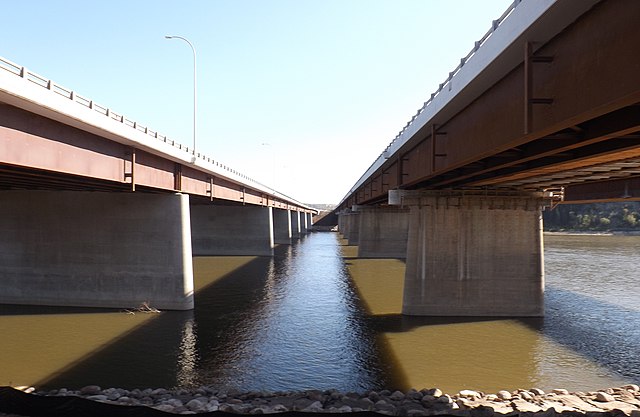
https://upload.wikimedia.org/wikipedia/commons/thumb/8/8b/Fort_McMurray_Athabasca_River_Bridges.jpg/640px-Fort_McMurray_Athabasca_River_Bridges.jpg Many cities will have parallel bridges less than a block apart. This is a way to add capacity to the overall crossing. In Vancouver this is frowned upon. In stead of increasing capacity, the crossings are kept narrow & sometimes even a lane or 2 is removed. This really helps to increase congestion, but that's whats expected with bottleneck planning. 
https://upload.wikimedia.org/wikipedia/commons/thumb/8/86/Fort_McMurray_Athabasca_River_Bridges_2.png/640px-Fort_McMurray_Athabasca_River_Bridges_2.png Vancouver has taken measures to prevent it from ever having any bridge or overall crossing from containing 10 lanes as in Ft. McM.
https://upload.wikimedia.org/wikipedia/commons/thumb/1/11/Surrey_aerial_view.JPG/640px-Surrey_aerial_view.JPG However, Vancouver was unable to stop Surrey from having a 10 lane crossing. 
No predominantly white power-structure is able to stop the growth of Surrey. No power-structure will be able to stop Surrey from eventually becoming the largest city in BC, with some of its tallest buildings. 

Most of the worlds population is nonwhite, so any slow growth initiative is a secret clever way to maintain the, KEEP THEM OUT mentality. A true multicultural Canada can help Vancouver & Victoria become proper big cities in the mild part of Canada. Not everyone wants to endure -20C to -40C winters.

Friday, January 01, 2021

The COVID pandemic era

Unfortunately, the COVID-19_pandemic has become the perfect excuse to limit nonwhite immigration into some countries. Especially Canada, which has the 2 largest land area of any nation, but has less than 40 million people. Indeed, Canada has less than half of 1% of the worlds population. So much of the world has been kept out, without Canada ever posting, KEEP THEM OUT signs. However, the end result is a series of things that still keeps Canada from ever containing 1% of the worlds population.

https://en.wikipedia.org/wiki/COVID-19_pandemic_in_Oceania#Australia

Australia was able to build up much more of its infrastructure than Canada has. Yet, Australia has millions of fewer people than Canada. Up until the covid era, Australia was already building up its infrastructure as if it had a larger population than Canada.

"Troubling new evidence about Canadian attitudes, shaped by the pandemic, suggests that even when borders finally reopen and the economic rebuilding begins, immigrants may no longer be as welcome as they have been in the past.

Outside Canada, the far right has stoked anti-immigrant rhetoric, and Canada is not immune to racism against immigrants." https://theconversation.com/covid-19-has-hardened-canadian-views-on-immigration-146512

https://en.wikipedia.org/wiki/COVID-19_pandemic_in_Canada

https://www.oecd.org/coronavirus/policy-responses/what-is-the-impact-of-the-covid-19-pandemic-on-immigrants-and-their-children-e7cbb7de

https://openknowledge.worldbank.org/handle/10986/33634

Saturday, October 03, 2020

The Riverline in Camden, NJ

"What is this thing? Is this a tram running through the city streets but on diesel? Or is this a train?

Camden, NJ is right across the river from Philadelphia. - The River Line (stylized as River LINE) is a diesel tram-train light rail system in southern New Jersey, United States, that connects the cities of Camden and Trenton, New Jersey's capital. It is operated for New Jersey Transit by the Southern New Jersey Rail Group (SNJRG), which originally included Bechtel Group and Bombardier. Now that the project is in its operational phase, Bombardier is the only member of SNJRG. The River Line is so named because the path between those two cities runs more or less parallel to the Delaware River." https://www.youtube.com/watch?v=HAZosllcM74

quebec-indigenous-death-racist-hospital-staff

 https://www.huffingtonpost.ca/entry/quebec-indigenous-death-racist-hospital-staff_ca_5f74b1d7c5b6374c55880703

vancouver-property-taxes-canada-ranking

 https://dailyhive.com/vancouver/vancouver-property-taxes-canada-ranking

Wednesday, September 30, 2020

metro vancouver translink-ridership-revenue

 https://dailyhive.com/vancouver/translink-ridership-revenue

the king-george-hub

 https://dailyhive.com/vancouver/westland-insurance-king-george-hub

601-beach-crescent-vancouver

 https://dailyhive.com/vancouver/601-beach-crescent-vancouver-rezoning-approval

55 stories, but it still should have been another 10-20 floors taller.

526-granville-street-office-tower

 https://www.urbanyvr.com/526-granville-street-office-tower/

Too short, not 40, not 30, not even 25 stories.

broadway-commercial

 https://www.urbanyvr.com/broadway-commercial-westbank/

Too small for a project next to 2 rapid transit lines.

1166-west-pender

 https://www.urbanyvr.com/1166-west-pender/

Its too short, not even 40 stories.

the vancouver-office-market

 https://dailyhive.com/vancouver/vancouver-office-market-q2-2020

Keep holding it back, as usual.

granville-bridge-connector-interim-design-approved

 https://dailyhive.com/vancouver/granville-bridge-connector-interim-design-approved

A new bike and pedestrian bridge should have been built instead.

Monday, September 28, 2020

Tuesday, March 31, 2020

TUI

The-Urban-Intersection Point, Of Cities and Technology in general... 

(This blog is in a very roughed out format. Perhaps eventually after hundreds of posts, it will gradually start to look a little more complete.)

TUI started out as a place where I could reference & list a bunch of urban links. Then over the past several years I noticed that other cities just as scenic as Vancouver, BC were able to do a lot more things and on a much larger scale. So many other cities don't look for excuses to continually hold things back, like Vancouver does. Simply put, no other major city is subjected to the overall restrictive or scaling down process known as, Vancouverism. Unofficially, the Vancouver planning mentality seems to be about almost watering everything down, while most real cities remain un-stunted in their scale and progress.

https://en.wikipedia.org/wiki/List_of_cities_with_the_most_skyscrapers#List_of_cities_by_number_of_completed_skyscrapers_taller_than_150_m_(492_ft)

TUI isn't just about cities and urban technology, although that is the main theme. It's also about comparing several things that various BIG cities have been allowed to do. Being from Vancouver, its amazing to see what so many cities around the world can do, simply because they aren't under the extreme multi-generational zoning controls and limitations of Vancouver. Apparently, Vancouver is suppose to be a stunted city, because it is in a scenic setting. Yet, several other cities that are also in a scenic setting, have nowhere near the same level of restrictive view corridors & building size restrictions, with short trains and narrow roads that Vancouver imposes. It's amazing to see the size and extent of the urban infrastructure that is so commonplace in most major cities, yet not permitted in small-scale thinking of Vancouver and BC, in general. 

Of course the two closest major cities to Vancouver are, Seattle and Calgary. Some might say that Calgary isn't as scenic as Seattle, because it isn't by a big lake or the ocean. However, I think that Calgary is a scenic city in its own right, just as Seattle is by the ocean and lakes. Its impressive to see what both of these cities have been able to accomplish without the small city thinking mentality of Vancouver & BC to curtail them.

It's as if Seattle and Calgary as well as most cities, have a symbolic Vancouver stump next to their version of a towering office building.

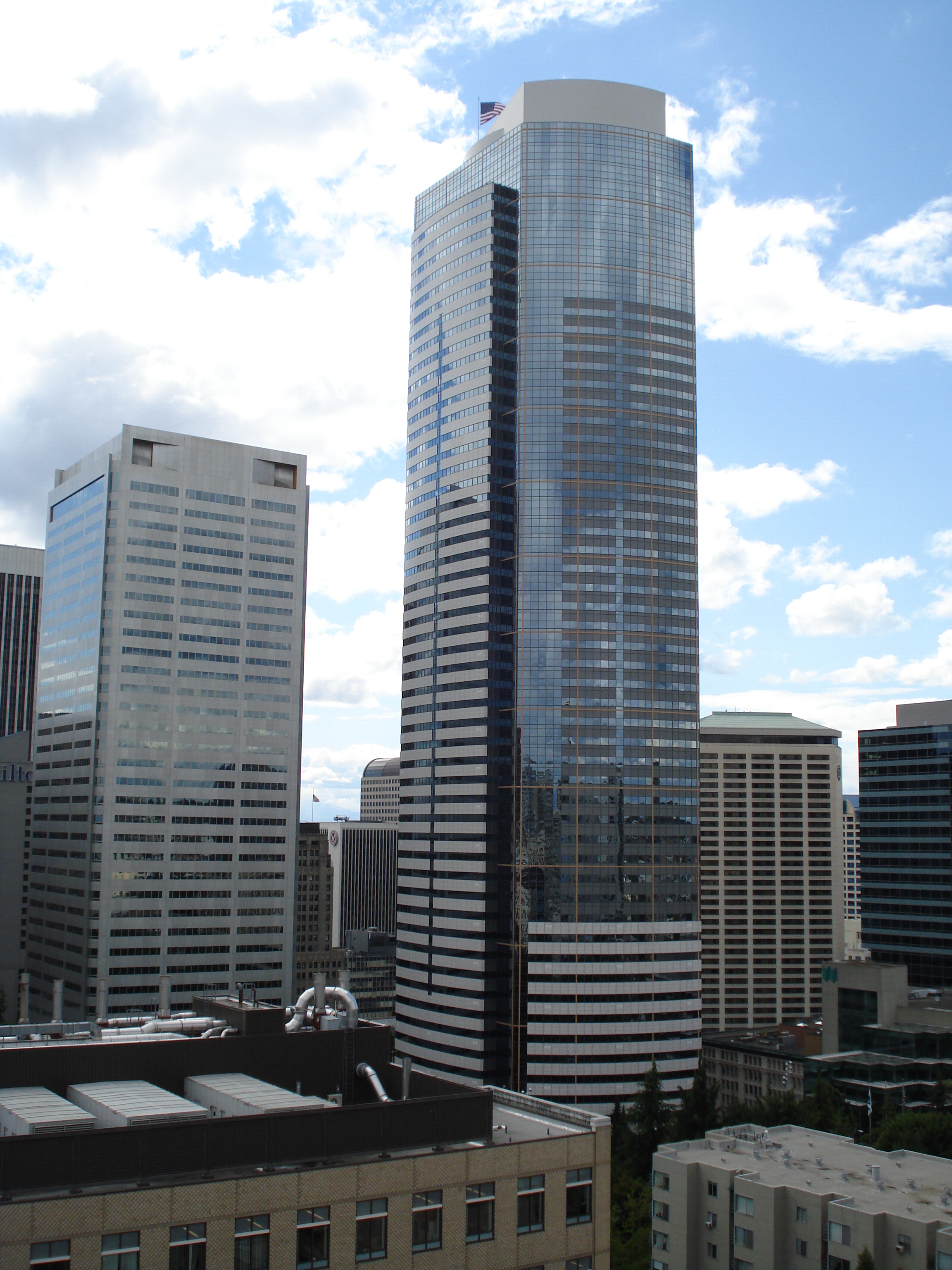
The Vancouver stumps vs. the Seattle & Calgary office towers. One_Union_Square at 456 feet (139 m) is just another stumpy building in Seattle. Yet, it would be one of the tallest office towers in Vancouver or anywhere in BC. So in  effect, when the 2nd tower was built, it was like showing a major Seattle office tower next to a Vancouver stump.

RoofOne Union Square:
456 ft (139 m)
Two Union Square:
741 ft (226 m)
Technical details
Floor countOne Union Square: 36
Two Union Square: 56

https://en.wikipedia.org/wiki/Union_Square_(Seattle)

https://upload.wikimedia.org/wikipedia/commons/9/95/Two_Union_Square_2.jpg (This complex started with a Vancouver, BC scale first tower, then because Seattle isn't under Vancouver type limitations, a second  building was able to be built as a Seattle size office tower.)

One of the tallest office towers in Calgary with its Vancouver stump sidekick. At the time of construction in the early 1980s, it was like a symbolic depiction of a big attempt of a Vancouver office building next to a Calgary size office tower. Of course Calgary like Seattle, isn't under the extremely restrictive Vancouver type building limitations.
The view From_Calgary_Tower , https://en.wikipedia.org/wiki/Suncor_Energy_Centre

When the Petro-Canada Centre opened in 1984 its Vancouver stumpy sidekick would be one of the tallest office buildings in BC & still is. 

https://upload.wikimedia.org/wikipedia/commons Sometimes I wonder how a city so close to Vancouver could permit an office tower to be 40 stories taller than the tallest office building in BC. Well of course, Seattle isn't under the small scale building limitations that Vancouver has imposed. Indeed, there is no office building in BC that has been permitted to even have a 40th floor, let alone 76 stories like in Seattle.
https://en.wikipedia.org/wiki/List_of_tallest_buildings_in_Seattle

https://upload.wikimedia.org/wikipedia/commons/3/34/Downtown_Calgary_2020-3.jpg The days of a 30 to 35 story Vancouver size office building in Calgary & Seattle being impressive are long gone.
wikipedia/commons/Vancouver_Skyline_and_Mountains The 34 or 36 story Scotia_Tower in Vancouver still remains as one of the prominent office buildings on the skyline. Yet, in most cities it would just be another background stump. Even in other scenic cities like Sydney, SF, Seattle & Auckland. Unlike those cities, Vancouver uses its scenic setting to limit the size of building & infrastructure overall. This helps with the, KEEP THEM OUT Agenda in BC, especially in Vancouver. 
wikipedia/commons/Vancouver-downtown It's very rare now for a 35 story office building to still be so prominent on the skyline in most major cities. 
wikipedia/commons/Scotia_Tower_Vancouver (Windows only go up to 34 floors with a few non window floors above that. There are also some underground floors. 138m or 452 feet. That's the Vancouver stump, now compare the Sydney office towers.)
The MLC_Center_Sydney has 60 floors, plus 8 more underground. 228m or 748 feet. Both 8 sided buildings opened in 1977, but NSW has nowhere near the building restrictions as found in BC. Yet, Sydney is just as scenic as Vancouver, if not more so. 

wikipedia/commons/Living_Shangri-La Vancouver, BC
https://en.wikipedia.org/wiki/Living_Shangri-La  200.86 metres (659 ft) tall with 62 residential floors.
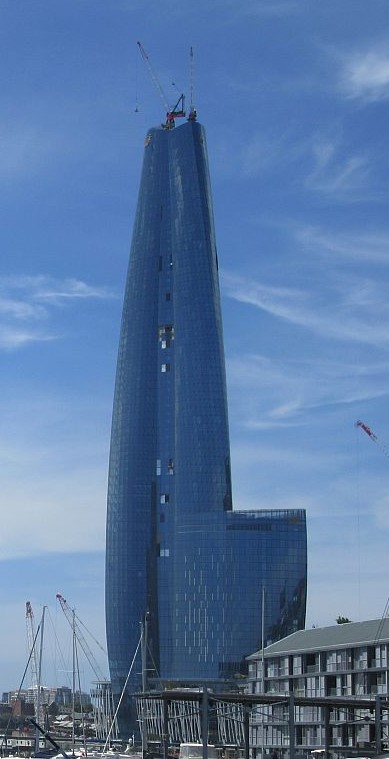
https://en.wikipedia.org/wiki/Crown_Sydney a height of 271.3 m (890 ft) with 75 floors.
One can clearly see the difference between the tallest residential tower in Sydney vs. Vancouver. Compared to Vancouver, Sydney doesn't really have much of a winter with cold crappy weather. Therefore, I would say that Sydney is just as scenic as Vancouver & much warmer, yet its isn't subjected to the Vancouver building & infrastructure limitations.

View_of_the_Sydney_Opera_House_on_city_skyline
Unlike scenic Sydney, Vancouver has used almost any excuse to have small buildings, short trains and narrow roads. All because the Vancouver interpretation of a scenic city is to keep everything small.   


It seems like there has been a multi-generational agenda to keep people out of BC. Of course one of the best ways to do that is to limit the growth of the largest cities in BC. Strict zoning and building codes that Seattle and Calgary just aren't bound by. Warm and scenic cities like Sydney, NSW and SF, Ca have never been under such limitations as Vancouver is towards urban scale. 
Any slow growth initiative is intended to reduce the influx of people moving in. Since most of the people on earth are of a nonwhite or non European heritage, the slow growth agenda seems to be a clever way to reduce the influx of non whites into Vancouver & BC. Unfortunately, most of the world is still unaware of this unofficial objective. SW BC is the most mild part of Canada and it seems that someone devised a way many decades ago to create several zoning & building restrictions to help keep people out. It's not just about limiting the scale of the buildings, but to even limit the overall infrastructure & economy. That in turn means that less people will be likely to move into BC.
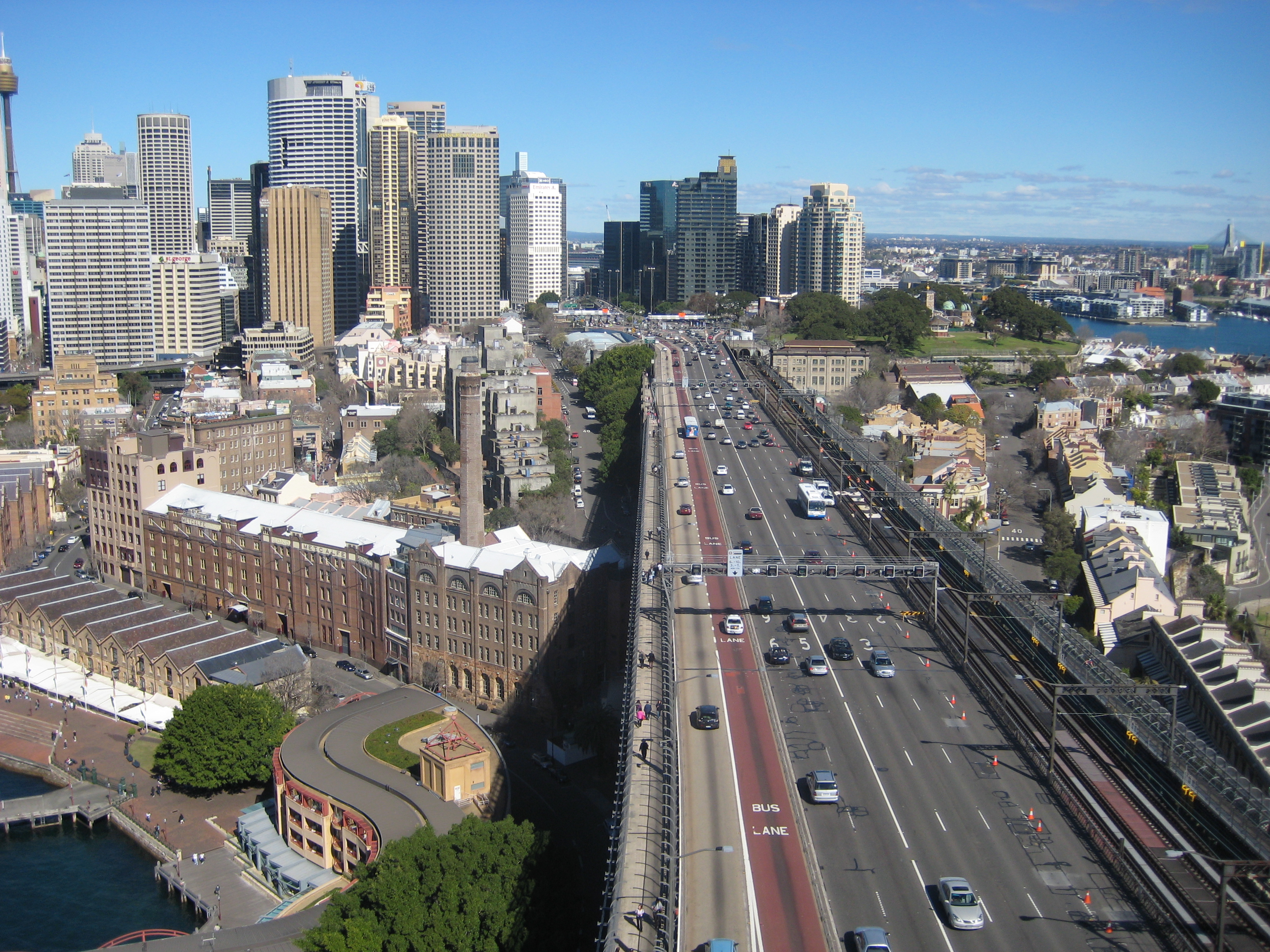
https://upload.wikimedia.org/wikipedia/commons/9/95/Cahill_expressway_from_bridge.jpg
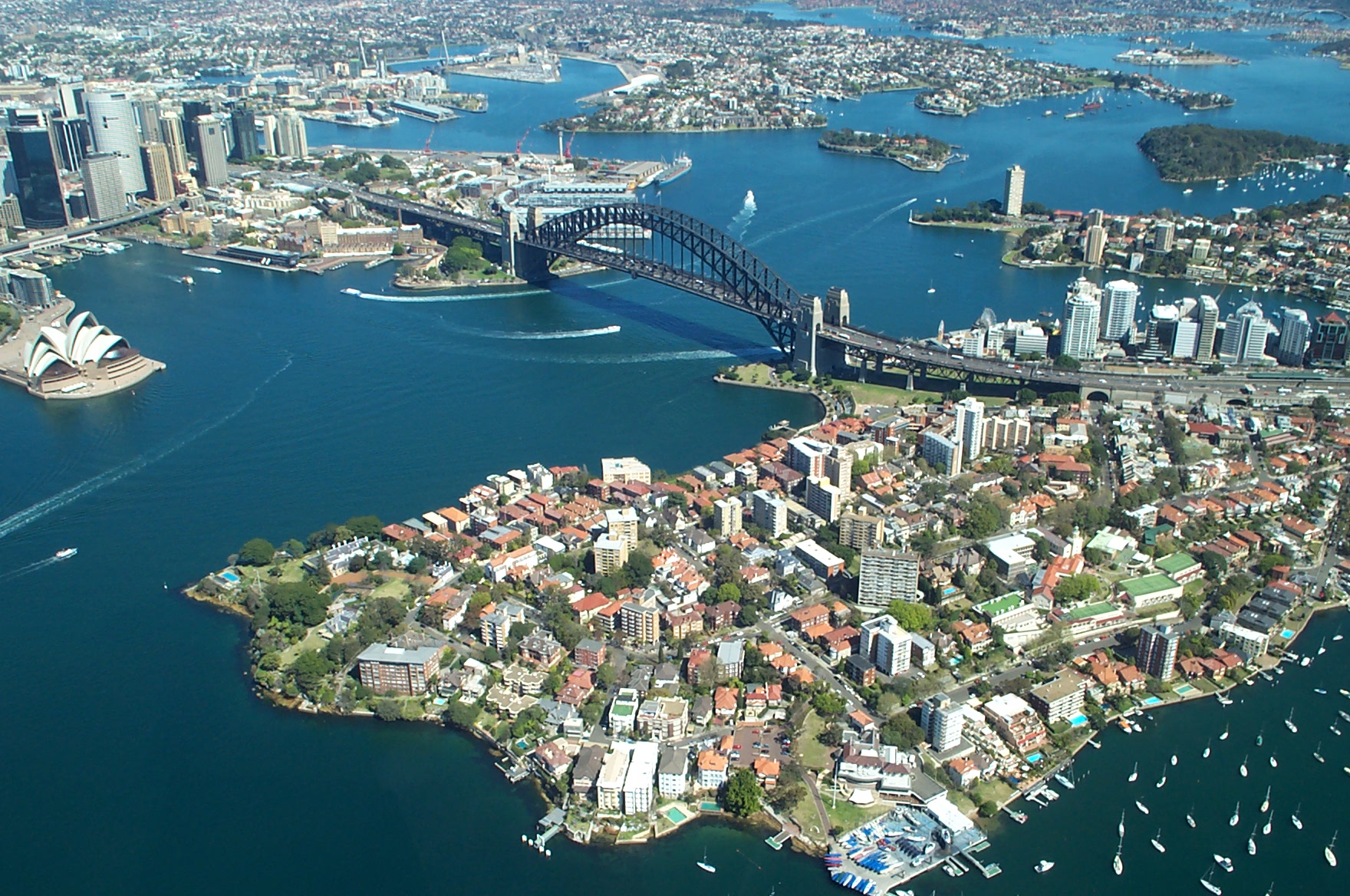
Its just amazing, how a bridge that was started in 1923 and opened in 1932, is wide enough to accommodate 8 lanes, 2 train tracks, foot and bike pathways. In stead of building more bike and transit bridges, the Vancouver approach is to take away what little traffic lanes exist.
wikipedia/commons/Sydney_Harbour_Bridge_from_the_air
The Sydney_Harbour_Bridge is just as impressive now as it was when it first opened.
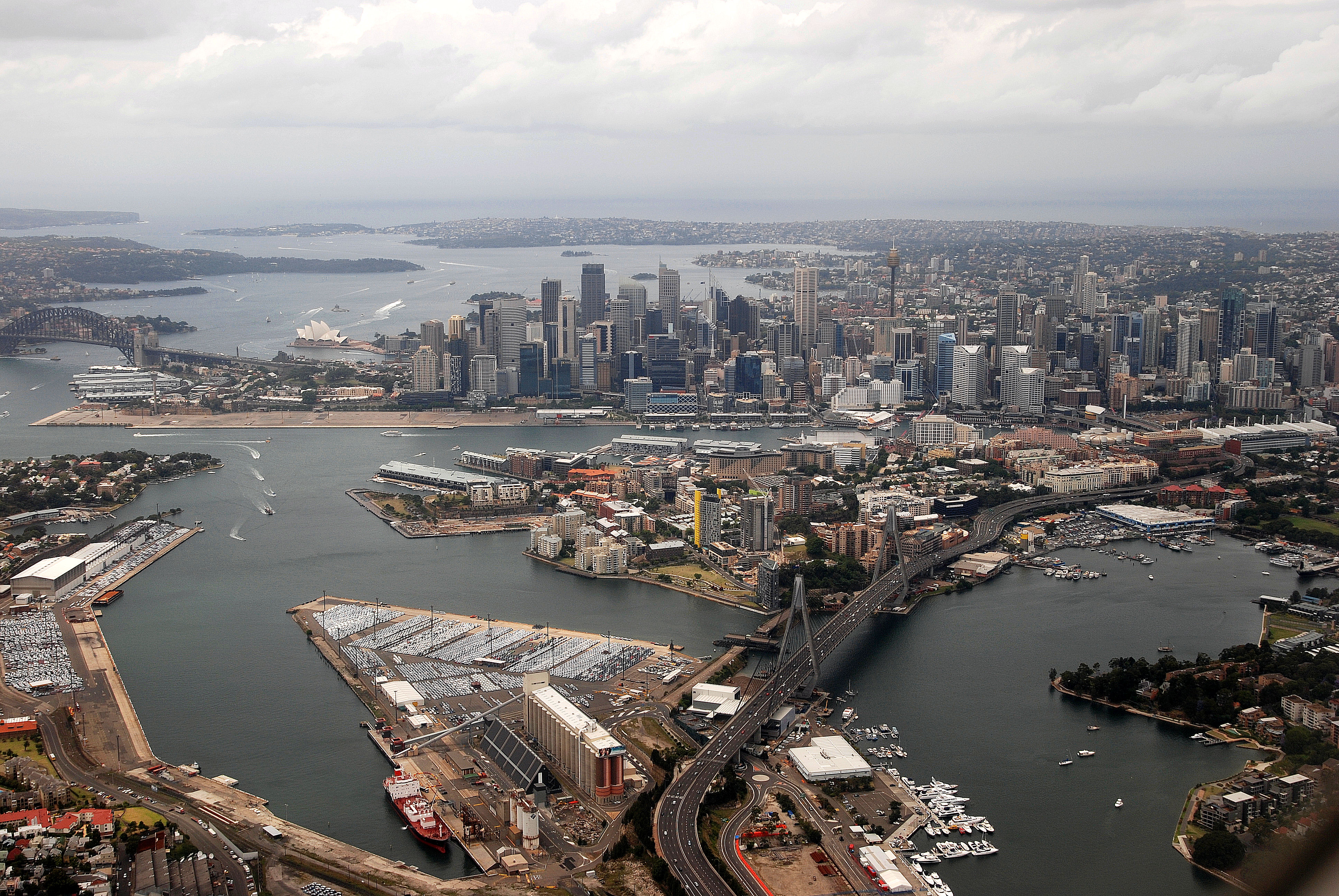
wikipedia/commons/Sydney The fantastic Anzac_Bridge is another 8 lane wonder. Although Vancouver was correct in stopping a few freeway plans that would have carved up the city, there still should have been a couple of wide Sydney like bridges across its inlet by now. At least a tunnel or 2.
Wikipedia Burrard_Inlet (So far, no passenger or commuter train tunnel has been built between Vancouver & North Vancouver or WV.)
Of course no bus & HOV tunnel under the inlet has been built either. Of course as if to meet a substandard requirement, Vancouver bridges are designed to be the epitome of bottleneck planning. Unlike Sydney or Perth, the Vancouver mentality was like, "Why would anyone want to cross the water on a wide bridge?" Indeed, the inept Lions_Gate_Bridge started out with only 1 wide lane each way. Unfortunately, the Lions_Gate_Bridge could only become 3 lanes wide, with no provision for an upper deck that could allow for a train, bus or HOV level. There should have been a bus & train tunnel constructed to help the congested bridge several decades ago. 

At least the Ironworkers_Memorial_Second_Narrows_Bridge was built to have 6 lanes. However, the bridge wasn't designed to have full width emergency lanes, that could have allowed for a provision to become 4 or 5 lanes each way. Ultimately, the bridge should have been designed to have 5 lanes each way, plus a provision for 2 train tracks & bike & foot paths. 
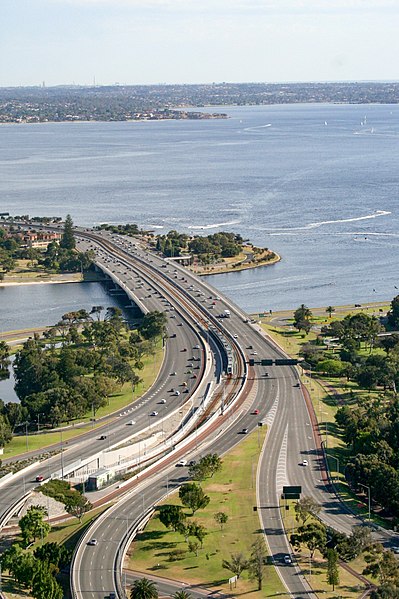
https://upload.wikimedia.org/Narrows_Bridge (Perth isn't limited by the small city thinking that Vancouver like to impose, so big city infrastructure isn't a problem there.)

"Under the plan, there would be six lanes on each bridge, including a bus lane on each.[28] The new bridge would run parallel to the original bridge and be separated from it by a gap of 6 metres (20 ft),[28] and was designed to look largely the same as the original."
https://en.wikipedia.org/wiki/Narrows_Bridge_(Perth)#Second_road_bridge:_2001 (5 general lanes each way with 2 train tracks in the middle.)

For Sydney allowing a 4 lane highway harbor tunnel, wasn't the end of their world. Yet, for Vancouver to even seriously reconsider its old harbor tunnel plans still scares the, KEEP+THEM+OUT, power-structure that mostly consists of white people. I just don't get it. My ancestors are from Europe & anyone that studies human history will realize that white people have always been a small portion of the overall human population. So by Canada continually refusing to only contain less than 1 percent of the human population, just happens to fit right in with the, KEEP THEM OUT Agenda. 

I'm bewildered that Vancouver is considered to be one of the worlds most_livable_cities. Considering how lacking the overall infrastructure is in Greater Vancouver, it's as if everything is continually watered down, compared to what most major cities allow themselves to have.

UPDATE
Then there is the-covid-era of the 2020s that just might be the perfect excuse to further limit Vancouver, BC and even Canada. As the worlds second largest nation in land area, Canada is not even close to having 1 percent of the worlds population. Again, it just so happens that most of the earth's human population is nonwhite. So using Covid and environmental issues has become the perfect excuse to keep nonwhite people out of Canada. Of course this should be challenged, but a lot of people will continue to use Covid and the environmental restrictions to maintain the, KEEP+THEM+OUT Agenda. 

Wednesday, August 07, 2019

alex-fraser-bridge-lane-closures

https://dailyhive.com/vancouver/alex-fraser-bridge-lane-closures-august-2019

yvr-looking-changing-flight-paths-minimize-noise-over-delta

https://biv.com/article/2019/04/yvr-looking-changing-flight-paths-minimize-noise-over-delta

canadas-east-coast-container-traffic-grows-lags-behind-us

https://biv.com/article/2019/04/canadas-east-coast-container-traffic-grows-lags-behind-us


https://biv.com/article/2019/04/congestion-china-trade-spark-cargo-movement-concerns

the-arc-concord-pacific-plaza

https://urbanyvr.com/the-arc-concord-pacific-plaza

https://urbanyvr.com/condos

https://urbanyvr.com/office

prince-rupert-add-second-container-terminal-quadruple-teu-handling

https://biv.com/article/2019/05/prince-rupert-add-second-container-terminal-quadruple-teu-handling-0


https://biv.com/article/2019/04/prince-rupert-container-growth-highest-west-coast

what-will-it-cost-to cure-regions-road-congestion

https://biv.com/article/2019/06/what-will-it-cost-cure-regions-road-congestion

vanport-authority-gct-square-off over-terminal-priorities

https://biv.com/article/2019/06/port-authority-gct-square-over-terminal-priorities


https://biv.com/article/2019/05/roberts-bank-terminal-2-hearings-broach-topics-fuel-spills-other-ecological-impacts


https://biv.com/article/2019/05/terminal-2-opponents-want-review-panel-widen-scope-projects-environmental


https://biv.com/article/2019/04/gateway-magazine-terminal-capacity-crunch


https://biv.com/article/2019/04/gateway-magazine-greener-gateways

translink-targets-massey-tunnel-improved-transit-service

https://biv.com/article/2019/08/translink-targets-massey-tunnel-improved-transit-service


https://biv.com/article/2019/07/delta-residents-should-move-seattle-have-better-commute-vancouver-mla

british-columbians-feel-more-kinship with-seattleites than-torontonians

https://biv.com/article/2019/08/british-columbians-feel-more-kinship-seattleites-torontonians

capstan-station-canada-line

https://dailyhive.com/vancouver/capstan-station-canada-line-budget-may-2019


https://urbanyvr.com/canada-line-richmond-capstan-new-station


https://pricetags.ca/2018/06/25/city-of-richmond-doubling-down-on-transit/

Wednesday, July 31, 2019

Sunday, July 21, 2019

Airports

https://www.youtube.com/watch?v=_JUr4NsPZ_0

Lagos: Building Africa's City in the Sea

https://www.youtube.com/watch?v=SGIeAm6NolQ

Regenerating Nine Elms: London's New District

https://www.youtube.com/watch?v=kCvZ9a-yWzk


years on from the London 2012 Olympics, we investigate how the Games are leaving a lasting legacy on the UK's capital.
https://www.youtube.com/watch?v=1gP_iaQwAkg

uk

Top 10 Cities with MOST Skyscrapers

https://www.youtube.com/watch?v=tzfoZj__xYI

Dubai Evolution from 1960 to 2021

https://www.youtube.com/watch?v=XPd5AmTEkdk

Malaysia's Smart Island City

https://www.youtube.com/watch?v=QFG-PIJ0GUE

NZ


https://skyscraperpage.com/diagrams/?countryID=105&status=15

NRG Park, Houston

https://en.wikipedia.org/wiki/NRG_Park


https://en.wikipedia.org/wiki/NRG_Stadium#Design_and_technology


https://www.citypass.com/

New Orleans

https://en.wikipedia.org/wiki/List_of_tallest_buildings_in_New_Orleans#Tallest_buildings

https://skyscraperpage.com/diagrams/?stateID=67&status=15

https://en.wikipedia.org/wiki/New_Orleans_Regional_Transit_Authority#Bus_and_streetcar_routes


https://en.wikipedia.org/wiki/Mercedes-Benz_Superdome

How Hong Kong Changed

https://www.youtube.com/watch?v=69EVxLLhciQ

Smart Cities: Singapore

https://www.youtube.com/watch?v=XNtdnPjRpzI


https://www.youtube.com/watch?v=mdzTAJh-bHE

portage-main-intersection-winnipeg-trizec-underground

https://www.cbc.ca/news/canada/manitoba/portage-main-intersection-winnipeg-trizec-underground-1.4724624

Saturday, July 06, 2019

Bank_of_America_Tower_(Hong_Kong)

https://en.wikipedia.org/wiki/Bank_of_America_Tower_(Hong_Kong)

https://skyscraperpage.com/cities/?buildingID=29727

Why China is Building the World’s Biggest City

https://www.youtube.com/watch?v=rc4JmEMRHgA

The World's Most Expensive Skyscrapers

https://www.youtube.com/watch?v=Uc5IJh6Uh30

The Hong Kong-Zhuhai-Macau Bridge

https://www.youtube.com/watch?v=dStITCgn73w

South korea: busan’s longest underground tunnel

https://www.youtube.com/watch?v=LnBO0e9uB9g

BEST SKYWALK IN BANGKOK

https://www.youtube.com/watch?v=fgUBcH9U_Eg

Expanding the Panama Canal

https://www.youtube.com/watch?v=B48CkD8b1QA


https://www.youtube.com/watch?v=xA2TyFxbH9Q


https://www.youtube.com/watch?v=Ygx96Hgltj8


https://www.youtube.com/watch?v=EZCCD2GbsOo

Monaco's Mediterranean Expansion

https://www.youtube.com/watch?v=j6tRPuW93y0

SALESFORCE Tower: San Francisco

https://www.youtube.com/watch?v=84sZh8htqrc


https://www.youtube.com/watch?v=r4ZTHUmcW-A

SF

Building Africa's City in the Sea

https://www.youtube.com/watch?v=SGIeAm6NolQ

Trains and Trolleys of San Francisco

https://www.youtube.com/watch?v=-2ax6GBHNKE


BART SFO
https://www.youtube.com/watch?v=nqdnRFWh93E


Cost of living in SF.
https://www.youtube.com/watch?v=cm2pYoSnnBo

53W53: Manhattan's Modern Masterpiece

https://www.youtube.com/watch?v=Us9SZUfVcK4

Norway’s $47BN Coastal Highway |

https://www.youtube.com/watch?v=HCT-FurFVLQ


urban roads & highways
https://www.youtube.com/watch?v=IQW6j4Xhrfo


Top 10 Largest Cities by 2100

https://www.youtube.com/watch?v=9OulEjWI-bE

Tokyo Skytree

https://www.youtube.com/watch?v=f6hehfvsGtM ,

https://skyscraperpage.com/cities/?buildingID=36514 ,

https://skyscraperpage.com/diagrams/?countryID=85&status=15

Friday, July 05, 2019

new glass-covered-walkway-union-station

https://dailyhive.com/toronto/glass-covered-walkway-union-station-july-2019

vancouver-citywide-planning-process

https://dailyhive.com/vancouver/vancouver-citywide-planning-process-budget-july-2019


https://dailyhive.com/vancouver/vancouver-densification-survey-spring-2019

broadway-corridor-plan-vancouver

https://dailyhive.com/vancouver/broadway-corridor-plan-vancouver


https://dailyhive.com/vancouver/vancouver-densification-survey-spring-2019

vancouver-council-continues-visions-crisis-management-of-development

https://vancouversun.com/opinion/op-ed/elizabeth-murphy-vancouver-council-continues-visions-crisis-management-of-development


https://dailyhive.com/vancouver/vancouver-frequent-transit-network-low-density-map

Hyperloop train

https://www.youtube.com/watch?v=zcikLQZI5wQ

tallest European skyscrapers

https://www.youtube.com/watch?v=Q_5RN8M8_Jc

Future London 2020 - Tallest Building Projects and Proposals

https://www.youtube.com/watch?v=wDdL8qO16JY

OSLO (NORWAY) evolution and its future MEGA PROJECTS

https://www.youtube.com/watch?v=uI4puTsgaz8


https://www.youtube.com/watch?v=n3aMEsNKr1A

calgary-transit-2019-stampede

https://dailyhive.com/calgary/calgary-transit-2019-stampede

toronto-beach-water-quality

https://dailyhive.com/toronto/toronto-beach-water-quality-2019

toronto gardiner-expressway-westbound-yonge-bay-york-off-ramp-closing

https://dailyhive.com/toronto/gardiner-expressway-westbound-yonge-bay-york-off-ramp-closing-2019

Thursday, July 04, 2019

molson-coors-brewery-1550-burrard-street-vancouver

https://dailyhive.com/vancouver/molson-coors-brewery-1550-burrard-street-vancouver-lease-july-2019


https://dailyhive.com/montreal/montreal-molson-brewery-residential-neighbourhood-2019

1025-1055-west-georgia-street-vancouver-rbc-royal-centre

https://dailyhive.com/vancouver/1025-1055-west-georgia-street-vancouver-rbc-royal-centre


https://urbanyvr.com/facelift-on-the-way-for-aging-royal-centre-at-west-georgia-burrard

https://dailyhive.com/vancouver/trump-tower-vancouver-four-seasons-july-4-2019

https://dailyhive.com/vancouver/trump-tower-vancouver-four-seasons-july-4-2019

urban Retroactive_continuity

https://en.wikipedia.org/wiki/Retroactive_continuity

federal-government-billion-dollar-funding-montreal-blue-line

https://dailyhive.com/montreal/federal-government-billion-dollar-funding-montreal-blue-line

skytrain-broadway-subway-station-names

https://dailyhive.com/vancouver/skytrain-broadway-subway-station-names-2019

metro-vancouver-housing-market

https://dailyhive.com/vancouver/metro-vancouver-housing-market-june-2019-report