Tuesday, June 07, 2022
Friday, October 01, 2021
TIoT
TIoT is an Urban Tech Intersection of various links.
Vancouver and even Victoria should have already been high tech hubs for several decades. Seattle, SF and Toronto are so far ahead of whats in backwater BC.
It seems that things like the COVID-19_pandemic will slow down immigration into Canada considerably. Vancouver, one of the most mild parts of Canada, won't be rivaling Montreal's population any time soon and Victoria remains much smaller than Quebec_City. When the world attains 8 billion people, Canada wont even have 80 million. It will be doubtful if Canada will even have a population of 40 million people when the world reaches 8 billion.
Even if the cities and their surrounding urban areas grew by tens of millions, most of Canada would still remain unpopulated and natural for wildlife. Combine that with more renewable energy measures and recycling and the worlds 2nd largest nation could easily contain millions of more people. However, there seems to be a mostly covert, KEEP THEM OUT Agenda, that's been firmly entrenched since colonial times.
https://en.wikipedia.org/wiki/List_of_census_metropolitan_areas_and_agglomerations_in_Canada
Canada as a nation, has the 2nd largest land_area and has yet to even contain even 1% of the worlds people.
Some would like to see a dramatic global reduction of population in most countries.
https://www.wsj.com/articles/looking-forward-to-the-end-of-humanity-11592625661
Perhaps releasing an army of Terminator robots upon most of humanity will speed things up.
https://www.wsj.com/articles/doomsday-math-says-humanity-may-have-just-760-years-left-11561655839 (Doom & gloom ecological horror stories or outright fascist extermination policies to reduce the human population is too dam extreme. Education & better urban planning can help to gradually reduce the human population.)
Most of this blog is still roughed out from its link list phase & is under construction & will include sarcasm.
https://en.wikipedia.org/wiki/Intersection_(road)#Types


Tuesday, May 25, 2021
The Urban (Technology) Intersection
Urban Tech can make cities more efficient, but hopefully not a technological prison.
https://urbannext.net/allthingsurban/urban-tech-101-digital-companies-changing-our-cities/
https://creativetribes.co/increasing-role-technology-urban-planning
https://smartcityhub.com/technology-innnovation/these-are-the-top-10-urban-innovations/
https://smartcityhub.com/technology-innnovation/six-smart-cities-smart/
https://smartcityhub.com/technology-innnovation/which-are-the-smartest-cities-in-the-world-and-why/
https://tomorrow.city/a/technology-for-smart-cities-the-pillars-of-urban-planning-of-the-future
https://tomorrow.city/a/ai-and-cities
Tuesday, March 31, 2020
TUI
The-Urban-Intersection Point, Of Cities and Technology in general...
(This blog is in a very roughed out format. Perhaps eventually after hundreds of posts, it will gradually start to look a little more complete.)
TUI started out as a place where I could reference & list a bunch of urban links. Then over the past several years I noticed that other cities just as scenic as Vancouver, BC were able to do a lot more things and on a much larger scale. So many other cities don't look for excuses to continually hold things back, like Vancouver does. Simply put, no other major city is subjected to the overall restrictive or scaling down process known as, Vancouverism. Unofficially, the Vancouver planning mentality seems to be about almost watering everything down, while most real cities remain un-stunted in their scale and progress.
TUI isn't just about cities and urban technology, although that is the main theme. It's also about comparing several things that various BIG cities have been allowed to do. Being from Vancouver, its amazing to see what so many cities around the world can do, simply because they aren't under the extreme multi-generational zoning controls and limitations of Vancouver. Apparently, Vancouver is suppose to be a stunted city, because it is in a scenic setting. Yet, several other cities that are also in a scenic setting, have nowhere near the same level of restrictive view corridors & building size restrictions, with short trains and narrow roads that Vancouver imposes. It's amazing to see the size and extent of the urban infrastructure that is so commonplace in most major cities, yet not permitted in small-scale thinking of Vancouver and BC, in general.
Of course the two closest major cities to Vancouver are, Seattle and Calgary. Some might say that Calgary isn't as scenic as Seattle, because it isn't by a big lake or the ocean. However, I think that Calgary is a scenic city in its own right, just as Seattle is by the ocean and lakes. Its impressive to see what both of these cities have been able to accomplish without the small city thinking mentality of Vancouver & BC to curtail them.
It's as if Seattle and Calgary as well as most cities, have a symbolic Vancouver stump next to their version of a towering office building.
The Vancouver stumps vs. the Seattle & Calgary office towers. One_Union_Square at 456 feet (139 m) is just another stumpy building in Seattle. Yet, it would be one of the tallest office towers in Vancouver or anywhere in BC. So in effect, when the 2nd tower was built, it was like showing a major Seattle office tower next to a Vancouver stump.
| Roof | One Union Square: 456 ft (139 m) Two Union Square: 741 ft (226 m) |
|---|---|
| Technical details | |
| Floor count | One Union Square: 36 Two Union Square: 56 |
https://en.wikipedia.org/wiki/Union_Square_(Seattle)
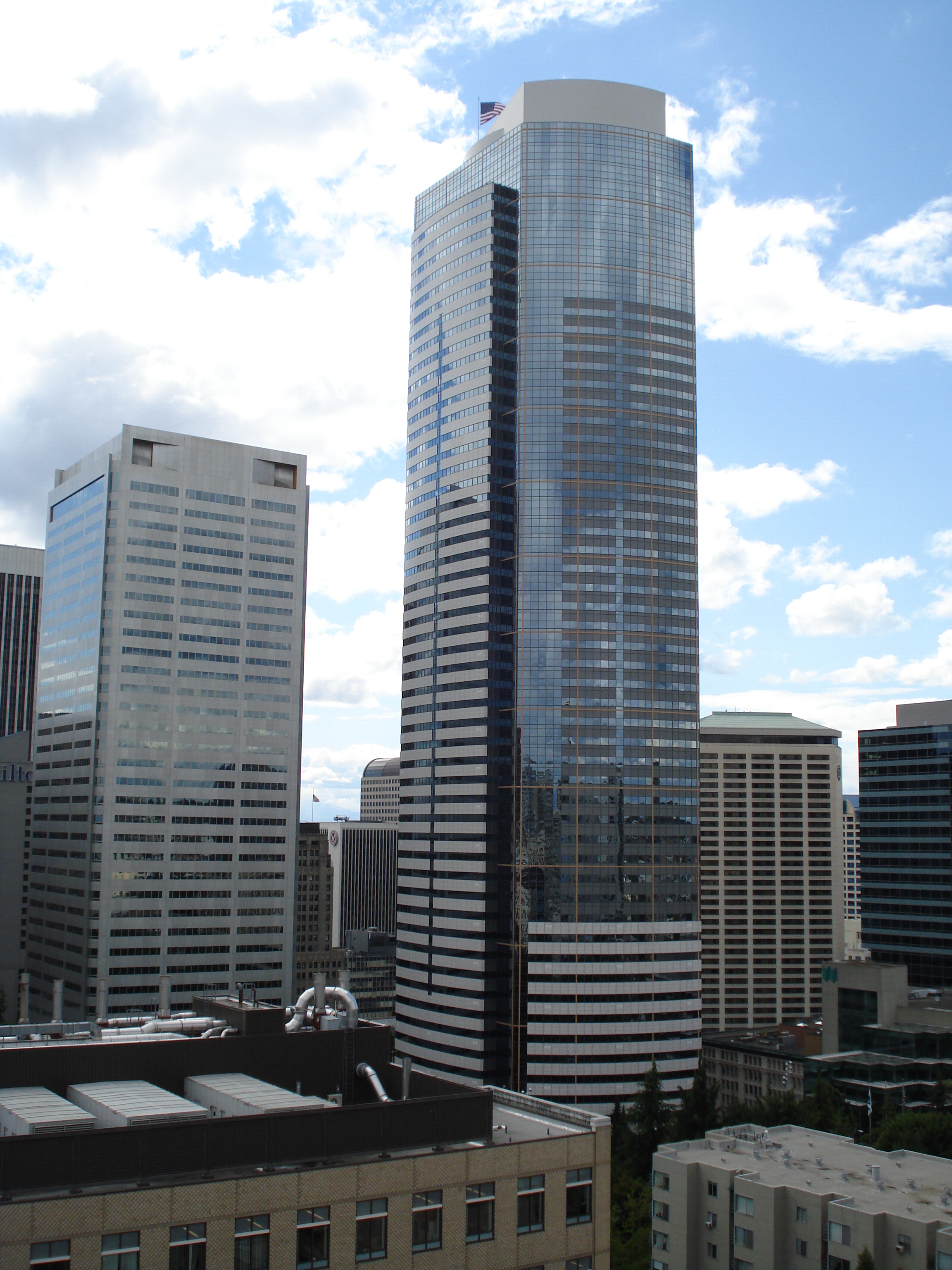
.jpg)

When the Petro-Canada Centre opened in 1984 its Vancouver stumpy sidekick would be one of the tallest office buildings in BC & still is.


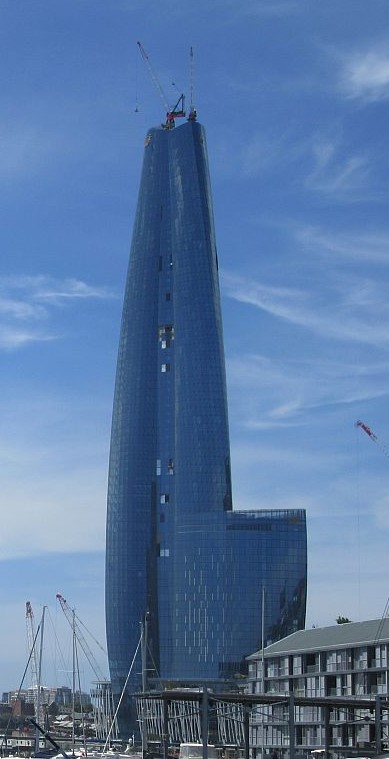

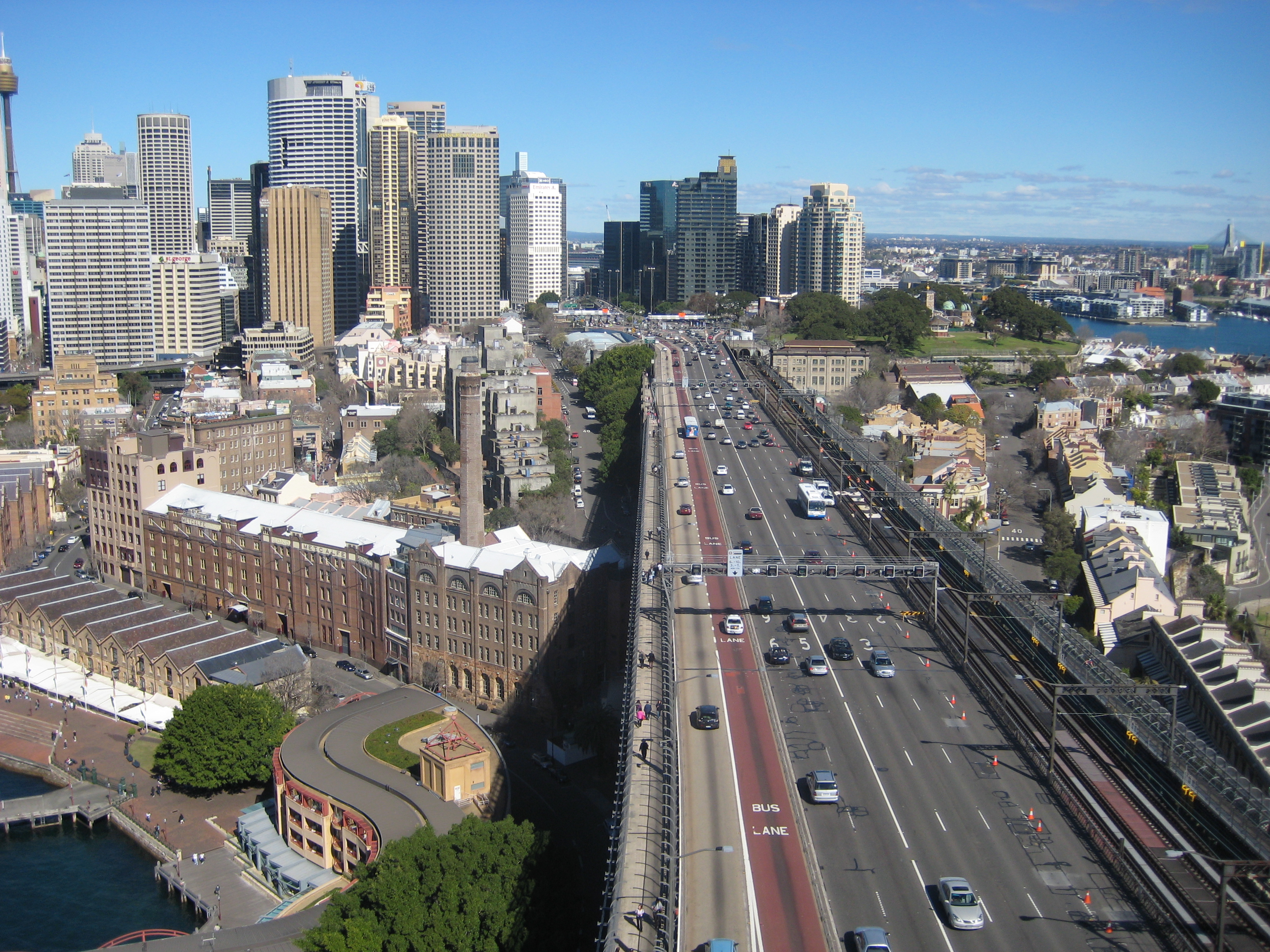
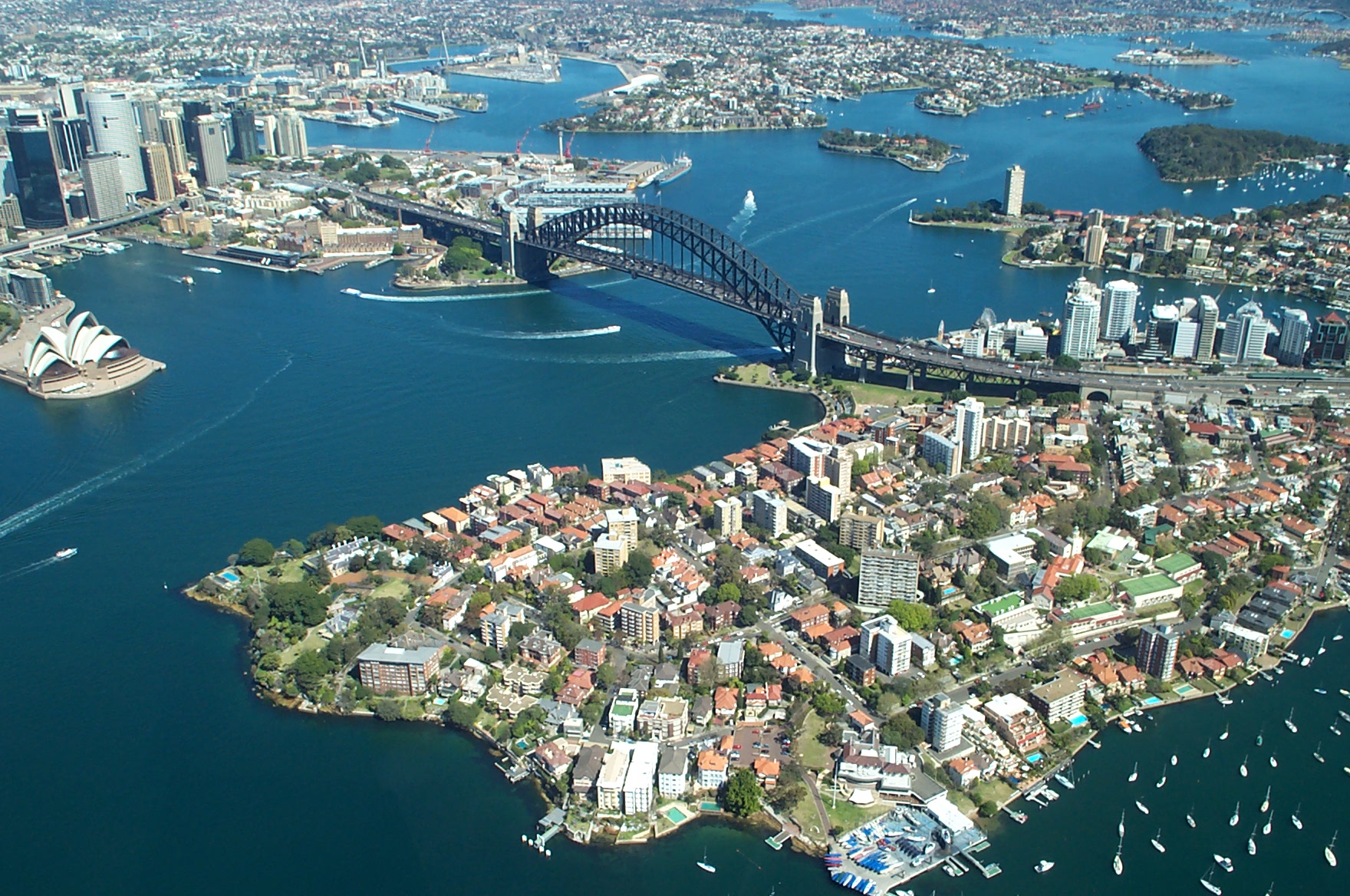
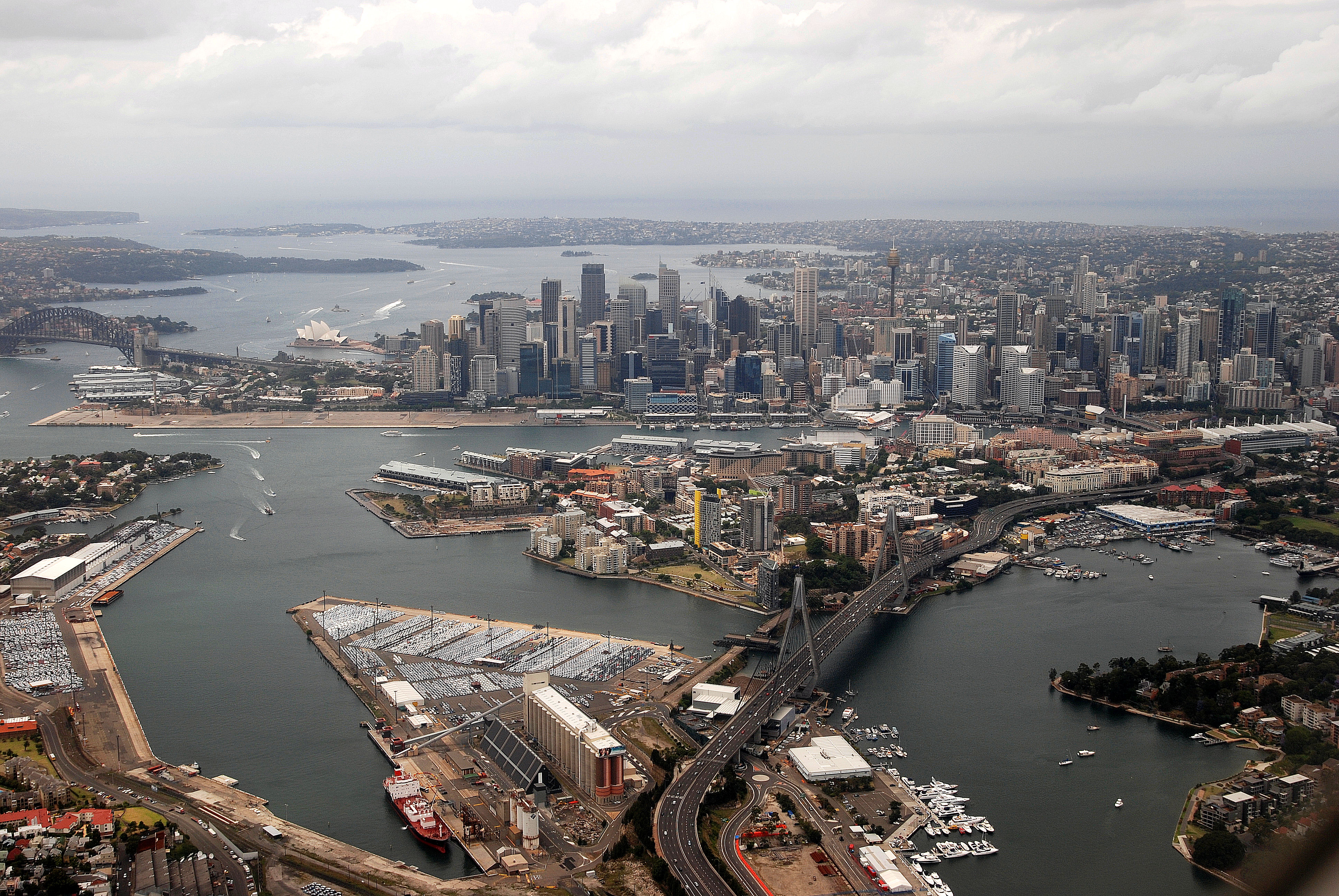
Unlike scenic Sydney, Vancouver has used almost any excuse to have small buildings, short trains and narrow roads. All because the Vancouver interpretation of a scenic city is to keep everything small.